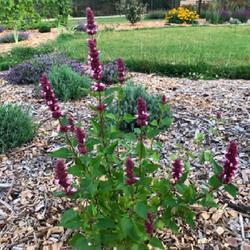
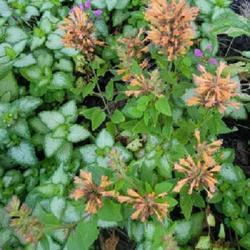
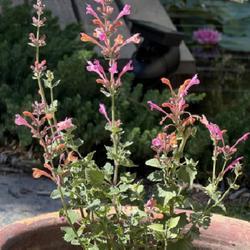
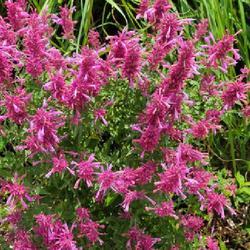
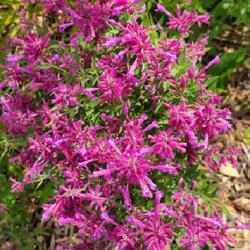
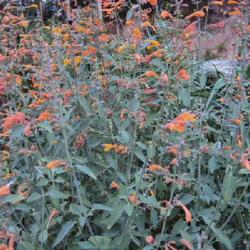
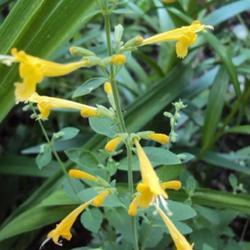
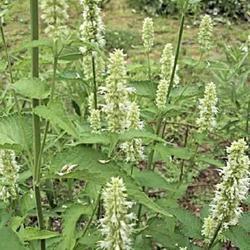
This is a North American native species that is often confused with the East Asian species
Korean Mint (Agastache rugosa) or
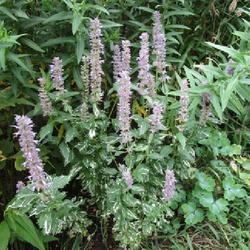
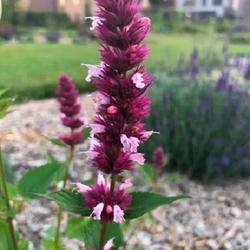
Anise Hyssop (Agastache 'Blue Fortune'), which looks like a cultivar of it or a hybrid with it as a parent, and I have seen native plant nurseries use pictures of what looks like the East Asian species and sell it under the name of the North American native species. Many of the photos on this profile look like the East Asian species to me.
They look quite similar and have a similar anise aroma, but the North American native has glossier leaves that tend to be darker green with teeth that are not as rounded. If you look at the underside of the leaf closely, the North American species is said to have very dense small hairs on the underside, whereas the East Asian species has more scattered larger hairs, densest around veins. (This doesn't seem to hold true for my seedling plants, which I thought were the North American native, so perhaps my hand lens isn't good enough, or it is only true of mature leaves or it is not true of all genetic variants or that my plant is a hybrid between these two species.) The East Asian species often has an indented leaf base (a more heart-shaped leaf) and the leaves tend to be a bit wider in proportion to the length.
These differences are reported on a PDF produced by Terry Serres for Big River Big Woods, the chapter of Wild Ones in the Twin Cities. It may be that some of these differences are not completely accurate or that there are better ways of distinguishing the species, or that there are hybrids between Agastache species that also need to be distinguished from Agastache foeniculum and Agastache rugosa. I tend to go on the rule of thumb that the East Asian species tends to have denser flower clusters without gaps, and wider leaves directly under the flower clusters, but I am not sure if that holds true either, looking at photos of Agastache rugosa on this site. I think more research on the differences is warranted and hopefully more native plant nurseries will get clued in to this problem and make sure they are selling the genuine North American species.