From Seed to Seed:
Plant Science for K-8 Educators
 |
 |
 |
 |
|
From Seed to Seed: |
|
|
Activity 45: You Ate What??? Grades: K-4 Associated Lesson Topics:
National Standards:
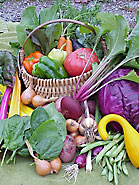
Planting the Seed... How many foods have you eaten today that you think may have come from a plant? What were those foods? What parts of the plant do you think these foods came from? What characteristics should we look at to determine what part of the plant a fruit or vegetable comes from? Will the shape of the food give us clues? What about the size? Teacher Information: Have different types of fruits and vegetables available for students
to look at and touch as they try to determine what part of the plant these
edible objects come from. This activity fits well with a discussion about
the difference between fruits and vegetables. Remember that a fruit is
derived from the ovary of a plant and vegetables are derived from other
parts of the plant. Necessary Materials:
Procedure:
What plant part are you eating when you eat the following?
Students can cut open the displayed fruits and vegetables to see if they find evidence of seeds. This activity works well with corn, peanut, tomato, strawberry, melon, cucumber, and orange. Discuss why these types of seeds are buried beneath layers of flesh. How do you think these seeds might move around? Have students compare the number of seeds in each. Why might some plants produce so many and others so few seeds? Students can then treat the seeds (see Activity 4: Not Till It's Right) and plant them in the schoolyard garden or classroom.
Please click the BACK button on your browser to return
to the course. |
||||
|
Made possible by a grant from Oracle Corp. Copyright 2001,
National Gardening Association, Inc. For questions regarding this web site, contact Webmaster
|
 It
may be useful to display a diagram of a plant and have students label
the parts of a plant.
It
may be useful to display a diagram of a plant and have students label
the parts of a plant.