From Seed to Seed:
Plant Science for K-8 Educators
 |
 |
 |
 |
|
From Seed to Seed: |
|
|
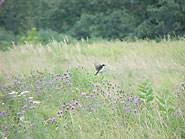
Plant-Animal Relationships Perhaps the most important plant-animal relationship is that of the herbivore
to its food. From tiny mice searching for seeds to huge wildebeests roaming
the African plains, many animals depend directly on plants for nutrients.
And we learned early on that plants have many different adaptations to
deter herbivores, including physical deterrents such as thorns, and Are there any ways that animals actually benefit plants? Earlier in the course we talked about how birds and mammals disperse seed. They may eat a ripe berry, and pass the undigested seed. Or they may unwittingly transport burrs. Animals-notably hummingbirds and bats-also occasionally act as pollinators. Rather than spend more time on these specific relationships, let's begin our look at the ecology of an ecosystem. Let's look at how all these pieces-and more-fit together to form a dynamic system. |
||||
|
Made possible by a grant from Oracle Corp. Copyright 2001, National Gardening
Association, Inc. For questions regarding this web site, contact Webmaster |
 chemical
deterrents such as those that cause bitter taste-or even toxicity.
chemical
deterrents such as those that cause bitter taste-or even toxicity.