
From Seed to Seed:
Plant Science for K-8 Educators
 |
 |
 |
 |
|
From Seed to Seed: |
|
|
Oils and fats. Like carbohydrates, oils and fats are made up of carbon, hydrogen, and oxygen atoms. However, the ratio of these three elements is different in oils/fats. In both plants and animals, oils and fats provide important reservoirs
of stored energy. Because they contain more than twice as many calories
per gram as do carbohydrates or protein, oils and fats are concentrated
energy supplies. While carbohydrates, and especially simple sugars, are
immediate sources of energy, oils and fats take longer to metabolize and
are used for long-term storage. Most important oils come from seeds. Your grocery store probably Counting Calories. Oils and fats contain 9 calories per gram. Carbohydrates and proteins both contain 4 calories per gram. |
||||
Made possible by a grant from Oracle Corp. Copyright 2001, National Gardening
Association, Inc. For questions regarding this web site, contact Webmaster |
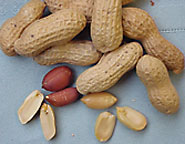 stocks
a number of cooking oils that are extracted from seeds. Again, you can
ask your students to conduct a grocery store investigation. How many different
kinds of oils can they find? What plants did they come from? Examples
include corn, soybean, sunflower, safflower, sesame, peanut, and canola
oils. (Canola oil is extracted from rapeseed, Brassica napus.)
stocks
a number of cooking oils that are extracted from seeds. Again, you can
ask your students to conduct a grocery store investigation. How many different
kinds of oils can they find? What plants did they come from? Examples
include corn, soybean, sunflower, safflower, sesame, peanut, and canola
oils. (Canola oil is extracted from rapeseed, Brassica napus.)