From Seed to Seed:
Plant Science for K-8 Educators
 |
 |
 |
 |
|
From Seed to Seed: |
|
Cereals.
Approximately three-quarters of the crops grown in the world are members
of the grass family. Grasses are grown as forage crops for domesticated
animals like cows and sheep; they are also a vital food source for humans.
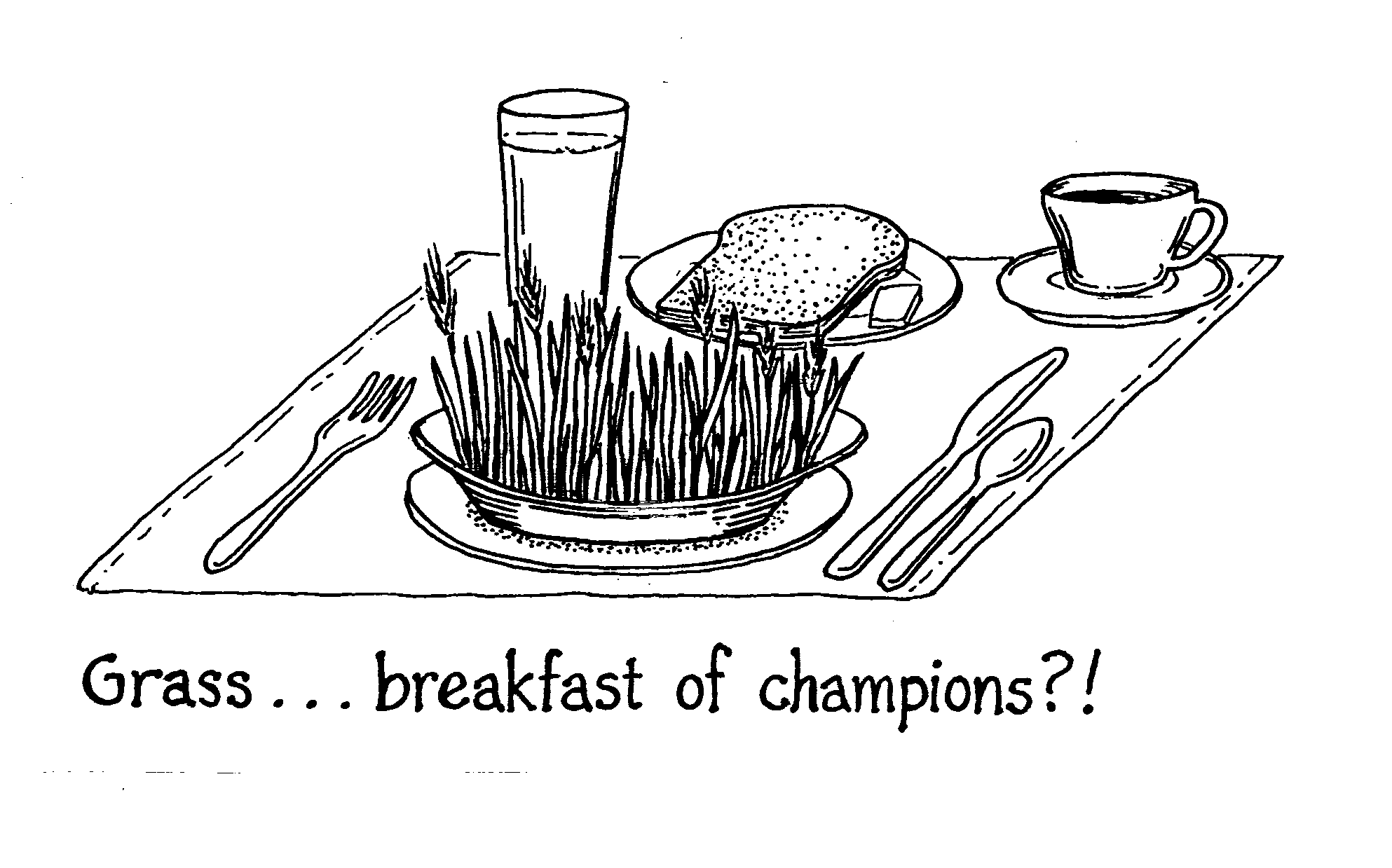 The name cereal describes grasses that form fruits-grains-that humans consume directly (as opposed to feeding them to livestock). A grain (the botanical term is caryopsis) is a fruit in which the dry ovary wall is fused with a single seed and its seed coats. Examples of cereals are wheat, corn, and oats-each of which can be grown in your schoolyard garden. Students can harvest, grind, and use grains to make their own cereal. Why are cereals such an important source of food for people all over the world? Cereals provide a concentrated source of carbohydrates, along with some proteins and oils. They are easily handled, transported, and stored-important characteristics, especially in regions of the world where harvested crops must be stored for use during the cold winter months. In their natural, unrefined state, grains contain large amounts of fiber. Remember that cellulose is the primary component of fiber. The bran, or outer layer of the grain, contains cells with thick, cellulose-rich cell walls. Unrefined grains also contain proteins and oils. Most of these are contained in the germ, which includes the embryo and the single cotyledon. (Remember, grasses are monocots, meaning they have one cotyledon.) During refining, the bran and germ are removed. Refined grains, and products made from them, are primarily a source of carbohydrates in the form of starch, and contain relatively little protein or fiber. Examples of refined grain products include white flour, most pasta, and white rice. Certain non-cereal seeds are sometimes used in the same ways as true cereals-ground into flour or used in baking, for example. These include buckwheat, quinoa, and amaranth. |
||||
Made possible by a grant from Oracle Corp. Copyright 2001, National Gardening
Association, Inc. For questions regarding this web site, contact Webmaster |