From Seed to Seed:
Plant Science for K-8 Educators
 |
 |
 |
 |
|
From Seed to Seed: |
|
|
Legumes. Humans consume both the fruits and seeds of legumes in their fresh state and also eat the seeds fresh or dried. If you eat a green bean, you are eating both the fruit (the pod) and the seed (inside the pod). Compared to cereals, legumes have a much higher protein content, often containing at least 25 percent protein.
Other types of legumes (species other than P. vulgaris) are
lima, scarlet runner, shell, black, and kidney bean. Pea (Pisum sativum)
is also a legume, as are chick pea, cowpea, black-eyed Like the cereals, legumes are easily handled, dried, and stored. However, an even more important feature is the leguminous plants' ability to fix atmospheric nitrogen. As we have often mentioned before, many types of legumes have a certain type of soil-borne bacteria living in nodules in their roots. These bacteria are able to take in atmospheric nitrogen and convert it into a form that is useful to the plant. (Remember, nitrogen is a critical component of amino acids, and therefore proteins.) As a result, the edible parts of legumes contain significant amounts of protein. Also, legumes do not require expensive nitrogen fertilization. Furthermore, when crop residues are tilled in they add nitrogen to the soil, making it available for future crops. |
||||
Made possible by a grant from Oracle Corp. Copyright 2001, National Gardening
Association, Inc. For questions regarding this web site, contact Webmaster |
 One
species of legume, Phaseolus vulgaris, accounts for many of the
beans familiar to cooks and gardeners. Different types of P. vulgaris
include: kidney, field, garden, haricot, pinto, great northern, and yellow-eye
beans. And don't forget the green, string, snap, and wax beans that can
be nibbled right in the garden. These are also types of P. vulgaris
that are harvested and eaten while the fruit is still in its immature
stage.
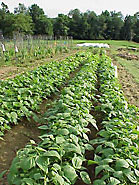
One
species of legume, Phaseolus vulgaris, accounts for many of the
beans familiar to cooks and gardeners. Different types of P. vulgaris
include: kidney, field, garden, haricot, pinto, great northern, and yellow-eye
beans. And don't forget the green, string, snap, and wax beans that can
be nibbled right in the garden. These are also types of P. vulgaris
that are harvested and eaten while the fruit is still in its immature
stage.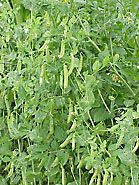 pea,
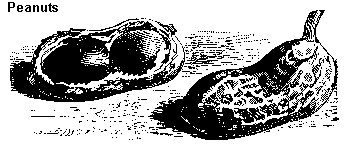
lentil, and soybean. Peanuts, of course, are a very popular legume, rich
in proteins and oils (30 percent proteins, 48 percent oils, 12 percent
carbohydrate).
pea,
lentil, and soybean. Peanuts, of course, are a very popular legume, rich
in proteins and oils (30 percent proteins, 48 percent oils, 12 percent
carbohydrate).