

Introduction
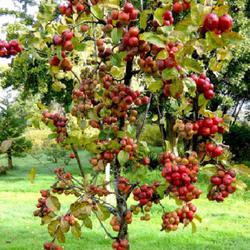
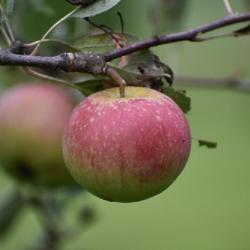
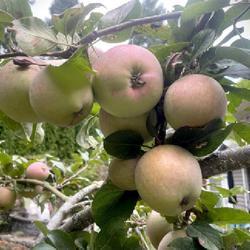
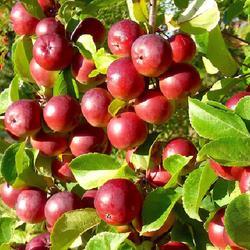
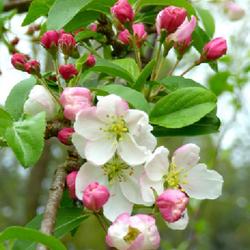
Grow your own apples trees and you can enjoy crisp, juicy fruit harvested fresh from the tree.
About apples
Apples require a fair amount of patience and planning. If you want a choice crop, you'll have to control insects, diseases, and other pests, keep an eye on the weather, and prune annually. And your first harvest will only come 3 years or more after planting. But the reward of picking apples from your own garden is worth the effort.
Select resistant varieties to minimize disease problems. Apple trees are not self-fertile; plant at least one other variety that blooms at the same time. Flowering crabapples that bloom at the same time will also pollinate apples.
Rootstock choice determines whether a tree is a dwarf, semidwarf, or standard size. Dwarf trees grow to be 8 to 12 feet tall and just as wide; semidwarf trees grow to be 12 to 18 feet tall and wide, and standard trees grow to be 18 to 22 feet tall and wide. In general, semi-dwarfing rootstocks for apples are recommended, if space permits, as true dwarfs are somewhat less hardy and therefore less suited to the coldest parts of the country.
Apples belong to the genus Malus, which also includes crabapples. Crabapples are used more as ornamentals but are also edible, albeit not quite as tasty. As mentioned above, crabapples can also be used to pollinate apples. Apples are also more distantly related to strawberries, roses, raspberries and blackberries, cherries, apricots, peaches, plums, and pears, all in the family Rosaceae.
Modern Disease-Resistant Varieties
For northern climates (Zones 4 to 6), consider the University of Minnesota-developed varieties: 'Honeycrisp' is a sweet, crisp red apple that stores well for up to five months. 'Sweet Sixteen' is a tart-sweet variety with creamy yellow flesh and a distinctive anise flavor, excellent for both fresh eating and cooking and resistant to scab. Both varieties perform best in areas with cool nights for good color development.
Heirloom Varieties
While modern, disease-resistant, semi-dwarf varieties are the practical choice for most home orchards, heirloom apples are worth a spot if you have the room and the inclination. A century ago, thousands of apple varieties were grown commercially in the United States; today a small handful dominate supermarket shelves. Heirloom varieties preserve a remarkable range of sizes, shapes, colors, and flavors, and many, such as the striped 'Newtown Pippin', are regionally adapted, uniquely suited to a particular climate, soil, or geography. That local adaptation can be a real advantage in the home orchard.
Growers at farmers' markets, farm stands, and CSAs across the country have been rediscovering heirloom apples, both for fresh eating and for cider: blending old varieties gives cider distinctive character, much as grape varieties shape wine. Planting a tree or two of a traditional variety broadens your own apple palette and helps conserve these old varieties for the future.
Choosing a site to grow apples
Choose a site with full sun, moderate fertility, good air circulation and water drainage. Apples will tolerate a wide range of soil types.
Planting Instructions for Apples
Spring planting is recommended in central and northern areas. Where fall and winter weather is generally mild and moist, fall planting is successful. Buy dormant, bare-root, 1-year-old trees, if possible. When planting trees on dwarfing and semi-dwarfing rootstocks, be sure the graft union stays at least 1 inch above ground.
Set bare-root trees atop a small mound of soil in the center of the planting hole, and spread the roots down and away without unduly bending them. Identify original planting depth by finding color change from dark to light as you move down the trunk towards the roots. If the tree is grafted, position the inside of the curve of the graft union away from the afternoon sun.
For container-grown trees, remove the plant from its pot and eliminate circling roots by laying the root ball on its side and cutting through the roots with shears. Don't cover the top of the root-ball with backfill because it could prevent water from entering.
Space standard trees 30 to 35 feet apart, semi-dwarfs 20 to 25 feet apart, and dwarf trees 15 to 20 feet apart. Surround each tree with a mouse guard before filling the hole completely. Water, prune, and mulch young trees right after planting.
Apples can be grown from seed, but the resulting trees do not produce good-quality fruit. For the best results, use grafted apple trees.
Training Apples as Espaliers
For small-space gardens or to create a sheltered microclimate for cool climates, apple trees can be trained into espalier forms against a south, east, or west-facing wall or fence. This technique, which originated in northern France and England, allows trees to be grown productively in a flat, two-dimensional plane while creating decorative four-season interest.
Select a dwarf or semi-dwarf, spur-type variety for horizontal cordon training. Good choices include 'Macintosh', 'Golden Delicious' (which is self-fertile), 'Liberty', and 'Honeycrisp'. Plant one-year-old whips about 6 inches from the wall or structure in full sun (6 to 8 hours daily). Install a wire trellis system to guide branch growth, spacing horizontal tiers about 2 feet apart.
Start with the main trunk and select a bud about 2 feet above the graft union, pruning off the top. As lower buds break, select the three strongest shoots. Tie two shoots horizontally to the left and right wires, and allow the third to grow vertically to the next level, repeating the process. Prune errant shoots back to 5 inches to create fruiting spurs. The entire structure takes 3 to 5 years to establish, but trees begin bearing fruit within a few years. Prune 2 to 3 times yearly to maintain the shape, and ensure wire supports are strong enough to hold fruit-laden branches.
Ongoing Care of Apples
Water young trees regularly, especially those on semi-dwarfing or dwarfing rootstocks, to ensure that the root system becomes well established. Renew the mulch periodically, but pull it away from the tree in the fall so mice don't nest over the winter and eat the bark. Begin training trees to their permanent framework in the first season. Prune bearing trees annually. Apples are susceptible to a number of different disease and insect pests, depending on region. Contact your cooperative extension office for information on managing pests in your area.
Pruning for Maximum Fruit Production
Vigorous apple varieties such as 'Granny Smith', 'Northern Spy', and 'Rome Beauty' often produce long, unproductive shoots with limited side branches. These can be managed by pruning 14 days after full bloom instead of during dormancy. Post-bloom pruning on such varieties encourages more side branches to develop and reduces excessive shoot growth, resulting in more accessible, easy-to-pick fruit. Alternatively, spread branches to 60 degrees or less from horizontal using weights or spreader sticks during the growing season.
Soil Health and Pest Prevention
Maintaining healthy soil is essential for tree vigor and disease resistance. Spread 1 to 2 inches of compost under the tree's drip line each spring. Test soil pH and amend to a range of 6.3 to 6.8 using ground limestone if needed. Adequate soil calcium is particularly important to prevent bitter pit, a physiological disorder. If soil testing indicates low calcium levels, apply gypsum.
Managing Diseases
The three main apple diseases are scab, powdery mildew, and cedar-apple rust. Scab develops in cool, moist spring conditions; rake and remove fallen leaves each fall or scatter ground limestone over fallen leaves to hinder spore reproduction. For disease prevention, apply sulfur sprays beginning at the pink bud stage (when flower buds show color), which controls both scab and powdery mildew. Cedar-apple rust, a problem primarily in the eastern U.S., can be managed with two sulfur applications: one at pink bud and another three weeks after petal fall. Sulfur is safe for organic growing and can be applied as a spray or dust; apply with a sticker-spreader in rainy areas for better effectiveness.
Managing Insect Pests
The three most common insect pests are codling moth, apple maggot, and plum curculio. Codling moth larvae tunnel into developing fruit. Monitor traps or use Bacillus thuringiensis (Bt) sprays beginning 15 days after petal fall at 5-day intervals; fish oil in the spray helps with effectiveness. Apple maggot (railroad worm) creates winding tunnels beneath the skin. Pick up and dispose of fallen fruit promptly, and hang red sphere traps coated with sticky insect trap material starting three weeks after petal fall; use six traps per standard tree. Plum curculio, which occurs east of the Rocky Mountains, is the most challenging. Control measures include sheet jarring (spreading sheets under trees, shaking branches to drop beetles, and disposing of them) three weeks after petal fall, or applying repellent sprays combining garlic extract, neem oil, fish oil, and seaweed early in the morning or at twilight at petal fall and one week later.
Harvesting Apples
The harvest season ranges from midsummer to late fall, depending on the variety. To avoid pulling out the stem when you harvest, cup the apple in your hand, tilt it upward, and twist to separate it from the spur at the point of attachment.
Frequently Asked Questions about Apples
Before you prune anything, find the graft union
This one check takes about ten seconds and it settles more questions than anything else on this page.
Almost every apple tree you can buy is two different apples joined together. The top, the scion, is the named variety on the label and is what makes the fruit you chose. It is grafted onto a rootstock, a separate plant selected for how big it lets the tree grow, how quickly it starts bearing, and how it copes with your soil. The join is visible: look at the lowest part of the trunk, generally between two inches and a foot above the soil, and you will find a swelling, a change in bark texture, or a slight dogleg kink where the trunk steps sideways.
Everything above that union is the variety on the label. Everything below it, including any shoot coming up from the roots or pushing out from the base of the trunk, is the rootstock, which is a completely different apple. Three rules follow. A shoot from below the union is not your variety, and since rootstocks are bred for root behavior rather than fruit, its apples are usually small, hard and sour. Remove rootstock suckers as soon as you see them, cutting flush at the point they emerge while they are still soft, because a sucker left to grow steals vigor and can eventually outgrow the variety you wanted. And keep the union above the soil, because if soil or deep mulch buries it the scion can root into the ground on its own, and the moment it does the rootstock stops controlling the tree's size.
How should I prune a backyard apple tree?
Prune in late winter into early spring, once the hardest cold has passed but before the buds break. The tree is bare so you can see what you are doing, and the wounds start closing almost immediately as growth begins. There is a second reason for that timing: fire blight is a bacterial disease that moves into fresh cuts during warm, wet weather while the tree is growing, and dormant-season pruning avoids that window entirely. If you ever have to cut out a blighted shoot during the season, cut well below the visibly affected wood and wipe the blades with alcohol between every cut.
On the cut itself, the old instruction to cut flush to the trunk is now understood to be a mistake. At the base of every branch there is a slightly swollen ring, the branch collar, with a raised ridge of bark in the crotch above it, and that collar contains the tissue the tree uses to seal off the wound. Cut flush and you remove it, leaving a larger wound the tree cannot close, which is an open door for decay. Make the cut just outside the collar so the collar stays on the tree; the scar looks like a slightly raised doughnut and closes over neatly. Long stubs are genuinely bad, though, since they die back and let decay in. For anything heavy enough that its own weight could tear the bark as it falls, use three cuts: an undercut a foot or so out from the trunk, a second cut from above slightly further out to drop the limb, then a final tidy cut just outside the collar. Do not paint the wound. Pruning paints, sealants and tar dressings were standard once, but they do not help, they can hold moisture against the wound, and a clean cut left open heals better.
Work in order. Start with anything dead, damaged or diseased. Then take out branches that cross and rub, because a rubbed wound never heals. Then remove the vigorous vertical water sprouts that go straight up from the limbs. Only then stand back, walk around the tree, and decide what to thin for light and access. Keep the pruning light in the early years, since heavy cutting always provokes a surge of upright regrowth the following spring, and prefer thinning cuts, which remove a whole branch back to where it started, over heading cuts, which shorten a branch and cause a cluster of new shoots at the cut. If you have inherited a badly overgrown tree, spread the renovation over three years and take no more than a quarter of the canopy in any one of them.
Branch angles are the part the usual advice leaves out. Wide angled branches are strong and narrow upright forks are weak, and everybody says so, but a narrow fork does not become a wide one because you want it to. Spread the branch physically while it is still young and flexible, using a clothespin wedged between trunk and shoot on new growth, a notched stick or a proper limb spreader on branches a year or two old, or a soft tie pegged to the ground. Spreading builds a strong attachment and, by bending the branch toward horizontal, encourages it to make flower buds rather than more leaves. On a young tree, spreading beats cutting for getting fruit sooner.
Keep the tree low enough to work on, and not only for light and air. Falls from ladders in fruit trees are one of the classic garden injuries, and the risk rises every year the tree gets taller. A tree pruned and picked from the ground or from the lower steps of a stable ladder is a tree that will not put anyone in the hospital. Never work from the top step, never take a chainsaw up a ladder, and if a limb is genuinely out of comfortable reach, that is a job to pay somebody to do. For an older gardener that is the single most important line on this page.
Anything specific to Fuji?
Three things, none of which pruning will fix. Fuji needs a pollination partner and will not set a crop from its own pollen, so there must be another apple or a flowering crabapple nearby blooming at the same time; a tree that flowers beautifully every spring and sets almost nothing is very often telling you this. Fuji is also a heavy setter and strongly biennial, cropping itself into exhaustion one year and skipping the next, and the cure is thinning the fruit rather than the branches: about four to six weeks after bloom, reduce each cluster to a single fruit and space the remaining fruit roughly four to six inches apart. It feels brutal, and it is the difference between a crop every year and a crop every other year, as well as what stops branches breaking under load. And Fuji ripens very late, well into fall, so do not judge the fruit early or panic in September.
How do I prune a dwarf tree trained flat against a wall, especially a multi-variety one?
Almost none of the standard advice for a free standing apple applies to an espalier, and some of it would actively undo the design.
The test for what comes off is direction, not size. Anything growing out of the flat plane, toward you or back toward the wall, is removed, and you can do that whenever you notice it at any time of year. Anything growing within the plane is worth keeping: tie it in as a future tier, or shorten it to become a fruiting spur. Do not strip the arms bare, because those short shoots are where your apples come from, and an espalier with clean naked arms will not fruit.
The timing is the reversal that matters most. Winter pruning invigorates a tree, removing buds while the roots stay the same size, so the tree answers in spring with a rush of vigorous upright growth. On an ordinary tree that is fine; on an espalier those water sprouts are precisely what you spend your life removing, so pruning only in winter means fighting your own tree every year. Summer pruning does the opposite, checking vigor and converting shoots into short fruiting spurs. Cut back the current season's growth once it has firmed at the base, generally from midsummer into early fall depending on your climate, shortening new shoots from the main horizontal arms to about three leaves above the cluster of leaves at their base, and shoots coming from existing spurs harder, to about one leaf. Leave the tips of the arms themselves alone if you still want them to extend. Then in winter do very little.
Ignore the standard instruction to clear the lowest eighteen to twenty four inches of trunk. That is correct for a free standing tree and wrong for yours, since an espalier's lowest tier is deliberately set low, often around fifteen to eighteen inches from the ground.
The real answer to how the branches will carry the weight is support rather than pruning, because a horizontal branch carries its load by bending and needs holding along its whole length. Build a permanent framework of posts with horizontal wires, or wires held four to six inches off a wall on vine eyes so air can move behind the tree. Tie the arms along the wires at intervals with soft, broad ties in a figure of eight so the tie takes the rubbing rather than the bark. Check every tie once a year and loosen it, because a tie left in place for three seasons will strangle the branch it was meant to support, and that is the commonest way a trained tree is quietly ruined. And understand that a dwarfing rootstock never becomes self supporting: dwarf apple roots are shallow and brittle, and a tree on one of the more dwarfing stocks needs its stake or framework permanently. So does its water, since dwarfing rootstocks are far less able to find their own in a dry spell, and a mulch over the root area kept clear of the trunk holds what you give it.
Keep the fruit load down while the tree is young. In the first year or two after planting, remove the fruit entirely so the tree puts everything into roots and structure, and after that thin to one fruit per cluster and space them out.
On a family tree with several varieties grafted on one rootstock, they do not grow at the same rate, and within a few years the most vigorous will have taken over the framework and shaded out the weakest. The fix uses the same principle in reverse: prune the vigorous variety in summer, which restrains it, and the weak variety in winter and more lightly, which stimulates it. Label the varieties now with something weatherproof that will still be legible in ten years, because everybody thinks they will remember which arm is which and almost nobody does. A multi-grafted tree largely solves its own pollination, with two caveats: the varieties have to overlap in bloom time, and if one dies out you may lose the partner the others depended on. And the height a dwarf tree reaches is decided by the rootstock rather than by the word dwarf, with the most dwarfing stocks holding a tree to roughly six feet and others comfortably reaching ten to fifteen, so find out which one you have and build the framework for the tree you will have in fifteen years.
I cut down an old apple tree and a shoot on the stump is growing. Will it become a tree?
It might grow, but work out two separate things before you decide to keep it: what variety it is, and what it is standing on.
Find the graft union on the remaining stump. If your shoot comes from above it, it is the variety you had and will fruit like the old tree. If it comes from below it, or from a root running out from the stump, it is the rootstock and will not. A single apple it happened to carry does not settle the question, because a rootstock will fruit too if you let it grow long enough; it only tells you the shoot is old enough to flower.
The harder issue is what it is attached to. A trunk that rotted from the inside means an established column of decay in the remaining stump and quite possibly in the root collar and major roots, and cutting the tree down did not remove that. The fungus is still there, still working through the wood, and your shoot is fixed to it. A shoot in this position grows unusually fast, because a mature root system is feeding a single small stem, and for a few years that looks like an advantage. The problem arrives later: the attachment between a fast grown shoot and a decaying stump is weak, and it gets weaker as the decay advances and the shoot gets heavier. Trees regrown this way have a habit of shearing off at the base at exactly the size where they are big enough to hurt somebody or flatten something. So this is a temporary tree, not a replacement. If you want an apple tree on that spot in twenty years, plant one.
Do not put the new tree in the same hole. Ground that has grown an apple for forty years tends to give a new apple a poor start, a well documented effect that shows as stunted growth for the first several years, so move at least fifteen to twenty feet away if you have room, and if you do not, dig out a wide, generous volume of the old soil and replace it.
If you want to keep the shoot in the meantime, which is perfectly reasonable while a new tree gets going, give it a fair chance. Choose one shoot, the strongest and best placed, and remove all the others, since several competing shoots produce a bush with weak forks rather than a tree. Stake it for its first few years, because it has no trunk taper of its own yet. Clear grass and weeds back to a radius of about three feet, since grass competes with young fruit trees far more than most people expect, and mulch that circle two to three inches deep, keeping the mulch several inches clear of the stem. Do not fertilize it: it is already sitting on the root system of a mature tree and will grow quite fast enough. And protect the base from mice and rabbits over winter with a guard, because young bark is exactly what they want.
Are general purpose tree and shrub fertilizer spikes suitable for apple trees and berry bushes?
The nitrogen worry behind that question is sound, the reasoning that sends people to a high phosphorus fruit formula instead is one of the most durable myths in garden fertilizer, and the honest answer is that most established apple trees do not need a bagged fertilizer at all.
The nitrogen point first. A high nitrogen feed on a fruit tree buys leaves and long soft shoots rather than fruit, and on an apple there is a second and more serious cost, because soft fast growing shoots are the tissue fire blight enters most easily. A heavily fed apple in a fire blight year is a much worse prospect than an unfed one. Late season nitrogen is worse still, since growth that has not hardened off going into winter is the growth that dies back in the first hard freeze.
Now the correction. Phosphorus does not make a tree flower. It is a structural nutrient involved in root growth and energy transfer, and a plant genuinely short of it does crop poorly, but the great majority of garden soils that have ever been fertilized or composted already hold plenty, and adding more to a soil that has enough does nothing for bloom. What it can do is tie up zinc and iron, which shows as pale or small leaves, and phosphorus washing into surface water is a real pollution problem, which is why several states now restrict phosphorus in lawn fertilizer unless a soil test justifies it.
So the sequence is this. Get a soil test through your county extension service before buying anything; it costs very little and it reports pH, which matters more than any of the nutrients. Then read the tree, because apple growers judge nitrogen need by shoot extension, the length of last season's new growth at the branch tips. A bearing tree making roughly eight to twelve inches a year is adequately fed by whatever it is already getting, and needs no nitrogen whatever the calendar says, while a young tree still building its frame should be making more than that. If it does need feeding, feed in early spring around bud break and never after about the middle of summer. And spread it rather than spiking it: the feeder roots that absorb nutrients are fine and spread out to and beyond the edge of the canopy, so a handful of concentrated fertilizer in a few holes near the trunk reaches a small fraction of them, while broadcasting a measured amount over the whole root area, or simply topdressing with compost and keeping a mulched, weed free circle out to the drip line, delivers more for less money. Do not put fertilizer in the planting hole of anything, since a new tree needs water and root contact with the surrounding soil, not a concentrated salt around damaged roots.
The berry bushes should not be treated as one group. Blueberries are the outlier and the one most often killed by kindness: they want a soil pH between about 4.5 and 5.5, they take their nitrogen in the ammonium form and are damaged by nitrate fertilizers, and they burn easily, so a general tree and shrub product will not correct pH and may well be the wrong nitrogen form. Raspberries, blackberries and currants are far less fussy and are usually well served by compost plus a modest spring nitrogen application.
Can I plant fruit trees near my mature oaks?
The oaks are the smaller half of the problem, and the idea that fallen oak leaves acidify or poison the ground beneath them is one of those garden beliefs that will not die. Oak leaves are mildly acidic when fresh, their effect on soil pH as they break down is small and slow, and left where they fall they make an excellent free mulch. What a mature oak really does to a young fruit tree is simpler and much harder to fix. It shades it, and apples, pears and citrus all want a minimum of six hours of direct sun and do better with eight, so watch the spot across a whole day before committing. Its roots extend well beyond its canopy and are extremely good at taking water and nutrients, so a young tree planted inside that zone is competing with a much larger and better established plant. And you cannot dig a planting hole inside a mature oak's root zone without cutting significant roots, which is how large old trees are lost; do not build a raised bed over oak roots either, because fill soil suffocates them. Site the fruit trees clear of the oak canopy and then some, and if that space does not exist, containers on the sunniest part of a drive or patio are a genuinely good answer, particularly for citrus.
I am on the Gulf Coast. Will apples grow here?
Only low chill varieties, and even those deserve treating as the most demanding thing in the yard rather than a background tree.
Apples and pears need a certain amount of winter cold, counted as chill hours, to break dormancy and bloom evenly, and most familiar apple varieties want eight hundred to over a thousand hours. The immediate Gulf Coast delivers a fraction of that in a normal winter and very little in a mild one. An apple that does not get its chilling blooms raggedly over weeks, sets almost nothing, leafs out poorly and eventually declines. Choose from the group bred for the subtropics, and plant two of them for cross pollination.
For pears in the same region the dominant problem is fire blight, and the classic European dessert pears are highly susceptible and will not last; the Southern hard pears, the fire blight tolerant hybrids and several Asian pears are what succeed. For citrus, a lemon is realistic on the coast but not carefree, since hard freezes reach the Gulf Coast every few years and lemons are among the more tender citrus, so grow the more cold tolerant kinds in the ground and keep a lemon in a large movable pot or against a sunny south facing wall with a plan for covering it. Satsuma and other hardy mandarins are the safer in-ground choice. Ask a local nursery or the extension office for their current recommended lists, because the good varieties for the coast are quite specific.
One regulatory point matters for citrus specifically. The Gulf states are under citrus quarantines because of citrus greening and citrus canker. Buy only certified nursery stock from a licensed source inside your own state, and do not bring citrus plants, budwood or fruit across state lines or order plants in from outside the quarantine area. This is the law rather than a courtesy, and it is what keeps a backyard tree from becoming a reservoir for a disease that has devastated commercial groves.
On the soil, coastal sand drains fast and holds little, so plan on regular watering and an annual compost topdressing, and if any part of the yard holds water after rain, plant into a raised mound rather than into a hole.
Will a flowering crabapple stand up on an exposed, windy corner lot?
Yes, a crabapple is one of the better small trees for a hard site: low and broad rather than tall and narrow, with strong flexible wood, wide roots, tolerance of a range of soils, and genuine contentment in full sun and open wind. Sizes run from eight feet to thirty, so you can match the space precisely. But the tree you buy matters more than the species.
Check three things before buying. Disease resistance varies enormously, and older crabapple varieties defoliate by midsummer from scab and rust and look wretched for half the year, while modern resistant selections stay clean with no spraying at all; any decent nursery can tell you which of their stock resists the four problems that matter, apple scab, fire blight, cedar apple rust and powdery mildew, and that single decision determines whether you enjoy the tree. Check what the fruit does, because on a corner lot with a sidewalk, large fruit that drops is a nuisance and a slip hazard underfoot, so choose one of the small fruited kinds under half an inch, which shrivel and hang through winter for the birds instead of dropping in a mess. The fruit is edible, incidentally, and the tart little ones make good jelly. And check what the site actually is: crabapples want soil that is moist and well drained and will not tolerate ground that stays wet, so dig a hole a foot deep, fill it with water, let it drain and fill it again, and if the second filling has not gone in a few hours you have a drainage problem.
Two practical points about a corner. Most municipalities have a sight triangle rule at street corners limiting what you can plant near an intersection and requiring clearance over the sidewalk, so check with your city before choosing the exact spot. And call 811 before you dig. The service is free, it marks public utility lines, and it does not mark private lines such as a run out to a garage or an irrigation system, so think about what you know is under there as well.
On the alternatives usually suggested alongside crabapple: redbud is beautiful but it is a woodland understory tree with thin bark, and on a fully exposed windy corner it is prone to sunscald on the trunk, weak narrow branch unions and borers, so it is not the tree for this site. Goldenraintree stands up to wind and drought well but seeds heavily and is listed as invasive in parts of the Southeast, so check your state's list first. Better matches for a tough open site are serviceberry, which flowers early, fruits for the birds and colors well in fall; the thornless hawthorns, which are hard as nails and hold fruit into winter; and Japanese tree lilac, genuinely tolerant of wind, heat and poor street conditions. One thing to refuse outright is the ornamental flowering pears sold everywhere as fast, cheap and pretty: they split apart in wind and storms as they mature, which on a corner lot means over a sidewalk or a car, and they have naturalized aggressively enough that several states have banned their sale.
The planting itself is worth getting right. Find the root flare, the point where the trunk widens into the roots, and plant so it sits at or just above the finished soil level even if that leaves the nursery pot's soil surface proud of the ground. Dig the hole two to three times as wide as the root ball and no deeper than the ball itself, tease apart circling roots, and backfill with the soil you dug out, with no fertilizer and no amendments. Mulch a wide ring two to three inches deep, pulled back so it does not touch the trunk, and water deeply once a week through the first two growing seasons. Stake only if the tree cannot stand on its own in your wind, use a wide soft strap low on the trunk, and take the stake off after the first year, because a trunk allowed to move builds the taper that keeps it upright later.
I want to plant apples on sandy ground as a food source for deer, and I can only visit occasionally. What should I plant?
This can be done, and done without a spray program, but three assumptions usually need adjusting: the rootstock, the protection, and how much attention the first three summers really take.
On rootstock, apples are almost never grown on their own roots, and what is sold as a standard tree is normally a variety grafted onto a seedling rootstock or one of the vigorous clonal stocks. For deep sandy ground, an absentee owner and a cold winter, vigorous is exactly what you want. Dwarfing rootstocks are the opposite of what this site needs, being shallow rooted, needing permanent staking and irrigation, and having no drought reserve at all.
On the soil, deep sand is droughty, acidic and low in nutrients. A soil test will almost certainly come back needing lime to bring pH up toward six to six and a half, and lime works slowly, so it wants doing the season before you plant. Skip the plan of working peat and compost into the planting holes: amending the backfill in a sandy site creates a pocket that behaves differently from everything around it, and roots circle in the pocket rather than moving out. Dig wide rather than deep, backfill with the soil that came out, and put the organic matter on top as mulch. Find the root flare before you set the depth, because nursery trees are commonly potted or dug too deep and a tree planted with its graft union and flare buried declines slowly for years.
On variety, deer will eat any apple once winter sets in, so choose for three things in this order. Disease resistance first and above everything, because with no spray program and nobody on site, scab will defoliate a susceptible tree by August every year and the tree will slowly starve; there is a group of scab resistant apples bred for low input growing, and that is the group to build the planting from. Ask your extension office about fire blight and cedar apple rust locally too, particularly if there are junipers or eastern red cedars nearby. Then drop timing, which is what actually spreads the value: the late hanging apples that stay on the tree into and after hard frosts and drop through early winter are worth the most, so aim for a few early, more in the middle, and as many late kinds as your season will actually ripen, asking specifically about days to maturity. Then pollination: plant at least two or three varieties with overlapping bloom, and check that none of your pollen sources is a triploid, since a few well known varieties produce sterile pollen. A couple of flowering crabapples in the block are the easiest insurance, blooming over a long window, pollinating almost everything, and carrying small persistent fruit that is itself excellent wildlife food.
Full size trees want twenty five to thirty feet between them. And the maintenance is where absentee plantings usually fail, on three things that are not disease. The deer themselves will browse the leaders off and rub the trunks with their antlers until the trees never make a canopy, so a five foot welded wire cage around each tree, well anchored, or a fence around the whole block, is not optional; take the cages off once the lowest branches are above browse height. Voles and rabbits girdle young trunks under snow, mulch and long grass, and a girdled tree is dead in the spring, so fit a hardware cloth guard around each trunk set an inch or two into the soil and taken well above the expected snow line, keep mulch pulled back from the trunk, and mow the grass short around each tree in fall so there is no cover. And new trees in droughty sand need real watering through their first two summers and possibly a third, which from a distance means either arranging for someone local to water or planting fewer trees and expanding once you know what survives.
A dormant oil application once a year is fine, and it is honest to say what it does and does not do. It smothers overwintering mites, scale and aphid eggs, and it has no effect on scab, fire blight, plum curculio or codling moth. For a wildlife planting that is not a problem at all, since wormy, scabby, blemished apples are perfectly good deer food, which is precisely why the resistant variety route works so well here. Finally, prune: a young tree needs a few minutes a year to keep a single leader and space the scaffold limbs, done in late winter while dormant, which on an apple is also the timing that limits fire blight risk.
What is apple scab, and what do I do about it?
Apple scab is the dominant fungal disease of apples in humid climates. It overwinters in fallen leaves and develops as temperatures warm in spring, showing as olive-green or brown lesions, often with a velvety texture, on both leaves and fruit. Infected leaves may yellow and drop prematurely, weakening the tree, and fruit becomes distorted and corky. It develops when leaves are wet and temperatures sit between 55 and 75 degrees, a window that coincides with spring leaf emergence and early summer in most regions, with rain or overhead irrigation providing the moisture spores need. Once lesions appear, fungicides cannot cure the damage, so prevention is the only effective approach.
Scab resistant varieties eliminate the need for sprays entirely. Liberty, Enterprise, Freedom and Williams' Pride are all scab immune or highly resistant and will bear clean fruit without seasonal spraying. If you grow susceptible varieties, management starts at ground level with sanitation: rake and remove fallen leaves in fall, or mulch heavily over the leaf litter so spores cannot splash up onto new foliage in spring. That single practice breaks the cycle that would otherwise repeat every year. Beyond that, thin fruit clusters to 4 to 6 inches apart when the fruit is marble sized, remove obviously diseased fruit during the season, and prune for an open framework so wet leaves dry quickly, since crowded canopies extend the window for infection.
Scabbed fruit is cosmetically damaged and safe to eat after cutting away the affected tissue. The disease stays on the surface and does not penetrate into the flesh.
What is cedar-apple rust, and do I have to remove my neighbors' junipers?
Cedar-apple rust is one fungus with two hosts and two very different appearances. On apples it causes yellow to orange lesions on leaves and fruit, often with a halo or ring pattern. On Eastern red cedar and various ornamental junipers it produces distinctive orange gelatinous galls that exude spores in spring and are unmistakable when you see them.
Removing nearby junipers is rarely practical and often not much use, because wind carries the spores considerable distances, so physical distance offers limited protection unless you are far from any juniper in all directions. The more effective approach is to select rust resistant apple varieties, which eliminates the problem without any ongoing effort. If you already have susceptible trees and rust is a regular problem, preventive fungicide timed to the vulnerable period in spring and early summer is the alternative, following the label on your chosen product. If junipers in your own landscape are manageable, removing visible galls in spring before they dry and release spores reduces local spore production, though it will not eliminate rust coming from upwind.
Rust lesions on the fruit are surface damage. Cut away the affected tissue and use the apple.
How do I manage fire blight?
Differently from everything else on this page, because fire blight is caused by a bacterium rather than a fungus, which means fungicides are completely ineffective against it. It kills shoots and branches suddenly, appearing as blackened, blighted tips as if scorched by fire, and it spreads through flowers and developing fruit as well as through branches, so infections can start at multiple sites during spring bloom.
It is difficult to eliminate once established but it can be managed through sanitation and pruning discipline. When you prune infected branches, remove all visible disease plus several inches of apparently healthy wood below the blight, and sterilize the pruners between every cut by wiping the blade with rubbing alcohol or a 10 percent bleach solution, because the bacteria travel from infected to healthy wood on your tools and a single dirty cut can spread blight through an entire tree. Never prune fire blight during wet weather or when rain is forecast, since moisture promotes bacterial movement into wounds. Remove the pruned material rather than leaving it on the ground near the tree.
Thin fruit clusters aggressively in early spring, removing most flowers and developing fruit while disease pressure is building. It seems counterintuitive when you want a harvest, and it is one of the most effective tools a homeowner has. Fire blight is also more severe in trees stimulated by heavy nitrogen, which produces the tender succulent growth the bacteria prefer, so avoid overfeeding and avoid spring nitrogen when trees are most vulnerable.
Streptomycin products are registered in some states for fire blight management, but availability varies by region. Contact your local Cooperative Extension to learn whether it is registered in your state and whether it is recommended in your situation. Most homeowners rely on pruning and thinning.
What about powdery mildew, black rot and frogeye leaf spot?
Powdery mildew appears as a white, dusty coating on leaves and sometimes fruit. Unlike most apple diseases it thrives in warm, dry conditions and is more common inland, away from coastal fog, and it does not need wet leaves, since humidity is enough, which is why it often shows later in summer after the spring diseases have subsided. It weakens trees by covering leaves and reducing photosynthesis but rarely causes leaf drop or severe damage in a home orchard, and its presence mostly indicates poor air circulation in the canopy. Pruning for an open structure and thinning crowded or crossing branches often prevents it from establishing at all.
Black rot causes dark, sunken lesions on fruit that gradually expand and deepen, and infected apples may rot partially or completely on the tree or in storage. Frogeye leaf spot is a related disease showing as small circular leaf lesions with a gray center and a red or brown halo. Both are more common in warm, wet springs, and both overwinter in mummified fruit and dead twigs, so sanitation controls them directly. Remove mummified fruit hanging on the tree after harvest and at season's end, pick up and discard all fallen apples, prune out dead, diseased or canker-bearing branches during dormancy along with stubs that will not heal, and burn or bury the diseased material rather than leaving it in the orchard.
Sanitation is in fact the foundation of the whole business. Most apple diseases overwinter in fallen leaves, mummified fruit, cankers and dead twigs, and removing those sources directly reduces next year's pressure. Dropped fruit through the growing season is not a wasted resource but a disease and pest problem: windfalls land on damp soil or grass where fungi thrive, they rot quickly, they perpetuate spore production and attract insects, and picking them up regularly improves disease control far more than most people expect.
When and how should I use a fungicide?
Fungicides work as preventives applied before infection occurs, not as cures for fruit that is already spotted. Material applied to foliage or fruit before spores arrive and germinate prevents lesions from forming; applications after spots are visible waste money, because those lesions are already established internally. Timing follows tree development rather than the calendar: begin preventive sprays when leaves emerge in spring, often called the green tip stage, continue through petal fall if disease history warrants, and maintain protection into early summer depending on the target disease and the weather. The label on your product specifies the schedule, because timing depends on the active ingredient.
Before buying anything, check your state's current registrations for homeowner use on apples, since approved products and their labels change over time and access varies by region due to EPA label restrictions. Sulfur and lime-sulfur are traditional options available in most regions, and copper-based fungicides such as Bordeaux mixture are also registered. Each product has different mixing requirements, application rates, pre-harvest intervals and temperature restrictions, and you must follow them.
Sulfur must not be applied when air temperatures exceed approximately 85 degrees, because heat causes phytotoxicity that damages and discolors foliage; check your product label for its exact threshold. Do not apply sulfur within 30 days of an oil-based spray or dormant oil, and do not apply dormant oil within 30 days of sulfur, because the combination can damage the tree and reduce the effectiveness of both.
Lime-sulfur and Bordeaux are not interchangeable, a distinction worth stating because the two are sometimes mentioned together in older guidance. Lime-sulfur is elemental sulfur complexed with lime, applied as a liquid, subject to the same temperature ceiling, with its own pre-harvest interval and mixing requirements. Bordeaux mixture combines copper sulfate and slaked lime, is not a sulfur fungicide, and has different mixing instructions, temperature restrictions and pre-harvest intervals. Read the label on the specific product in your hand.
Chlorothalonil appears in older gardening literature as a standard product for home fruit growers. Homeowner use has been discontinued: the EPA cancelled residential and home garden uses and the products were removed from consumer shelves. Do not buy or use it on your apple trees, and if you have old containers of it in a shed, do not use them; follow your local hazardous waste disposal guidelines instead.
Apply any fungicide according to the label's directions on rate, water volume, mixing, frequency and, crucially, the pre-harvest interval. That interval is the minimum number of days between the final application and harvest, and it exists because residues on fruit take time to break down to safe levels. If the label says 21 days, do not harvest for 21 days even if the fruit looks clean. That timing is set by regulatory agencies from residue data and is not negotiable.
Which apples from a diseased tree are safe to eat?
The decision is straightforward. Cosmetic surface damage is fine, and internal decay is not.
Apples with scab, with cedar-apple rust lesions, or with russetting, the brown corky surface that sometimes accompanies scab or develops on its own, are safe. Cut away the affected tissue and use the apple as you would any other for fresh eating, sauces, pies or cider, because the interior is unaffected.
Apples affected by black rot or other soft-rot fungal diseases develop internal decay that cannot be cut away safely. The decay supports mold growth and fermentation, and soft decay indicates that microbes have invaded tissue to a depth where surface trimming cannot remove them. Those apples should not be eaten fresh, cooked, pressed for cider, or processed in any way. Discard them.
Windfalls need careful inspection, because they often land on damp soil and develop mold quickly. Check each one for soft spots, cracks or visible mold, and use only sound fruit that fell recently. If in doubt, discard it.
Moldy fruit is not safe even when the mold is only visible on the surface. Some molds produce toxins that penetrate into the flesh and you cannot see them by cutting the visible mold away. Never use visibly moldy apples for anything. Discard them, or compost them in a hot pile if you are confident it will reach internal temperatures above 140 degrees.
Caterpillars have rolled up the leaves on my apple tree. Should I release predators to eat them?
Buying in predatory insects is rarely the answer, and praying mantids in particular are a poor choice, being entirely indiscriminate and taking beneficial insects as readily as pests, and they will not stay where you release them.
Leaves spun or rolled together with webbing, with a small caterpillar feeding inside, are the work of leafrollers. They are common on apples and they look far worse than they are: the damage is to foliage rather than fruit, it happens early in the season, and a healthy tree carries the loss with no effect on the crop. Leafroller numbers are also policed heavily by parasitic wasps and other beneficials already present in most gardens, and outbreaks generally settle within a season or two without help.
For a backyard tree the sensible response is to leave them alone, or to squash the rolled leaves between finger and thumb where there are only a few and it bothers you. What genuinely helps is not spraying broadly for something else, since broad spectrum products that would kill leafrollers also remove the natural enemies keeping them, and worse pests, in check. If the same tree is stripped heavily year after year, that is worth a proper diagnosis from your Cooperative Extension office rather than a guess.
I grew apple trees from seed and keep them indoors. Why are the leaves spotting and dropping?
An apple is not an indoor plant, and that is the root of it. Apples are hardy, deciduous, full sun trees that need a real winter, and a seedling kept permanently in a house is short of light, short of chill and short of dormancy. Leaves that yellow, spot and drop on an indoor apple are usually a light and roots problem rather than a disease.
Two things typically show up together. Stretched, lanky growth with long gaps between the leaves means the plant is reaching for light, since a few hours through a window is a small fraction of what an apple gets outdoors, and supplementary lighting on a long daily cycle makes a visible difference. A heavy, dense potting mix that stays wet is the second, and it damages roots, which then shows in the foliage; repot into a mix opened up with perlite or bark, in a container with real drainage, and let the surface dry between waterings.
Dormancy is not something to prevent. Apples need a spell of winter cold to grow and fruit properly, and a tree denied it declines over the years rather than benefiting. Better to grow the seedlings outdoors, or move them out for the season and overwinter them somewhere unheated but sheltered, so they can drop their leaves and rest as they are built to. And adjust one expectation: apple seedlings do not come true, so a tree raised from the pip of a good apple will be a different and usually far inferior tree, and it may take many years to fruit at all.
Our old apple tree makes far more fruit than we want. Can it be stopped?
Not entirely. There is no practical way for a home gardener to make a mature apple tree stop flowering and fruiting, and it will keep setting fruit as long as pollen reaches it, which on a tall old tree with another apple in the same garden it will.
You can reduce the load, though, and the two effective levers are pruning and thinning. Winter pruning removes fruiting wood, so taking out some of the older fruiting spurs along with height and spread cuts the crop and makes the tree easier to live with. Bring a large neglected tree down over two or three seasons rather than all at once, since heavy cutting in a single go provokes a mass of vigorous water sprouts. Thinning the young fruitlets in late spring, while they are still small, reduces the eventual crop directly and improves what is left.
For the fruit you do not want, the fixes are practical. Laying a tarp or netting under the canopy makes clearing windfalls quick, picking up drops promptly cuts down both the mess and the insects working them, and many food banks and local gleaning groups will gladly collect a surplus crop. If insect activity near the back door is the real complaint, it is worth knowing that bee activity is confined to the few weeks of bloom, and that most of what gathers around fallen fruit later in the season are wasps rather than bees. Clearing the drops daily is what settles that down.
Do I need a second apple tree to get fruit?
It depends entirely on the variety. Golden Delicious sets fruit reliably on its own; most other apples need pollen from a different apple variety, or a crabapple, blooming at the same time. Pollen from plums, cherries, or other fruit trees does nothing for an apple. Bees handle the transfer, so no hand pollinating is needed. If you are unsure whether your tree needs a partner, watch it through one full season: flowers but no small green apples by late summer confirms a pollinator is missing, and your nursery or extension office can identify the variety and suggest a compatible partner that blooms in sync.
What is the white, fuzzy, cottony growth on my apple's branches?
Look closely for small reddish insects under the fluff: that is woolly apple aphid, which secretes the cottony cover. Small parasitic wasps normally keep it in check, which is why outbreaks often follow heavy insecticide use nearby that killed the wasps. Control it in the dormant season with horticultural oil, coating every branch surface, top and underside, per the label. In wet, humid regions a white flaky growth on bark can instead be lichen or algae, handled with a dormant-season spray for bark problems; ask extension or a nursery professional if you are unsure which you have.
My apples come out misshapen and gnarled every year. Why?
Three causes cover most cases, and the foliage tells you which. Healthy, unspotted leaves point to cold or rainy weather during bloom, which suppresses pollinator activity and leaves fruit incompletely pollinated; there is no treatment, and next year is a new draw. Olive-green leaf spots turning brown are apple scab, managed with a growing-season spray program from bud break on the label's schedule, plus raking up fallen leaves each fall, since the fungus overwinters in litter. A puckered, dimpled surface with distorted leaves is rosy apple aphid, smothered with dormant-season horticultural oil against the overwintering eggs. When in doubt, take fruit and foliage to the extension office rather than spraying at a guess.
Why does my crabapple have rings of holes in the trunk and branches?
A ring pattern of holes is bird work, usually a woodpecker or sapsucker drilling for insects, not an insect outbreak itself. Crabapples also carry the same disease load as orchard apples and generally need the same preventive dormant and early-spring sprays; summer symptoms mostly have to wait for next year's prevention. Extension can confirm which disease is present and, if you are replanting, point you at resistant varieties.