

Getting Beyond the Basic Container
Containers planted with a single type of plant, such as petunias or geraniums, can be spectacular. But don't be afraid to combine different types of plants. You can create dramatic, professional-looking displays by following a few simple design principles.
Choosing Compatible Plants
The foundation of any successful container combination is plant compatibility. Make sure the plants you select have similar growing requirements, especially light and moisture preferences.
Light requirements: Some plants prefer full sun, others thrive in part shade, and some tolerate both. Mixing plants with different light needs in a single container is a recipe for disappointment. For example, sun-lovers like portulaca and lavender need excellent drainage and bright light, while shade-lovers like impatiens and torenia prefer moist, shaded conditions.
Moisture needs: Match plants based on their soil moisture preferences. Diascia needs full sun and moist soil, which differs from the full sun and very well-drained soil that lavender prefers. Before combining plants, research their water needs and group compatible types together.
For more details on container care, drainage, and watering schedules, see Container Gardening Basics.
Selecting Plants with Different Growth Habits
To create visual interest and professional depth, combine plants with different growth characteristics. Think of this structure in three tiers:
Thriller: Tall, spiky plants provide vertical emphasis in the center or back of the container. Grasses, snapdragons, angelonia, and ornamental millet work well. These plants draw the eye upward and establish the planter's height.
Filler: Smaller, mounding or shrubby plants fill the middle ground with substance and color. Geraniums, begonias, coleus, nemesia, diascia, and verbena are excellent fillers that provide bulk without overwhelming the design.
Spiller: Cascading plants soften the edges of the planter and add grace and movement. Trailing petunias (calibrachoa), sweet potato vine, dichondra, helichrysum, portulaca, lobelia, and alyssum spill over the container's edge in an inviting way.
A well-designed container draws on all three elements. For instance, combine spiky ornamental grasses with shrubby verbena and cascading sweet potato vine for a layered effect.
Using Foliage to Create Impact
Don't overlook foliage when designing container combinations. Leaves often provide more visual presence than flowers and can transform a design.
Dark-leaved foliage complements bright or light-colored flowers beautifully. Plants like 'Purple Knight' alternanthera, 'Purple Lady' iresine, Persian shield, or black-leaved colocasia create stunning contrast with white, pink, or yellow blooms.
Chartreuse or yellow-green foliage brightens an entire planter and livens up darker color schemes. A yellow-green ornamental sweet potato or golden helichrysum can energize a combination that might otherwise feel dull.
Silver foliage plants add delicate, sophisticated contrast. Dusty miller, helichrysum, and plectranthus work in nearly any color scheme and are especially striking when paired with cool-toned flowers like purples and lavenders.
Patterned leaves deserve attention too. Cannas and elephant ears offer ornamental foliage that can stand alone as focal points, while hostas and caladiums bring lush texture.
Designing with Color
Color is one of the most exciting aspects of container design. Whether you're drawn to pastels, brights, or monochromatic schemes, a few principles will help you succeed.
Pastel colors: Soft pinks, lavenders, and pale yellows create a mood of tranquility. Pastel combinations look best when viewed from relatively close up, as they can appear washed out in harsh midday sun. Consider placing pastel planters near seating areas or doorways where they'll be appreciated up close. You can enliven a pastel planter with a splash of vibrant color or tone down an overly bright one with silvery foliage.
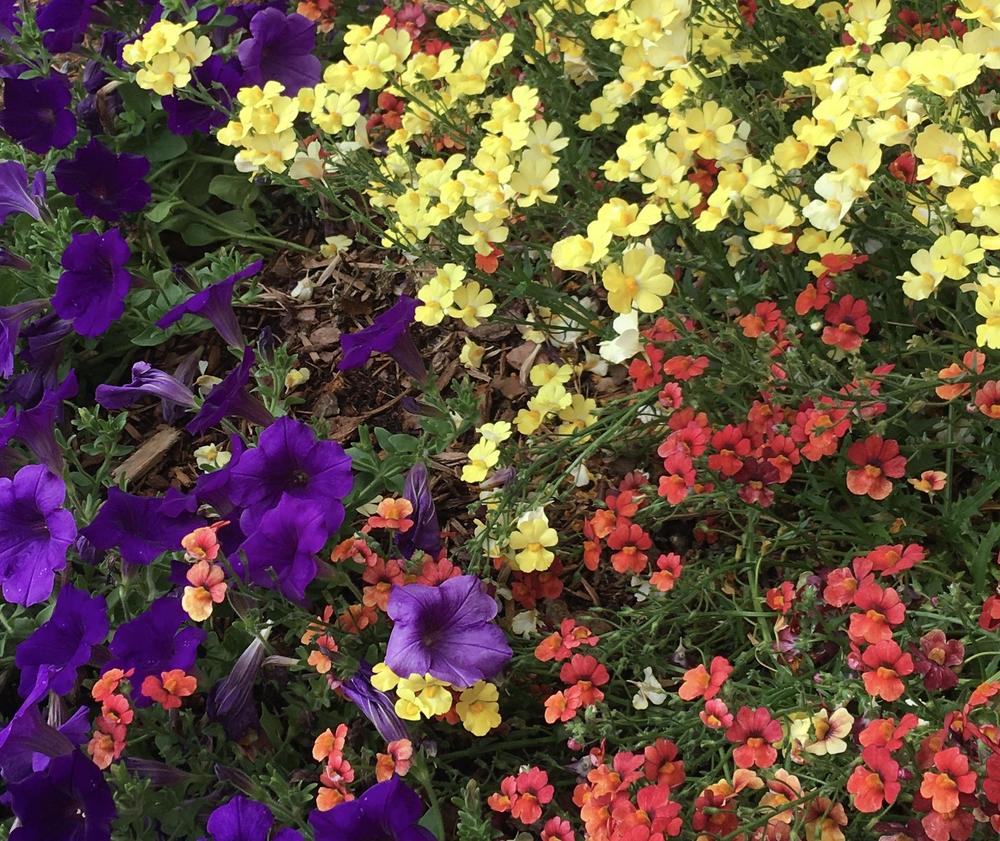
Bright colors: Racy reds, vibrant oranges, and sunny yellows invigorate and energize a space. Bright colors hold up well under brilliant sunshine and attract the eye from a distance, making them excellent for creating focal points in the garden.
Harmonious color schemes: If you're uncertain about color combinations, start with harmonious colors, which are adjacent on the color wheel. Examples include blue and violet, orange and red, or orange and yellow. These combinations are inherently pleasing and easy to execute. As you gain confidence, you can add splashes of another color to create drama.
Monochromatic schemes: Plant entirely in silver and white, or combine purples and lavenders, for a sophisticated, unified look.
Planting for Seasonal Continuity
Annual flowers can be categorized as either cool-lovers or heat-lovers, which allows you to refresh containers with the seasons.
Cool-season plants include pansies, dianthus, alyssum, lobelia, diascia, snapdragons, petunias, and nemesia. These withstand light frosts but begin to fade when temperatures soar in midsummer.
Heat-loving plants include angelonia, begonias, dahlia, gaillardia, geraniums, impatiens, lantana, penta, portulaca, torenia, verbena, vinca, and zinnias. These thrive in the heat of summer but won't tolerate cold weather.
Take advantage of these preferences by planting successive crops. Start with cool-season pansies and dianthus in spring, replace them with heat-loving verbenas and geraniums when temperatures climb, and circle back to cool-season chrysanthemums and ornamental kale in autumn. In warm parts of the country with distinct spring, summer, and fall growing seasons, you can refresh containers three times per year.
Expanding Beyond Traditional Annuals
Container gardening opens the door to creative combinations that transcend the typical annual flower display.
Edible and ornamental hybrids: Include ornamental peppers, colorful Swiss chard like 'Bright Lights' with multicolored stems, culinary herbs such as purple sage or bronze fennel, and edible flowers like nasturtium and purple basil. These plants are both attractive and functional, offering visual interest plus fresh herbs and vegetables. Never spray edibles with pesticides.
Specimen plants: Larger perennials, shrubs, and tender perennials expand your options. Canna and elephant ears make bold statements in large containers with their tropical foliage. Crinum lilies bring fragrant flowers. Mini roses and dwarf shrubs can anchor permanent or semi-permanent plantings.
For information on growing fruit trees and berry plants in containers, see Fruit & Trees in Containers.
Creating Focal Points with Container Placement
The location and grouping of containers transforms how they're perceived and valued in the landscape.
Strategic placement: Position large pots overflowing with color and texture to create focal points that draw the eye. Containers placed near seating areas, patios, doorways, or entry points command attention and set the mood for the entire space.
Grouping: Combine multiple planters of different sizes and color combinations for greater impact. Several containers clustered together, especially at varying heights, create a more dynamic display than a single planter. This approach also lets you experiment with different color schemes without committing to a single large container.
Mobility: One of container gardening's greatest strengths is flexibility. Move containers around the yard throughout the season, combining them in different ways with garden art, sculpture, or at different heights. Change their position to follow sun patterns or to create new seasonal focal points.
Vertical gardening: Hanging baskets and elevated containers draw attention and make efficient use of limited space, especially in urban settings where balconies and patios are primary gardening areas.
Tips for Luxurious, Full Planters
Dense, overflowing containers create more impact than sparsely planted ones. Follow these guidelines to achieve professional results.
Plant more densely than you think reasonable. Use more plants per container than instinct might suggest. A planter that looks crowded at planting time will fill out beautifully as plants mature.
Choose a high-quality potting soil. Avoid using garden soil, which drains poorly and may contain disease organisms. Quality potting soil supports vigorous growth despite the confined root space.
Deadhead regularly. Most annuals benefit from regular deadheading to promote continuous blooms throughout the season. Removing spent flowers signals the plant to produce more.
Water and fertilize consistently. Container plants need more frequent watering and feeding than garden-planted specimens because roots are confined. Small containers may need watering daily, even twice daily, during hot, sunny weather. See Container Gardening Basics for detailed care information.
Monitor for pests. Container-grown plants sometimes receive extra attention that actually protects them from pest problems. However, examine foliage and flowers regularly. Many insect pests can be controlled by simply hosing them off the plants every few days. If problems persist, try insecticidal soap.
Fragrance and Special Touches
Consider fragrance when placing containers near doorways, windows, or seating areas. Fragrant plants like petunias, dianthus, and nasturtium are more enjoyable when positioned where you'll encounter their scent regularly.
Include edible flowers and herbs for a multi-sensory experience. Nasturtium flowers and leaves add a peppery bite to salads, while fresh sprigs of basil or purple sage enliven dinner dishes.
Experimentation and Discovery
Containers are perfect for experimenting with plant combinations and discovering new favorites. Be bold this year and try something new. Names like diascia, angelonia, alternanthera, bacopa, and plectranthus are becoming mainstream after appearing exclusively at specialty nurseries just a few years ago.
Let your mood and whim guide your choices. You can change out plants and rearrange pots to suit your evolving preferences. With a clean slate to work with each season, the possibilities are truly infinite.
For guidance on choosing annual flowers and selecting varieties, see Growing Annual Flowers. Whatever combinations you create, light up your landscape with color, texture, and style.
