

Introduction
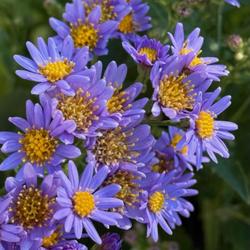
The brilliant flowers of asters brighten the fall garden when little else is blooming. Indeed, "aster," the Latin word for "star," aptly describes the starry flower heads.
About asters
Aster thrives under a wide range of conditions. Plant height ranges from 8 inches to 8 feet, depending on variety. Tall varieties make good back-of-the-border plants and are also attractive planted in naturalized meadows.
Special features of asters
Attracts butterflies.
Choosing a site to grow asters
Dependent on species. Some prefer full sun, others require shade. Some types of asters grow in wetlands, others are suitable for xeriscaping.
Planting Instructions
Plant in spring, spacing plants 1 to 3 feet apart, depending on the variety. Prepare garden bed by using a garden fork or tiller to loosen the soil to a depth of 12 to 15 inches, then mix in a 2- to 4-inch layer of compost. Dig a hole twice the diameter of the pot the plant is in. Carefully remove the plant from its container and place it in the hole so the top of the root ball is level with the soil surface. Carefully fill in around the root ball and firm the soil gently. Water thoroughly.
Ongoing Care
Highly variable, but most asters are carefree.
Growing Asters Successfully
Most species grow best with full sun and well-drained, fertile soil. To minimize mildew, provide good air circulation by spacing plants liberally.
To promote dense, compact growth and eliminate the need to stake, pinch back growth tips two or three inches once or twice in spring and early summer before flowers begin to develop. Alternatively, shear asters back by half in spring.
The fastest-growing asters require yearly division in spring. Others need dividing every three years or so. After lifting and dividing, replant sections from outside the clump and discard the old center. Propagate by division or by stem cuttings in spring or early summer.
Recommended Asters
'Purple Dome' is an outstanding compact New England aster reaching 18 inches tall and 36 inches wide, covered in late summer and autumn with semidouble purple blossoms. The flowers obscure the lower foliage, hiding any leaf damage. Zones 3 to 8.
'Alma Potschke' is a New England aster with brilliant rose-red flowers on stiff stems to three feet, blooming September through October.
White wood aster is native to eastern North American forests and blooms well in dry shade. It brightens dark corners with sprawling clouds of one-inch white daisies in September and October, reaching two to three feet. The shiny, deep purple stems contrast beautifully with the flowers. Zones 3 to 9.
Heath aster is native to the eastern United States and has tiny flowers in white, pink, or lavender that bloom in great profusion, smothering dense, bushy plants to three feet. Flower sprays are particularly good for cutting. The plants tolerate some drought. Plant in a sunny spot. Zones 4 to 9. 'Blue Star' is a soft-textured plant with starry bluish daisies and yellow centers.
Aster frikartii is a bushy, multistemmed aster with fuzzy dark gray-green leaves, reaching 2.5 to three feet high with abundant two- to 2.5-inch lavender-blue, gold-centered daisies. It generally blooms from summer into fall. Most successful in zones 7 and above; in zones 5 and 6, provide a winter cover of evergreen boughs.
Aster laevis has shiny green leaves growing in a clump-like form with dark maroon stems reaching three feet or higher, cloaked with one-inch lavender-blue flowers in fall. This aster is mildew resistant and easy to grow given well-drained soil and full sun. 'Bluebird' is a cultivar selection prized for freedom from mildew and other foliage diseases. Zones 2 to 8.
'Raydon's Favorite' aster (A. oblongifolius angustatus) displays a profusion of blue-purple blossoms in September and October. Plants are three feet high and two feet wide, and the leaves have a pleasant minty fragrance when crushed. Zones 5 to 9.
Frequently Asked Questions about Asters
Why is my aster now called Symphyotrichum?
Because the botany changed, not because you bought the wrong plant. Research showed that the North American wild asters belong to different genera from the Eurasian species originally described as Aster, so New England aster became Symphyotrichum novae-angliae and New York aster became S. novi-belgii, with other species moving to Eurybia. True Aster now covers plants such as A. amellus and A. tataricus, which are less common in American gardens.
Nurseries still label and sell all of them as asters, and the common names have not changed, so nobody at a garden center is going to call them symphyotrichums. The new names matter in seed catalogs, botanical references and scientific writing. For growing purposes these plants all want the same things and respond to the same care.
When and how should I divide my asters?
Aster clumps grow woody and crowded, and the center of an old clump dies out, leaving a ring of live growth around a dead core. A plant that was three feet across at flowering can end up looking like a doughnut, all flowers around the edge and nothing in the middle. That is normal, and it is the main reason division is needed.
Most established asters want dividing every two to three years, though it depends on the cultivar's vigor and the soil. A strong New England aster in rich ground may need it yearly, while a smaller type in lean soil goes four years or more. The practical signal is the center thinning out.
Timing follows your climate. In cold regions, divide in spring: fall divisions face freeze and thaw cycles that heave young plants and break crowns. Where winters are mild, dividing after flowering in fall works well and gives three or four months of cool, moist soil for root growth before summer heat. In hot-summer climates, divide in spring or late fall and avoid summer entirely. Either way, pick a time when the soil is moist enough to dig easily but not waterlogged.
To divide, lift the whole plant with a spade, keeping as much root as you can manage, and lay it out on the ground or in a wheelbarrow. If the soil is compacted, wash it off with a hose so you can see the crown. Cut the dead center away with a sharp spade or pruning saw, leaving the living ring, then cut that ring into sections through the crown, following the natural segments where you can see them. Fist-sized divisions with several good shoots and a decent handful of roots transplant reliably; golf-ball pieces are fragile and need coddling. Do not be timid, since asters are tough and most divisions shrug off rough handling. If the crown is too woody to cut, drive two garden forks back to back through the middle and lever it apart with the handles, then cut the pieces up.
Replant at the depth the plant was growing before, since burying the crown deeper invites rot, and space divisions 18 to 24 inches apart according to the mature width of the cultivar. Close spacing looks fuller in year one and buys you another division in two years instead of three or four, so space for the final size and accept a thin-looking bed the first season. Water thoroughly and keep the soil consistently moist for about four weeks while roots take hold, with a light organic mulch to steady moisture and temperature. Once growing, asters tolerate dry soil, though they bloom better with regular moisture.
My asters grow tall and flop over. What can I do?
This is the most common complaint about the genus, and it is worst on New England aster and its cultivars in rich soil, in afternoon shade, or with generous watering. There are four answers, and the fourth is the most reliable.
Pinching means taking the top inch or two off the new stems in early summer, once growth reaches six to eight inches, cutting just above a node to remove the terminal bud. The plant branches lower down, every branch carries flowers, and the result stands 6 to 12 inches shorter than an unpinched plant of the same cultivar. The deadline matters more than the technique: stop pinching by about the 4th of July in northern zones and mid-July in warmer ones, because asters set their flower buds in late summer and pinching after that removes the fall display. Pinch once in a season; repeated pinching delays bloom so far that flowers may not open before frost.
The Chelsea chop is the harder version: cut the whole plant back by a third to a half with hedge shears in late June or early July, taking all the stems at once. It gives a denser, more mounded plant than pinching does, at the cost of blooming two to three weeks later, sometimes mid-October in the north instead of late September. That delay can be an asset when you want asters peaking after other fall flowers have finished.
Staking suits gardeners who would rather not cut. Set grow-through supports or link stakes over the plant before it reaches full height so the stems grow up through the framework, or tie individual stems to bamboo or wooden stakes. Put supports in while stems are young and pliable, because mature stems are brittle and snap at the tie.
Then look at the cause. Rich soil, especially soil high in nitrogen, drives tall leafy growth at the expense of flowers; shade makes plants stretch; constant watering keeps growth soft. Chronically floppy asters are usually telling you they are too shaded, too well fed, or watered too often. More sun, less nitrogen and watering only when the soil is dry to the touch produce shorter, sturdier plants with no pinching at all.
Compact cultivars avoid the whole problem. Selections such as 'Professor Kippenberg' hold an 18 inch to 2 foot mounded shape without pinching, staking or cutting back, and cost no more than the tall kinds. The guide's recommendations above include other good compact choices.
Every year my asters go white with powdery mildew. Do I need to spray?
No. Powdery mildew is close to universal on asters in late summer, when nights cool and humidity climbs, and you will see the flour-like coating from late August onward, sometimes covering whole plants by October. It looks bad, but on asters it rarely kills the plant or stops it flowering, which is why treatment is optional in a way it is not on some other plants.
If the look bothers you, prevention beats spraying. Space plants 24 inches apart rather than 18. Strip the lowest 12 inches of foliage off the stems in July so air moves at the base, where mildew usually starts. Thin the crowded inner stems in midsummer, taking every third or fourth stem out at the base to open the middle of the clump. These sound drastic, and asters take them in stride and regrow quickly. Air movement suppresses mildew more dependably than any product.
Cultivar choice does the rest. Look for descriptions that say mildew resistant or disease resistant. New York aster types tend to resist better than New England types, and the wild species often stay clean longer than showy hybrids; Aster laevis and its selection 'Bluebird', mentioned above, are prized for exactly this.
If you do decide to spray, sulfur and other fungicides work on asters, but only with repeated applications starting in July as pressure begins, and they never prevent it completely, which is why most gardeners judge the effort not worth the modest gain. Follow the product label exactly. Never apply sulfur when temperatures will exceed 85 degrees Fahrenheit, and never within two weeks of an oil spray.
My aster is yellow, stunted and its flowers are deformed and greenish
That is aster yellows, and it is not a fungus. The cause is a phytoplasma, a wall-less bacterium, carried by leafhoppers that feed on an infected plant and then move to a healthy one. The whole plant yellows, growth is stunted, and flowers come out distorted or green instead of their proper color.
There is no cure, and no fungicide touches it because the pathogen is not fungal. Remove the infected plant and destroy it, by burning or burying it deep. Never compost it: the phytoplasma survives in compost and spreads later. A plant showing yellows will never recover.
To reduce it, clear weedy plants nearby where leafhoppers overwinter and keep asters away from known sources. Where the disease is established locally, outdoor asters will meet it eventually, and some gardeners in those areas grow asters in containers or under cover to limit leafhopper exposure.
What else goes wrong with asters?
Whole stems wilting and collapsing while the soil is moist usually means vascular disease or, more often, poor drainage. Asters resent soil that stays waterlogged. Raise the bed with compost or sand, make sure water drains away after rain, and check for compaction. Heavy clay is the usual culprit.
Plenty of foliage and few flowers points to shade, excess nitrogen or crowding. Asters want at least six hours of direct sun and do better with eight, with afternoon shade acceptable only in very hot climates. Feed sparingly or not at all, and space plants properly, since crowded plants suppress each other's bloom and hold the damp air that disease likes.
Seedlings that wilt and collapse at the soil line are damping off, a fungal problem of wet seedling mix. Use a sterile seed-starting mix, keep it moist rather than soaked, and run a fan on low for air movement, removing affected seedlings as soon as you see them.
Should I deadhead, and when do I cut the plants down?
Deadheading through September and early October, taking flowers off as they fade, suppresses seed set and keeps the plant blooming another week or two; kept up faithfully, it can carry asters into November or later in mild climates.
There is a good argument for leaving some seedheads, though. Asters self-sow reliably, and finches and other seed eaters work the heads through late fall and winter, which matters to birds staging for migration. Leaving heads on plants near a feeder or at the back of a border, and deadheading the ones in full view, is a fair compromise. Unwanted seedlings pull easily when small, or move to where you want them.
The same generosity applies to pollinators: asters flower from August into November, when summer annuals have collapsed and little else is open, and that late pollen and nectar feeds butterflies and bees fueling up for the end of the season.
After a hard frost has killed the foliage, cut the dead stems to the ground, either in late fall or in early spring, and clear the debris away to remove overwintering sites for pests and disease spores.