

The Appeal and Challenge of Hanging Plantings
Hanging baskets and window boxes are the finishing touches that bring your garden to eye level, brightening decks, patios, entries, and window sills. They add a lush, overflowing appearance to any space and bring color and fragrance within easy reach. However, this visual abundance comes with specific care requirements. Because hanging plantings have reduced soil volume compared to in-ground gardens, they retain less water, dry out faster, and require more frequent fertilization and watering.
Success hinges on understanding these constraints and committing to meticulous maintenance, especially during the growing season.
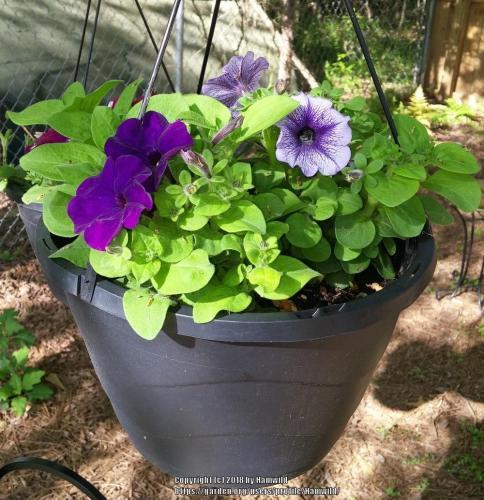
- Petunias (Petunia)
- Uploaded by Hamwild
Choosing the Right Basket or Box
Basket and Box Types
The most important feature of any hanging container is good drainage. Saturated soil leads to root rot and plant failure, so choose containers with drainage holes. If you cannot hang them where excess water can drain freely, look for pots with built-in saucers.
Hanging Baskets:
Hanging baskets are available in several materials, each with different watering and maintenance requirements:
- Plastic pots retain water well and require less frequent watering. They are lightweight and durable.
- Glazed ceramic and fiberglass pots retain moisture longer than unglazed pottery, making them practical for busy gardeners.
- Moss-lined wire baskets are porous and may need daily watering in hot weather. They allow plants to grow through the sides and create a full, spherical appearance. Sphagnum moss, the living top layer of sphagnum bogs, has traditionally lined these baskets. Modern alternatives include coco fiber liners, which are sustainably sourced and drain well.
- Unglazed ceramic (terra cotta) pots are porous and also benefit from daily watering schedules.
Size and Weight Considerations
Size affects both watering frequency and safety. Smaller pots dry out more quickly and need daily watering, while large pots can get too heavy to hang safely. A 12-inch basket is often an ideal balance. If you choose plants with cascading or trailing habits, they may hide most of the basket, so the container's appearance matters less. With mounding or upright plants, the basket remains visible, so its color and finish should complement your space.
Window Box Selection
Window boxes should be at least 8 inches wide and 8 inches deep to provide sufficient root room. For boxes mounted directly under a window, choose one that is a couple of inches narrower than the window width for the most attractive appearance. Securely anchor window boxes under windows with galvanized L-shaped brackets screwed into wood or masonry. On decks and porches, hang boxes from sturdy brackets that drape over deck railings. Use sturdy, decorative chains for hanging baskets, which let you easily raise or lower them to suit the season and your plants' growth.
Planting Your Hanging Garden
General Planting Guidelines
Begin by filling your basket or box about halfway with potting mix (see Container Gardening Basics for soil selection). Moisten the mix if it is dry, and do not use regular garden soil, which compacts in containers.
Set plants at the same depth they were growing in their original pots. Space them 2 to 5 inches apart depending on their mature size. A single vigorous plant, such as a petunia or scaevola, can fill an entire 12-inch pot. Smaller plants, such as lobelias and pansies, can be combined in a single pot. You can purchase plants in cell packs or larger pots; larger plants fill out the container faster.
Fill the spaces between plants with soil mix, tapping gently to settle it. Water the basket thoroughly to eliminate air pockets and help plants establish. Place the basket in a sheltered location for a week or two to let plants adjust before moving it to its permanent, exposed location.
Planting Wire Baskets with Side Plantings
Wire baskets offer the advantage of plants growing on all sides, creating a full, spherical form. To achieve this effect:
- Soak sphagnum moss (or coco fiber liner) in a bucket of water before starting.
- Arrange your potting soil and plant materials around your work area.
- Layer moss, then potting mix, then plants, repeating until you reach the top of the basket, finishing with moss.
A key technique: insert trailing plants through the wire openings with their leaves going from inside out, rather than trying to push roots through the holes. Bundle up the foliage and push the leaves through the wire mesh. This is far less damaging to tender foliage like ferns and prevents excessive disturbance to the root system.
The purpose of this side-planting method is to have plants growing on all sides of the container. You can shape moss plantings into balls, pillars, or wreaths. Succulents work especially well in moss-lined baskets because they do not mind drying out between waterings.
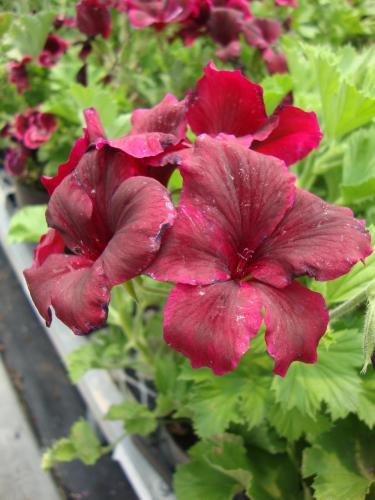
- Pelargoniums (Pelargonium)
- Uploaded by Paul2032
Planting Window Boxes
Window boxes offer an opportunity to showcase multiple plants with contrasting growth habits and foliage sizes. A classic design combines thriller, spiller, and filler plants (see Container Design & Plant Combinations for detailed color scheme and combination strategies):
- Thriller: Set the tallest, most dramatic plants in the center or back of the box. Geraniums and snapdragons work well.
- Spiller: Trailing plants hang over the front and sides. Lobelia, ivy, and trailing petunias cascade gracefully.
- Filler: Fluffy, mounding plants fill the spaces between thriller and spiller. Pansies, impatiens, and alyssum create fullness and color.
Plan spacing as for hanging baskets and follow the same planting procedure. Water thoroughly to settle the soil.
Selecting Plants for Sun and Shade
Choose plants based on the light levels where your basket or box will hang:
Full Sun (6+ hours of direct sun): Petunias, zinnias, verbena, geranium, scaevola, heliotrope, nicotiana, nasturtium, dahlia, and alyssum are reliable bloomers in full sun. Many of these are available in both mounding and cascading forms. Read plant labels carefully to select the growth habit you want.
Part Sun or Afternoon Shade: Begonia, impatiens, fuchsia, torenia, and trailing ivy thrive in partial shade. Some sun-lovers, such as geraniums, actually benefit from a bit of shade during the hottest part of the day. Consider how sunlight varies with the season; your deck may receive full sun in early spring and partial shade by midsummer when trees leaf out.
Shade: Impatiens, begonias, and shade-tolerant ferns and torenias work well for baskets and boxes in shaded locations.
Seasonal Options: In warmer regions, rotate plants by season. Cool-season plants like pansies, alyssum, lobelia, nasturtium, and snapdragon shine in spring and fall. Warm-season annuals like petunias, zinnias, begonias, and verbena peak in summer. By swapping plants strategically, you can maintain color in your baskets nearly year-round.
For specific plant selections and growing guides, see Growing Annual Flowers.
Essential Maintenance for Hanging Plantings
The lush, overflowing appearance that makes hanging baskets appealing requires commitment to regular care. Meticulous maintenance is the key to success.
Watering
Hanging baskets dry out faster than in-ground gardens because their soil volume is small and they are exposed to the elements from all sides. In hot weather, you may need to water daily. Rather than following a schedule, check your plants daily and water when the soil is dry to a depth of about an inch. Water thoroughly until excess drains from the pot, then allow the soil to dry slightly before watering again.
If the soil dries out completely and pulls away from the edges of the pot, it needs more than a normal watering; see the rescue steps under Mid-Season Refresh and Troubleshooting below.
Fertilizing
Hanging baskets require more frequent fertilization than in-ground gardens because nutrients leach from the potting mix with regular watering and the root volume is limited. Apply a water-soluble, balanced fertilizer every two weeks, or follow fertilizer label instructions. Soluble fertilizers deliver nutrients more quickly than granular types and are the better choice for containers.
Deadheading and Trimming
Consistent deadheading (removal of spent flowers) keeps flowering annuals from setting seed and encourages continuous blooms. Deadhead at least once a week. Plants with large flowers or flower heads, such as geraniums and petunias, benefit from more frequent deadheading, done as soon as flowers begin to wilt.
Keep trailing plants compact and attractive by preventing them from becoming leggy. When stems start to look stretched and disproportionately long, cut every other stem back by about one-third. Blue fan flower (Scaevola), 'Summer Wave' trailing torenia, and million bells (Calibrachoa) are annuals that especially benefit from this kind of pruning.
Remove dead or yellow leaves whenever you pass your basket. Impatiens may need daily de-leafing during peak season.
Pest and Disease Management
Because plants in hanging baskets are placed close together, pathogens can spread quickly from plant to plant. Check your baskets at least every other day and remove any leaves showing signs of disease (mold, mildew, or leaf spots). Nip pest infestations in the bud by handpicking pests, removing affected plant parts, or treating with lower-toxicity options like insecticidal soap, neem oil, or pyrethrin. If you apply pesticides to flowering plants, do so in late evening when bees are not actively foraging.
Mid-Season Refresh and Troubleshooting
Replacing Plants
As the season progresses, some plants will pass their prime before fall arrives. Keep your baskets looking fresh by replacing annuals selectively. For example, replace spring-blooming pansies with summer-heat-tolerant verbena in June, then add fall-blooming chrysanthemums in September. This approach keeps your containers colorful and vibrant throughout the growing season.
Rescuing a Dried-Out Basket
If you accidentally let a basket dry out severely, recovery is possible. Soak the entire basket in a large tub or basin of warm water for 30 minutes, allowing the potting mix to fully rehydrate. After soaking, allow excess water to drain. Water thoroughly at least every two hours over the next several hours until the soil has fully expanded and the plants begin to recover.
Tips for Success
- Choose plants with similar light and water requirements for each container to ensure they thrive together.
- If uncertain about plant compatibility at the garden center, test your combinations by arranging potted plants together before purchasing.
- Consider using a water-absorbing polymer added to potting mix to decrease watering frequency.
- Raise or lower hanging baskets as the season progresses. You might start with baskets at eye level and raise them as flowers cascade and mature.
For deeper guidance on soil mixes, drainage, and fertilizer fundamentals, see Container Gardening Basics. And if you want to grow salad greens, vegetables, or herbs in your window boxes and baskets, see Vegetables & Herbs in Containers.
