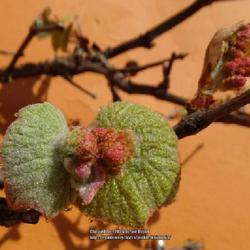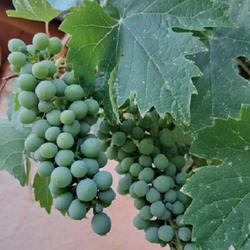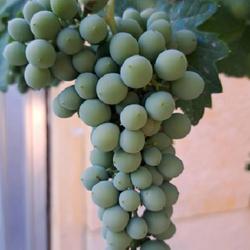


Introduction
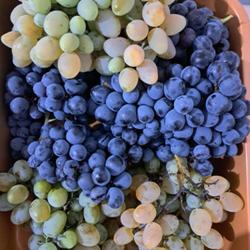
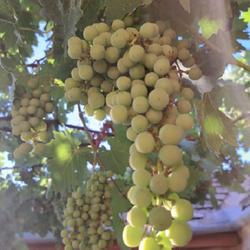
It's a wonder more gardeners don't plant grapevines. Just 2 years after planting, you can be sampling your own grapes; in 3 years, you can be harvesting up to 15 pounds of grapes from each vine -- plenty for eating and making jellies, juice, or wine.
About grapes
Not only do grapes produce an edible crop, the vines are also ornamental. Train your grapevines over an arbor to create an attractive, and productive, garden focal point.
Grapes require a long, frost-free growing season. Choose a variety that is recommended for your climate. Grapes start to bear 2 years after 1-year-old vines are planted. Established vines will yield up to 15 pounds of grapes per year, 30 to 40 pounds from a muscadine.
Choosing a site to grow grapes
Select a site with deep, well-drained, loose soil in full sun. Set up a trellis system before planting.
How to harvest grapes
Grapes will only ripen on the vine. As they ripen, the sugar content rises to about 20 percent. Harvest table grapes when the flavor is right; harvest wine grapes when they reach the appropriate sugar content. Grapes don't ripen once picked, so wait until the color deepens and the flavor is sweet. Cut whole bunches from the vine with a sharp knife. Eat grapes fresh, store them in the refrigerator for up to one week, or freeze the fruits to be used in shakes and smoothies in the winter.
Planting Instructions
Plant grapes in the spring. Space vines 6 to 10 feet apart (16 feet for muscadines). For each vine, dig a planting hole 12 inches deep and 12 inches wide. Fill with 4 inches of topsoil. Trim off broken roots and set the vine into the hole slightly deeper than it grew in the nursery. Cover the roots with 6 inches of soil and tamp down. Fill with the remaining soil, but don't tamp this down.
Ongoing Care
Prune the top back to two or three buds at planting time. Prune annually when the vines are dormant according to the training system you select.
Pruning systems: Grapes produce the most fruit on shoots growing off of one-year-old canes. If you have too many old canes, you'll get fewer grapes. If you prune back your vines completely each year, you get lots of new growth but few grapes. The goal is to remove up to 70 percent of the canes each winter while maintaining canes for fruit production and renewal.
For grapes on a fence or trellis: Once you've established a main trunk, allow two canes to form on either side at the height of your first horizontal wire (about 3 feet). Let the trunk grow further and top it once it reaches the ultimate height (usually 5 to 6 feet). Allow two more canes to develop on either side. In the first winter, prune back the side canes to 3 buds each and attach to wire supports. In the second winter, prune side canes to about 10 buds each and select four renewal spurs pruned to two buds each. In the third winter and thereafter, prune the side canes that fruited back to the trunk and prune renewal spurs to ten buds, then select four more renewal spurs for the following year.
For grapes on a stake: Pound a sturdy stake next to the vine and attach securely. Let the vine grow to the top the first year then top it. Allow 4 to 5 side canes to grow, removing all others. In the first winter, cut back side canes to three buds each. In the second winter, prune healthiest canes to 6 to 10 buds, select two as renewal spurs pruned to three buds each, and remove all other canes. Repeat this pattern each winter.
For grapes on an arbor: Construct a sturdy arbor to hold the weight of the vines. Grow one grape per post, selecting the strongest cane. Allow it to grow to the top of the post the first year, securing it as it grows. Top the cane the first winter and allow side branches along the top of the arbor. In subsequent years, remove canes that fruited, cut back one-year-old canes to 5 to 6 buds, and leave renewal canes pruned to 2 to 3 buds. Space canes 2 to 3 feet apart on the trellis.
Do not fertilize unless the soil is very poor or the plants show poor foliage color or signs of nutrient deficiencies. Cultivate shallowly around the base of plants to control weeds. Drape netting over vines to prevent birds from destroying your harvest.
Frequently Asked Questions about Grapes
How do I choose a grape for my climate?
Start by working out which of the main groups suits where you live, because that decision matters far more than the choice of a particular variety within it.
American grapes (Vitis labrusca and its hybrids) are the most winter hardy group, taking cold winters well and ripening in moderate summers. Their skins slip off the pulp and the flavor is the one most people associate with juice and jelly. Concord is the best known and is hardy to zone 5. They resist powdery mildew and usually do well on their own roots. Most modern seedless table grapes sold for cold climates are labrusca hybrids.
European grapes (Vitis vinifera) include most of the seedless table varieties and nearly all the classic wine varieties. They want warm summers, mild winters and dry air, typically zone 6 and warmer, and they have a hard time where summers are humid because so many fungal diseases follow the humidity. They usually need grafting onto phylloxera-resistant rootstock.
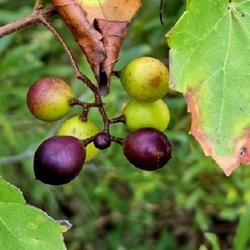
Muscadines (Vitis rotundifolia) are a separate southeastern species built for heat and humidity, roughly zone 7 southward. They carry much larger vines, fruit on current-season growth, need less winter dormancy, and are highly resistant to Pierce's disease and powdery mildew. The fruit is large, thick skinned, and borne in loose clusters. Check self-fertility before you buy: many muscadine cultivars, including the heirloom 'Scuppernong', are female and will not set fruit without a self-fertile pollenizer nearby. 'Carlos' and 'Dixie' are self-fertile, fruit reliably when planted alone, and will pollinate female cultivars planted near them.
French-American hybrids cross European and American species to keep some vinifera fruit quality while picking up hardiness and disease tolerance. They occupy the middle ground and are available mostly from specialty suppliers.
Then match four things about your site rather than one: how cold the winter gets, how long the frost-free season runs, how much summer heat builds up, and how humid and wet those summers are. The last is the one gardeners skip, and it decides whether a European variety will be a pleasure or a constant battle with disease. Climate also shifts over remarkably short distances, so a variety that thrives in a hot inland valley may never ripen properly on the cool foggy coast of the same state, and a recommendation attached to a state name is not specific enough to plant by.
For the actual shortlist, use a source tied to your county rather than a national one. State land-grant universities and Cooperative Extension offices publish grape variety trials for their own regions, and a nursery serving your area has already filtered its catalog for you. Once group and region are settled, narrow by what you want from the fruit, since few varieties are equally good fresh, for juice, and for wine.
Which seedless grapes are reliable in zone 4 or 5?
Cornell University trials have shown consistent performance from five seedless labrusca hybrids, all commercially available and all hardy in these zones. None needs rootstock, and all are self-fertile, so a single vine will set fruit.
- 'Canadice', red seedless, medium clusters of small berries similar in look and flavor to the heirloom 'Delaware'. Hardier than most seedless grapes.
- 'Einset Seedless', red, with a distinctive strawberry-like flavor, medium clusters, dependable ripening, and good storage into November.
- 'Himrod', white, combining Ontario and Thompson Seedless parentage, and the most successful seedless table grape from the Cornell program. Large bunches with a clear, honeyed flavor and a tender, melting texture.
- 'Interlaken Seedless', white, early ripening, with medium compact clusters of small berries and a distinctly American flavor. The early ripening is an advantage in a short season.
- 'Remaily Seedless', white, with large clusters of firm oval berries and a neutral, mildly fruity flavor that keeps well into late fall.
In zones 6 and 7 you have the option of either these hybrids, which will overwinter reliably, or European grapes with rootstock and careful siting. If European types interest you, consult your local extension office about regional cultivars and disease pressure first.
Will white seedless grapes take the heat in the Deep South?
Less happily than the muscadines native to the region. Most white seedless table grapes descend from bunch grapes bred for drier, cooler summers, and in the heat and humidity of the lower South they sunburn more readily and are more prone to the fungal diseases that thrive in warm wet weather. Muscadines evolved with those conditions and shrug them off.
You can still grow them. Site the vines for full morning sun with some relief from the worst of the afternoon, keep soil moisture steady rather than letting the vines swing between wet and dry, and prune and space the canopy so air moves through the fruit zone. Most important, choose varieties bred for the region, since nurseries serving the southeastern states carry seedless white selections developed for warm, humid zones and one of those will outperform a West Coast variety every time.
For the least trouble from a Southern planting, make muscadines the backbone of it and treat a bunch grape as the more demanding companion rather than the mainstay.
Can I get a grapevine that does not fruit?
No true fruitless grape cultivar exists; all grapes fruit unless pruning prevents it. If you want the look of a mature vine without the harvest, plant a European cultivar and remove the fruiting wood each dormant season by cutting all selected canes back to two or three buds. That prevents significant fruiting and lets you keep the vine as an ornamental structure, and it is also the way to enjoy a vinifera variety in a climate too cold to ripen it properly. The labor is an every-year commitment.
If the vertical growth is what you are after rather than the grape itself, Virginia creeper or hops give a similar effect for less work. Note the caution about hops below if you have a dog.
Where should I plant a grapevine?
Grapes want full sun, at least six to eight hours a day, deep, well drained, loose soil, and afternoon warmth. In cooler regions a south or west facing site accelerates ripening. Choose somewhere with good air circulation to reduce fungal disease pressure, and avoid low-lying areas where cold air pools in spring, damaging early buds, and again in fall, extending the frost season. If your property has microclimates, use the warmest one.
Two siting hazards deserve separate attention: herbicide drift and the support structure. Both are below.
How far apart do I space them, and how deep do I plant?
Grapevines are vigorous, and unless you have a very large property one vine usually supplies all the fruit a household eats. Space vines 6 to 10 feet apart, and 16 feet for muscadines; if you are planting two for different cultivars, at least 8 feet apart reduces crowding, disease pressure, and competition. In tight spaces or containers, a single vine is preferable.
Plant in spring after the last frost, or in fall where winters are mild. Dig a hole slightly larger than the root ball. On a grafted vine, set the union, the swollen knob where rootstock meets scion, at soil level or just above; planting deeper can encourage rot or let the scion root and defeat the purpose of the rootstock. On an own-root vine, plant at the depth it grew in the nursery. Backfill with native soil mixed about half and half with compost, water deeply, and keep the soil evenly moist but never waterlogged through the first growing season. Mulch two to three inches deep, keeping the mulch six inches back from the trunk.
Do European grapes need rootstock?
Almost certainly. Phylloxera, a root aphid that devastates Vitis vinifera, is present in most regions of the United States, and certified phylloxera-resistant rootstocks are standard for any vinifera planting. Do not plant own-root European grapes unless your extension office confirms phylloxera is not present in your area.
Pierce's disease is a separate problem, a bacterial disease spread by sharpshooter insects, established in California, the Deep South, and parts of the mid-Atlantic and Midwest and expanding as temperatures rise. Where it is established, many European cultivars will not survive. Labrusca and its hybrids are generally tolerant, and muscadines are highly resistant. Check your local extension office on Pierce's disease status before selecting a cultivar, especially for a vinifera or French-American hybrid.
Will lawn herbicide from next door hurt my vines?
It can, and grapes are unusually vulnerable. They are among the most sensitive plants to phenoxy and benzoic-acid herbicides, showing injury from exposures far below the levels that damage other plants. Drift from 2,4-D and dicamba, whether from a neighbor's lawn treatment or your own application, causes severe foliar injury, abnormal growth, and crop loss even at distances once thought safe. Drift depends on formulation, application method, wind, temperature and atmospheric inversions, and volatile formulations travel well beyond visible spray.
Practically: site vines away from routinely treated turf, talk directly with neighbors and any lawn service about their applications, and avoid volatile formulations anywhere near the vines. If you apply an herbicide yourself, follow the label's drift management and distance requirements for that specific active ingredient. If drift injury does occur, wash fruit and foliage with water and let the vine recover, and consult your extension office about documenting the drift.
How strong does the trellis or arbor need to be?
Stronger than most people build. A fully productive vine can weigh 50 to 100 pounds or more laden with fruit and foliage, and that load sits on the structure for decades.
Posts and trellises. A wooden privacy fence is often not strong enough to carry a vine. In a wire-trellis system the end posts carry the tension of the wires pulling against the weight of the vines, so they need to be substantial, at least 4 inches in diameter, set to a depth proportional to their exposed height, typically 2 to 3 feet, and braced or anchored against leaning. Line posts between them carry less tension and can be lighter. Use pressure-treated wood, a naturally durable species, or steel. Backfill with well compacted, well drained soil or gravel: concrete around a wooden post traps water at the base, accelerates rot, and makes replacement difficult. A post set too shallow shifts and leans as the vine bears weight, eventually becoming both inaccessible for pruning and dangerous to work on.
Overhead arbors are a different structural problem, needing to support the full canopy weight across the framework plus wind load. That means substantial beams, at least 6 inches in one dimension, on posts at least 4 inches in diameter set 2 to 3 feet deep in well-drained backfill, with cross-bracing or moment-resistant connections. A flimsy arbor that seems adequate for a young vine will fail catastrophically under a mature, fruit-laden vine in a windstorm or under snow and ice.
And understand what an overhead arbor commits you to. You will prune that vine annually from a ladder, in late winter or early spring, for as long as you own it. That is a decades-long commitment to work at height, and many people who plant overhead arbors badly underestimate it. If you are not comfortable with the height, the balance, or the annual obligation, hire a professional pruner or choose a support you can reach from the ground.
How do I prune a grapevine?
The key decision is whether your cultivar wants cane pruning or spur pruning. These are fundamentally different, and using the wrong one on the wrong grape can cost an entire season of fruit. Grapes produce most fruit on shoots growing off one-year-old canes, and the general goal is to remove up to 70 percent of the canes each winter while keeping canes for both fruiting and renewal.
Cane pruning leaves longer sections of one-year-old wood, typically 10 to 15 flower buds along each selected cane, while the canes between them are cut back to two or three buds to form spurs. The long canes carry this year's fruit and the short spurs generate the canes you will select from next year.
Spur pruning cuts all selected canes back to two or three buds each. It is simpler and makes a more compact vine, but it suits only certain varieties, and because the fruiting wood comes from permanent spurs that stay on the vine year after year, those spurs gradually become gnarled and less productive. Cane pruning, which replaces wood every year, is the more flexible system long term.
The critical difference is that some grapes, most notably Thompson Seedless, carry virtually no fruit in the first three to six buds along a cane. That is genetics, not disease. Spur prune a Thompson Seedless back to two or three buds and you remove all the potentially fruitful buds and get little or no harvest, so it must be cane pruned to keep the buds in the middle and upper portions of the cane. 'Red Flame', 'Tokay' and 'Emperor' spur prune successfully, though they can be cane pruned too if you prefer that system or want more control over vigorous growth.
Do it while the vine is fully dormant, in late winter or very early spring before buds swell. If you prune after buds start to swell, the vine releases a watery fluid from the cut, called bleeding. It looks alarming and it does no harm; the vine seals the wound on its own. Bleeding is simply messy, which is why true dormancy is the better window.
For a cane-pruned vine, find the main arms extending from the trunk. Remove everything unnecessary, old and unproductive, or clearly dead or diseased, since weakened wood produces poor fruit and diseased wood spreads problems. Then select healthy one-year-old canes, identifiable by their smoother bark, spaced about six inches apart along each arm. Prune every other one to keep 10 to 15 flower nodes along its length and cut the ones between back to two or three nodes. Do not hesitate to remove weak or spindly canes entirely: a vine with fewer, stronger canes outperforms one with many weak ones. A vigorous vine may want only eight to ten buds per cane while a weaker one can carry up to fifteen.
For a spur-pruned vine, select healthy one-year-old canes along the arms about six inches apart and cut each back to two or three buds, removing all longer canes and old wood.
The trellis, stake and arbor training systems described in Ongoing Care above set up the permanent framework these annual cuts are made on.
How do I train a young vine, and can it fruit right away?
Training establishes the vine's permanent structure over its first three years; pruning is the annual maintenance afterward. Skipping the training phase, or letting a vine fruit too early, is one of the commonest mistakes new growers make and it sets back productivity for years.
Set a young vine next to a post or vertical support and let it grow through its first dormant period without pruning, so the root system establishes and the vine banks energy. The next dormant season, select the most vigorous cane, remove all the others at their base, and cut the chosen one back to two or three buds. In the second growing season, once new shoots reach about 12 inches, pick the strongest and remove the rest; that shoot becomes the permanent trunk. Resist the temptation to keep several trunks, since one strong trunk beats two or three weak ones. Once the trunk is several feet tall, pinch the tip about six inches above the height where you want the lateral arms, which pushes the vine to form the laterals that will carry your fruiting canes. When sturdy laterals have formed, remove competing buds and smaller canes. By the third year the framework is in place.
Do not allow young vines to fruit during their formative years. This is a hard rule. Early fruiting diverts energy from root and wood development and can severely reduce productivity for years. Remove all flower clusters in the first two to three growing seasons. The small loss is repaid many times over once the vine matures.
Should I fertilize, and should I thin the clusters?
Do not fertilize unless the soil is very poor or the plants show poor foliage color or nutrient deficiency symptoms, and base any application on a soil test rather than a schedule. Feed in spring once active growth has begun. Avoid excess nitrogen, which gives lush foliage at the expense of fruit. Without a soil test, a balanced formula such as 8-8-8 at roughly four tablespoons spread over 100 square feet around each vine is a reasonable starting point, or you can mulch with about two inches of finished compost in the same area, which adds organic matter and releases nutrients slowly. Cultivate shallowly around the base to control weeds.
Thinning clusters is a simple step that is often skipped. Removing roughly a third of the developing clusters early, before they get large, redirects energy into fewer, larger clusters and better fruit. How many to remove depends on the variety, the vine's vigor, and the quality you want.
Why are my grapes so small?
Small berries have many possible causes: a young or immature vine, a short or cool growing season, heat, uneven irrigation, poor drainage, an excessive crop load, a dense canopy, the pruning or training choices you have made, or disease. Do not assume pollination or fertilizer is the problem. Confirm the vine's age, its suitability for your area, your watering and drainage, the training system, the crop load, and any signs on leaves, stems and clusters.
Once the vine is established, crop thinning may improve berry size, but use a plan suited to your cultivar and training system rather than a universal cluster count or fertilizer rate. Base any fertilizer on a soil test and follow current label directions. Any pesticide or other crop product must be labeled for the exact grape crop, target, site and application, and its preharvest interval must be observed.
My grapes will not ripen, or the clusters shrivel and drop
Grapes only ripen on the vine and do not continue ripening once picked, so wait until the color deepens and the flavor is sweet. As they ripen the sugar content rises to about 20 percent. Harvest table grapes when the flavor is right and wine grapes when they reach the target sugar, cutting whole bunches with a sharp knife.
Premature shriveling is not necessarily a watering or pollination problem. Compare affected clusters with healthy ones and inspect the fruit, stems, leaves, canopy airflow, irrigation and drainage, insects, birds, and any signs of rot, since disease, crop stress, and physical or environmental injury can look alike. Remove affected material only in line with reliable local disease guidance, and do not reach for a fungicide until the disease is identified and a current grape label supports its use, preharvest interval included.
A vine that has grown for years without fruiting is worth checking against the training advice above, since a vine never given a proper framework, or one repeatedly pruned back hard, makes plenty of growth and little fruit.
Never eat moldy, decayed, leaking or otherwise spoiled fruit, and wash harvested grapes under running water before eating.
I found a small white grub inside my grapes. What is it?
A pale larva inside an otherwise normal looking berry, often with a dark sunken spot on the skin where it entered, is most often grape berry moth. The adult is an inconspicuous moth that lays on developing clusters, and the larva feeds inside the fruit and moves from berry to berry, webbing them loosely together as it goes. Damaged berries tend to crack, and the openings invite rots and fruit flies, so a cluster can go downhill quickly once feeding starts.
Sanitation does most of the work in a backyard planting. Pick off and destroy infested clusters as you find them rather than dropping them under the vine, and clear mummified berries, fallen fruit and prunings at the end of the season, since that debris is where the pest passes the winter. Keeping the canopy open with proper pruning helps too, because it dries the fruit zone.
Get a firm identification before treating. Several very different insects feed inside grapes, and your local Cooperative Extension office can tell you which are active in your area, when, and what if anything is registered for grapes where you live. Timing matters far more than product choice with fruit-feeding insects, and on a crop you intend to eat the product label is the authority on what may be used and how long before harvest.
What about whiteflies, or clear droplets on the stems?
For whiteflies, first inspect the undersides of the leaves and confirm that is what you have, since sticky honeydew, yellowing, curling and weak growth all have other causes. Remove heavily affected leaves where practical and use a gentle water spray if the vine and soil can tolerate it. Protect beneficial insects, and do not treat without an identified target. For any soap, oil or insecticide, the current label must specifically allow use on grapes for whiteflies, for your site, application method and timing, and you must follow its directions on protective equipment, reentry interval, pollinator protection, drift and runoff, preharvest interval, storage and disposal. Do not substitute homemade detergent mixtures, and do not treat washing the fruit as a substitute for label compliance.
Clear droplets on the stems cannot be identified from a description alone. Photograph them clearly and inspect for pruning wounds, other injury, sap-feeding insects, honeydew, or distinct egg masses. Avoid scraping or treating until the cause is clearer, and do not apply anything without a confirmed target and a current label covering grapes and the site.
My newly planted vine wilted, or looks dead. What now?
Wilt is a symptom, not proof of transplant shock. Check the root ball and surrounding soil for dryness or saturation, confirm the vine is planted at its original depth, and look for damaged roots or trunk, poor drainage, heat, wind, and signs of disease. Keep the root zone evenly moist and never waterlogged. Temporary shade can help during exceptional heat, but do not fertilize to force recovery, and do not count on survival.
On a defoliated vine, a small scratch showing green tissue and a pliable stem suggest living tissue, but neither test guarantees recovery. Inspect roots, crown and trunk, soil moisture, irrigation history, winter injury, pests, and foliage disease, and seek a local plant diagnosis if the decline persists. Remove only wood you have confirmed dead, using clean tools and stable footing, and do not start a routine spray program.
I cut through a cane by accident. Have I killed the vine?
Almost certainly not. Grapevines are very hard to kill through pruning mishaps. If the cut went through the main trunk or a primary arm you cannot rejoin the pieces this season, but the vine should recover and build new structure for next year.
If healthy side branches or canes remain below the injury, leave them and let the vine grow from them this season. In early spring of the following year, select the most vigorous new cane and prune it as you would a newly planted vine, training it up as a new trunk. Undamaged canes elsewhere on the vine will simply carry on, fruiting normally if they carry flower buds.
A second option is propagation from cuttings. In early spring, cut five-inch sections from intact side branches, remove about half the bark from the bottom end, dip that end in rooting hormone, and set the cutting in water or in a sand and soil mix under a cut plastic bottle to hold moisture. Roots should form in about three months, after which you can pot it up. It is a slower path but useful for a valuable cultivar.
Can I grow grapes in a container?
Container success depends on the cultivar, your climate, sunlight, root volume, drainage, watering, pruning, secure support, and winter protection for the roots. No cultivar can be promised as reliably fruitful in a container without checking your local conditions against its requirements. Expect substantial seasonal pruning and support, and do not count on a crop.
Use a stable, well-drained container and secure the trellis so wind cannot overturn it. A large planted container can be dangerously heavy: verify balcony structural capacity and any building or landlord rules, and use a safe lifting method or a second person rather than lifting alone. Protect exposed container roots from winter extremes, since roots in a pot swing with the air temperature in a way roots in the ground never do.
Can I grow muscadines from seed?
You can, but a muscadine seedling is an experiment rather than a dependable duplicate of its parent, and it may differ in fruit quality, sex, vigor, disease response, and harvest time. Use a named plant or a properly propagated cutting when preserving a named cultivar matters, and check propagation rights where they apply.
Confirm the species and use current, species-specific guidance for cleaning, dormancy treatment, scarification, temperature and sanitation. Do not expect a fixed germination time, and do not cut seed coats with a knife. Handle seed with clean tools and a clean starting mix, label your containers, and keep seed, tools and any products away from children and pets.
Can I plant strawberries or hops with my grapes?
Strawberries, yes. They grow happily at the base of a grapevine without competing significantly for root space as long as you water both adequately, and the vine gives them some shade from afternoon heat in hot climates. Keep the runners out of where you walk and prune, and be aware that fruit on the ground attracts bees and other insects into the area.
Hops, no, at least not in the same small bed. A hops bine is a herbaceous perennial rather than a woody vine: it dies to the ground each winter and regrows twenty feet or more in a single season, arriving at full size every year rather than building up gradually as a grape does. In a bed a few feet wide, the root competition matters more than what happens overhead, and the established grape is the plant that loses ground. Hops also spread by rhizomes and come up away from where they were planted, so they become a permanent management job.
The management conflicts compound the problem. Grapes are pruned dormant and need clear access to their cordons and spurs; hops are trained on strings and cut to the ground every year, so doing both jobs in the same few feet either wrecks the grape pruning or leaves the hops unpruned. Both plants are attacked by Japanese beetles and both suffer downy and powdery mildews, and crowding them reduces airflow exactly where the grape can least afford it. And hop cones are picked in late summer, precisely when the grapes are ripening and least tolerant of someone climbing through them.
Give hops their own vertical run instead: a string or wire anchored from ground level to a high point on a wall, a pole, or a separate line at the end of a building. A single crown is plenty for a home brewer. Train the bine up two or three strings in early summer and cut off all the other shoots at the base each spring.
Hops are seriously toxic to dogs. Ingestion, most often of spent brewing hops but also of plant material, can trigger malignant hyperthermia, a rapid and dangerous rise in body temperature that is a genuine emergency and has killed dogs. It affects any breed and is not dose-forgiving. Keep dogs away from the plant and from spent hops, never compost spent hops where a dog can reach them, and call a veterinarian immediately if a dog eats any. Handling hop bines also scratches skin, since the stems are covered in hooked hairs, so wear gloves and sleeves for training and harvest.
Wild grape has taken over since I tilled. How do I get rid of it?
Tilling made it worse, and the reason is straightforward: wild grape resprouts from pieces of root and stem, so running a tiller through an area thick with vines chops them into pieces and each piece becomes a new plant. You propagated them. Stop tilling that ground while regrowth is active, and instead dig the root pieces out by hand or pull shoots with a small fork so the attached root tissue comes up with them.
Repeated cutting does exhaust regrowth eventually, but only if it is relentless. Every shoot has to come off as soon as it has made a few leaves, so the roots never replenish their reserves. Done consistently over one to two seasons it works; done occasionally it is just pruning, and the vine gets stronger with each recovery.
Black plastic or landscape fabric with planting holes is effective, blocking light and preventing most regrowth while letting you crop through the holes. Flame weeding is legitimate too, since intense heat kills green tissue and relentless application over a season exhausts the roots. But on a dry hillside with brush, timber or dead vine debris around, a flame tool is a real fire risk: do not use one in dry or windy conditions, keep water on hand, never flame near plastic or other dry mulch, and check local burn regulations first.
On herbicide, a product may be used only where its current label explicitly permits it, and some non-selective products do allow application in and around a food garden before planting. Two different waiting periods appear on those labels and answer different questions. The preplant or plant-back interval is how long you must wait after treating the ground before sowing or setting out a crop. The preharvest interval is separate and covers how close to harvest a product may be applied to a crop already growing. Both are printed on the label, and the printed figures are the authority. If a label does not name a food garden as an approved site, it does not belong in one.
The cut-and-treat technique is the right method in principle for woody vines: cut a stem down, immediately brush a small amount of herbicide onto the fresh cut so the product enters through the wound rather than drifting onto crops or soil. Even so, it works only with a product whose label permits both the technique and the site. For a garden you plan to crop this season, the practical answer is to defer herbicide entirely, work mechanically through the growing season, and treat regrowth after harvest or before planting next season, when the intervals can actually be met. Rush them and you compromise both soil safety and your harvest.
General guidance on weed and invasive plant control, site identification, and working a site safely is at /learn/faq/view/29/.
Will black walnut trees near my vines cause problems?
Juglone, the compound black walnut releases, comes mainly from living roots, and those roots spread well beyond the branch canopy, so how far the tree stands from your planting matters more than anything else. After a walnut is removed the decaying roots go on affecting sensitive plants for years rather than clearing in a single season, so the notion that you wait a year and the problem is solved is not accurate.
Grape itself is not among the plants that suffer from juglone. Tomato is, which is worth knowing if tomatoes share the ground. Where walnut proximity is a real concern, raised beds with fresh imported soil are a reliable answer for sensitive crops. More detail on black walnut and how far juglone reaches is at /learn/faq/view/232/.
Grapes, raisins, and dogs
Grapes and raisins are toxic to dogs and can cause acute kidney injury. The condition can develop within hours or over several days. There is no established safe quantity and individual sensitivity varies widely: some dogs show no reaction to a single grape while others develop kidney disease from a small amount. The toxic compound and the mechanism are still not fully understood, which is why veterinarians and the ASPCA do not consider any level safe.
If you are growing a vine on a patio, arbor, or fence where a dog can reach fallen fruit or low-hanging clusters, treat that as a real hazard. Do not assume an in-ground planting is safer, because fallen fruit on the ground remains toxic. If a dog ingests grapes or raisins, contact a veterinarian or animal poison control immediately even if the dog seems fine, because kidney damage can progress quickly and early treatment matters.
Know the poisonous look-alike before eating any wild grape
If anyone in your household is tempted to eat wild grapes growing on your property, learn to distinguish them from Canada moonseed (Menispermum canadense), which is poisonous, climbs the same way, and grows in the same places. Its berries are dark and similar in size to wild grapes. Grape has forked tendrils and several small pear-shaped seeds in each fruit; moonseed has no tendrils and a single flattened crescent-shaped seed. Never eat any wild fruit without a confident identification.
Working safely, and when to call a professional
Use a sturdy ladder and position it so you are not reaching at arm's length. Keep three points of contact, put both feet squarely on a step rather than on the side rails, and face the ladder climbing and descending. Wear safety glasses when cutting overhead or where branches might snap back. Use clean, sharp shears and saws, since dull tools need more force and leave ragged wounds that heal slowly. Never work alone on a tall ladder or in an awkward position, and if you are uncomfortable with the height, get help.
If a vine declines significantly after pruning, shows canker damage, has been severely wounded, or simply reaches a size where working at height worries you, a professional arborist or vineyard pruner is the safer option. And where a regional disease such as Pierce's disease is a possibility, consult your local cooperative extension office before pruning, since pruning practice affects disease management.
Finally, drape netting over the vines as harvest approaches to keep birds from taking the crop.
Will seedless grapes produce in cool, foggy coastal country?
Himrod and Interlaken, both excellent seedless whites bred for cool short seasons, can fruit in coastal fog country if you plan around two problems. The first is warmth: the vines may struggle to ripen fully, which is where Himrod's very early season earns its place. The second is disease, since persistent fog and fog-drip feed mildew and rot on developing fruit. Give them the sunniest, warmest spot on the property, thin the canopy for air movement, remove diseased leaves and fruit promptly, and accept that some years the coast simply wins.
Are galvanized posts in concrete, or treated wooden stakes, safe next to grapevines?
The zinc from galvanized coating leaches too slowly to matter at the scale of a few posts. The concrete is the real consideration: fresh concrete is strongly alkaline and raises soil pH locally as it weathers, and grapes in high-pH soil show iron chlorosis, yellow leaves with green veins. Keep the planting hole and root zone clear of the immediate concrete collar, backfill with fresh soil away from the concrete edge, and if chlorosis appears later, soil-test before deciding between lowering pH and supplying iron. As for treated wood, modern residential lumber uses copper-based preservatives, not the old arsenic-based CCA, and is considered safe in the landscape; use cedar, redwood, or locust if you would rather skip the question entirely.
Is sea grape a real grape, and can I grow a hedge from cuttings?
Sea grape, Coccoloba uvifera, is a tropical coastal evergreen and not a Vitis at all, though its fruit is edible and makes good jelly. Cuttings root readily: dip the cut end in rooting powder and set it in compost-enriched soil, ideally starting in a potting mix for a season before transplanting, though direct ground planting works. One thing first: in Florida and other coastal jurisdictions sea grape is a protected native, and trimming or taking cuttings from established plants can require a permit, so check with the local coastal or environmental office before harvesting material.