


How to tell a fungus gnat from an ant before you treat anything, the two barriers that actually break the gnat life cycle, why a solarium full of whiteflies keeps reinfesting itself, the cotton swab method for mealybugs on a plant too sensitive to spray, what sticky leaves are telling you about the insect you have not found yet, and the pest control worth refusing indoors.
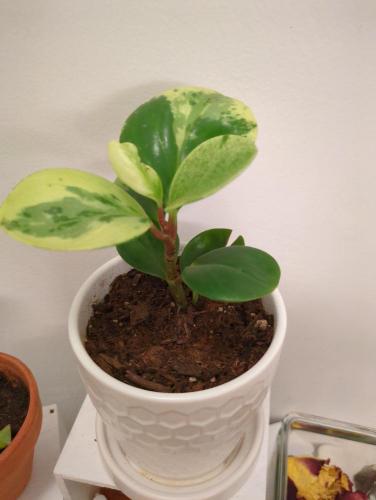
There are tiny bugs running in and out of the soil of my houseplant. They are pale, flattish, and they do not fly. What are they?
You are almost certainly looking at fungus gnats, at one stage or another of their life cycle. The adult is a small dark fly that looks much like a fruit fly and drifts up when you disturb the pot; the larvae live in the top layer of the potting mix and are the stage most people see first when they notice movement at soil level.
They breed in moist soil and in decaying organic matter, which is exactly what a bag of potting mix provides, so a pot kept constantly damp is an ideal nursery. That is the whole of the problem, and it points straight at the fix.
Let the top layer of the mix dry out between waterings. Gnat larvae need continuous moisture, and a surface that dries breaks the cycle without anything else. This is awkward on a young plant or a rooted cutting you are deliberately keeping evenly moist, but if you are fighting gnats on a mature plant, take the infestation as a fair sign that the pot is being watered more often than it needs.
Then put a barrier over the surface, which is the step most people skip. With the top of the mix covered, the adults cannot lay in it and the next generation never happens. Either of these works:
- A thin, free draining layer of coarse sand or fine gravel, just deep enough to cover the mix completely. Water still passes through freely and the surface dries fast.
- Decorative pebbles or aquarium stone, which do the same job and look deliberate.
Be careful not to add so much grit that you completely impede the passage of moisture out of the soil. A thin layer is sufficient. Too much can lead to perpetual soil moisture and fungal complications. In most cases the only way water can leave the soil (other than passing through the plant) is to evaporate from the top of the soil.
For the adults already flying, stand yellow sticky traps at foliage level. Gnats and whiteflies are both strongly drawn to yellow, and a commercial trap card or a piece of bright yellow card smeared with petroleum jelly catches them equally well. Replace the traps every few weeks. Traps and barriers between them will bring the population down over several weeks, and both are approaches you can use in a room with children and pets in it.
I saw winged insects coming out of my houseplants, so I dusted an ant powder over the soil and even worked some through the potting mix at repotting time. They are still coming out.
Stop adding the powder, and check the identification first. Winged fungus gnats emerging from houseplant soil are far more common than winged ants coming out of a pot, and the two get confused constantly. Fungus gnats breed in the mix itself, which explains insects appearing from several pots at once. Ants nest elsewhere and travel to a plant, usually because something on it is producing honeydew for them, so ants in a houseplant are a sign to inspect the foliage for sap feeding insects rather than to treat the soil.
Working an outdoor ant product into potting soil indoors is not something to continue. An insecticide may only be used on the sites named on its label, and an ant powder for lawns, foundations, or cracks in paving is not the same registration as a product cleared for use on houseplants inside a home. Beyond the legal point, there are practical ones: the powder is now in an open container of soil at hand height where children, cats, and dogs live, you cannot ventilate a treated pot the way you can a yard, and the treatment does nothing about the breeding site if the insects are gnats. Nothing you spray will keep gnats from coming in through an open door either. Eliminating their food and breeding sites indoors is the control that works.
What to do instead. Repot into fresh mix if the old mix is soggy or spent, discard the treated soil according to the disposal instructions on that product's label rather than tipping it into the garden or the trash, let the surface dry between waterings, cap the mix with a thin layer of sand or gravel, and set yellow sticky traps. If you conclude they really are winged ants, look for the nest, which will be a structural problem in the house rather than a plant problem.
My heated solarium fills with whiteflies every winter. Spraying kills them instantly but they are back in days.
That pattern is the life cycle, not a failed product. A spray contact kills the adults in flight and on the leaf, but it does not touch the eggs and the immature stages fixed to the undersides of the leaves. Those hatch out over the following days, which is why the room appears to be reinfested from nowhere. In a warm, enclosed, humid room, whiteflies breed very rapidly and continuously, with none of the winter cold that eventually knocks them back outdoors. There is no single treatment that ends them in one pass, and any approach you take has to be repeated on a schedule for several weeks to work through the generations.
Start with plain water, which is more effective in that room than it sounds.
- Rinse the plants thoroughly, and get the undersides of the leaves, which is where whiteflies and their eggs are. A firm spray dislodges adults and washes off eggs and honeydew alike. Outdoors this is a hose; indoors it can be a sink, a shower, a garden sprayer, or a spray bottle used with some conviction, and larger fixed plantings can be done with a hand sprayer set to a strong stream.
- Repeat it. Daily while the population is high is not too often, and this is the point at which most people give up too early.
- Spider mites, which you also have on the rose, respond to the same treatment even better. Mites thrive on dry, dusty foliage, so weekly rinsing both removes them and raises humidity at the leaf surface in the way they dislike. Rinsing plus cooler temperatures will slow a mite population noticeably.
- Water rinsing has an obvious downside in an enclosed room, so time it for the morning, ventilate afterward, and let the foliage dry before evening. Wet leaves overnight in a humid, still, heated room invite fungal problems, and the same still air is part of why the pests are doing so well. A fan improves both.
Yellow sticky traps hung among the plants will take a steady stream of adults out of the room and tell you at a glance whether the population is rising or falling.
Then add insecticidal soap if rinsing alone is not enough. These products are made from fatty acids and work on soft bodied insects such as whiteflies, aphids, and mites, and they kill only what the spray actually wets, which is why coverage of the leaf undersides matters more than volume. Use a product whose current label names houseplants or indoor plants and the pest you have, mix it at the label rate, and follow the label for how often it may be applied and any ventilation or reentry direction it gives. Store it out of reach of children and pets.
Do not mix your own spray from dish detergent or any other household cleaner. Detergents are not formulated or tested for plants, the strength that kills insects and the strength that strips the protective coating off a leaf are uncomfortably close together, and the results vary with the product, the water, and the plant. A registered insecticidal soap costs little and comes with directions that have been tested.
Test any spray before you treat everything. Do a few leaves on one plant, wait several days, and look for burn or spotting before you go further, because hibiscus, rose, and many succulents each react differently. Spray in the morning rather than in strong sun or heat.
Two things do more than any spray in that room. Isolate and inspect every new plant for a few weeks before it joins the collection, and check plants that summer outdoors before they come in for the winter. A solarium that gets a clean start in autumn is a very different place by February.
White fuzz has appeared along the stems of my jade plant, its leaves keep falling, and the stems are shriveling, but I can find no insects
Look again with a hand lens before deciding what this is, because two very different problems look similar at arm's length.
If it is mealybugs, you will find soft white insects that hold still on the stems and in the leaf joints under a cottony coating, and they move if you disturb them. Treat them with rubbing alcohol on a cotton swab, touching each insect directly. The alcohol dissolves the waxy coat and kills the insect underneath, and the swab lets you treat a plant that reacts badly to sprays. Go over the plant again every few days for several weeks, because eggs and hidden individuals in the leaf joints and at the soil line keep the infestation going. Keep the alcohol on the insects rather than dousing the whole plant, treat out of direct sun, and try a small area first: alcohol can mark the leaves of succulents, and it is flammable, which matters in a room heated by a wood stove. Store it away from children.
If there are no insects at all and the material is dry and powdery, you are more likely looking at a fungal problem or at plain cultural stress, and the aloe with dark spots and drying tips points the same way. Wipe the fuzz away with a clean cloth, remove fallen leaves promptly, and then correct the growing conditions, which for a jade in a dry winter house usually means the following.
- More light. Jade and aloe both survive in low light and neither is good in it. Weak, spindly growth and leaf drop are the standard response to a dim winter windowsill. A bright window is what they want.
- Less water. Grow them in a free draining mix and keep them on the dry side, letting the mix dry well down between waterings. Overwatering causes root rot, and leaf drop is one of the first things you see from it.
- No fertilizer until spring. Growth slows naturally in the short days, so feeding now produces soft, sappy growth that is more attractive to pests and more prone to fungal infection, not a stronger plant.
- Air movement, and moderate temperatures. Good circulation is the single most useful change if any part of this is fungal. Keep them out of a hot draft from a vent or a stove; both plants prefer cool to average room temperatures, and a drop of ten degrees or so at night suits them well.
- Keep water off the foliage when you do water.
On sprays and jade in particular: these plants are sensitive to a number of products, so use only something whose current label names jade or succulents, and test it on a few leaves several days ahead of treating the whole plant.
Some of my plants have a white foamy substance on the stems.
That is the classic sign of spittlebugs. The insect is small, sucks sap from stems and leaves, and whips up a mass of bubbles around itself, which hides it from predators and makes it look far bigger than it is. Push the foam aside with a finger and the insect is sitting inside it.
They are among the least damaging of the sap feeders, and on all but a small plant they are a cosmetic problem rather than a threat.
Wash them off with a strong stream of water, which is the whole treatment. You can also simply squash them by hand as you find them. Repeat when the foam comes back, and check plants moved in from outside, since this is a pest that usually arrives from the garden or a greenhouse rather than appearing indoors on its own.
My leaves have a fine sticky mist on them, and the floor under the plant is sticky too. What is it?
Sticky leaves mean honeydew, which is a sap feeding insect somewhere above the sticky surface. It is excreted by insects that drink more sap than they can process, so it falls onto lower leaves and onto whatever is beneath the plant. It is not a disease, and it is not something the plant is doing on its own.
Find the insect. It will be one of three, and each is handled differently.
- Aphids. Soft bodied, clustered on the newest growth and shoot tips, easy to see. Wash them off with a spray of water, and use insecticidal soap if they persist.
- Scale. Small firm discs, brown or tan, gripping the stems and the undersides of leaves along the midrib. They do not look like insects at all, which is why they are missed. Scrape or rub them off by hand for a light infestation, or treat with a lightweight horticultural oil whose current label names your plant and scale.
- Spider mites. Nearly invisible, with fine webbing in the leaf joints, and the foliage takes on a dull stippled look before it yellows and drops. Rinse the plant weekly with plain water, raise the humidity, lower the temperature if you can, and use insecticidal soap if that is not enough.
Follow the label directions on any product you use, exactly, and test spray a few leaves and wait several days before you treat the whole plant.
Sooty mold often follows honeydew. It is a dark fungus that grows on the sugary deposit rather than attacking the leaf, and it disappears once the insects are gone and the residue is wiped off.
Deal with the honeydew itself as well as the insect. Wipe the leaves and the floor, since the sticky film collects dust and, on a floor, is slippery.
Related things that go wrong indoors
Brown tips on a spider plant. Several causes, and they are worth sorting through in order.
- Underwatering, often because the plant needs repotting. When a root bound plant is watered, the water frequently runs straight down the gap between the root ball and the pot and out of the drainage hole, leaving the mix as dry as before. Make sure the mix is genuinely wetted through. If it has dried hard, set the whole pot into a basin holding a few inches of water and leave it to draw moisture upward until the surface turns damp, then let it drain completely.
- Fertilizer salts building up in the mix. Leach the pot from time to time by watering to free runoff several times in succession, letting it drain fully between each.
- Dry air or a draft. Both scorch the tips.
- Trim the brown tips off with scissors if they bother you; the plant is not harmed by it.
Feeding houseplants. Spider plants and most foliage houseplants are not fussy: any balanced water soluble fertilizer sold for foliage houseplants is fine, applied at the rate on the label. More is not better with fertilizer, and excess is a direct cause of both salt damage and the soft growth that pests prefer. Stop feeding for the winter. With short days and slow growth there is nothing to feed, and roughly early October to the middle of March is a reasonable dormant window for a plant on a windowsill.
Leaf drop in general, which turns up alongside almost every pest question here. Both too much water and too little cause it, and where the leaves fall from tells you which. Loss from the bottom of the plant, with yellowing, points to overwatering; loss from the top and the branch tips points to underwatering. Check with a finger rather than a schedule: the mix should feel like a wrung out sponge, neither sodden nor dust dry. Always empty the drainage saucer, since a pot standing in water is one of the reliable ways to kill a houseplant. A plant just brought indoors will drop some leaves as it adjusts to much lower light, but heavy continuing loss means it wants a brighter place.
Dry indoor air. Stand the pot on a tray of pebbles with water added to just below the tops of the stones, keeping the pot itself above the water line. Evaporation from the tray humidifies the air around the plant far more effectively than misting does.
Holes and notches in leaves with no insect present. Chewing damage is often historical, done by a caterpillar inside the bud before the leaf unfolded, or by something that fed on the plant while it was outdoors. If you see no active pest, the damage should stop and the marked leaves will simply be replaced in time. If fresh damage keeps appearing, check the plant after dark with a flashlight, since weevils, caterpillars, slugs, and snails all feed at night and hide by day.
How do I make sure nothing is riding in on the plants I bring inside for the winter?
Snakes burrowing into a container are not a realistic worry. A pot does not offer the space or the conditions for that, and it is not something that happens in practice. If you want to be certain, look over the soil surface for holes suggesting something has tunneled in.
The hitchhikers actually worth checking for are smaller. A plant that has spent the summer outdoors routinely comes in carrying aphids, scale, spider mites, mealybugs, whiteflies, or fungus gnats, and one untreated plant reinfests a whole collection in a warm house. That is the most common origin of every problem on this page.
Give each plant this going over on the day it comes in.
- Check the undersides of leaves, the shoot tips, and the leaf joints with a hand lens for insects, webbing, and the small firm bumps of scale.
- Look under the pot and in the drainage holes, where slugs, snails, ants, spiders, and earwigs shelter. Do this outside, and lift the pot carefully rather than putting your hands blindly underneath it.
- Wash the outside of the pot and rinse the foliage, undersides included.
- Repot if the mix is full of roots or full of insects, using fresh mix.
- Then quarantine. Keep newly brought in plants apart from the rest for two or three weeks and check them over again before they join the collection. This one habit prevents more indoor pest problems than any spray does.
