

Introduction
Figs are one of the oldest cultivated crops, predating even the growing of wheat, and were enjoyed by the ancient Egyptians, Romans and Greeks. They are a semi-tropical tree that is easy to grow in areas with long, hot summers. While they are winter hardy in Zones 8 and warmer, gardeners in coastal areas with cool summers may have a harder time getting a reliable crop. Outside of these zones, figs may be grown as container plants in a greenhouse or overwintered indoors.
About Figs
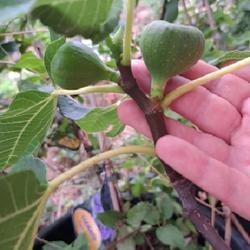
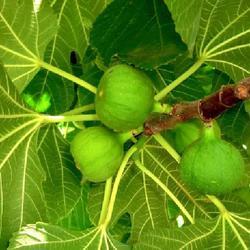
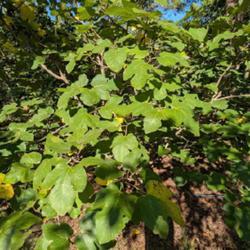
The common fig is a deciduous, small tree usually growing 10 to 30 feet tall, with large, lobed, deep green leaves that lend a tropical air to the plant. (There are other types of figs less commonly grown that have different pollination requirements. This information pertains to common figs.) The flowers of the common fig are all female and don't need pollinating to set fruit. The first crop of fruit in spring is called the "breba" crop, maturing from buds set the previous season. The main crop that follows in the fall matures on the new growth made that summer. In cooler parts of its range, the breba crop is often lost to spring frosts.
There are a number of fig varieties adapted to different regions of the country. Good varieties for the South include 'Celeste', 'Eastern Brown Turkey', 'Green Ischia' and 'Magnolia', 'Brown Turkey', 'Kadota', 'Ischia' and 'Mission' are among those recommended for California, while 'Desert King' and 'Lattarulla' are adapted to the cooler conditions of the Northwest.
Choosing a Site to Grow Figs
Select a site with full sun and well-drained soil with plenty of organic matter. The preferred soil pH is 6.0-6.5, but trees will tolerate a pH of 5.5-8.0. In areas with a shorter growing season or cooler summer temperatures, try growing trees as espaliers against a sunny, south-facing white wall where they'll receive reflected light and heat. Espaliering is a technique of training trees to grow flat against a support like a wall or fence by pruning and manipulating branches, maximizing fruit production in limited spaces.
Planting Instructions for Figs
Set out new trees in spring. Set bare-root trees atop a small mound of soil in the center of the planting hole, and spread the roots down and away without unduly bending them. Identify original planting depth by finding color change from dark to light as you move down the trunk towards the roots. Set the trees 2-4 inches deeper than they grew in the nursery. Plant trees at least 20 feet from buildings and other trees.
For container-grown trees, remove the plant from its pot and eliminate circling roots by laying the root ball on its side and cutting through the roots with shears. Set the tree 2-4 inches deeper than it was growing in the container.
Propagation
Fig trees can be easily propagated from cuttings in late spring or early summer once new growth has hardened. Take 4 to 6 inch cuttings from branch tips. Remove the lower 50% of leaves and reduce the remaining leaves by 75%.
Fill a 6-inch pot with well-draining soil mixed with perlite, or use perlite alone. Optionally dip the cut end in rooting hormone. Make 6 to 8 small pilot holes in the soil and insert the cuttings. Press the soil around them and water lightly. Place the pot under grow lights or on a bright windowsill with indirect light. Keep the soil moist but not soggy. Roots typically form in 2 to 3 weeks. Once established, transplant each rooted cutting into its own 4-inch pot.
Ongoing Care of Figs
Young trees need regular watering while they are getting established, and established trees in dry climates will need deep watering at least every week or two. A layer of mulch over the root zone will help to conserve moisture. Yellowing or dropping leaves and dropping fruits may be signs of drought stress.
Fig trees don't usually need regular fertilization unless they are grown in containers. Use your tree's growth rate to assess its need for feeding; if it makes less than a foot of new growth annually, apply 1/2 to 1 pound of actual nitrogen, dividing this amount into 3 or 4 feedings, beginning in late winter and ending in midsummer.
Figs generally don't need much pruning to be productive. Shape trees lightly during the dormant season and remove dead, diseased, broken or crossing branches.
To minimize bird damage to fruit, harvest ripe fruits promptly and cover trees with netting. Contact your local Cooperative Extension Service for information on fig pest and diseases in your area.
Container Growing
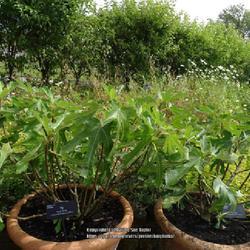
Fig trees are excellent container specimens, especially for gardeners in cold climates. Select a container at least 15 gallons in size and fill with potting soil. Water and fertilize regularly to keep the tree growing well; a slow-release organic fertilizer works best. Replace the potting soil every few years to maintain nutrients. Keep the tree 5 to 10 feet tall by pruning in the dormant season. When pruning, remove any broken or diseased branches, suckers, or side branches growing vertically from the main trunk, and cut back the ends of main branches by one quarter. Fig branches exude a white, sticky sap when cut that can irritate skin, so wear gloves when pruning.
Winter Protection and Overwintering
In the northern parts of its range, figs may benefit from frost protection. In late fall, tie the tree's branches up to make it more compact, fashion a cage of chicken wire around the tree and fill it with dry straw for insulation. Wrap the outside of the cage with layers of burlap and plastic. Remove the wrappings and straw in spring just before new growth begins and after the danger of hard frost. Some gardeners even manage to bring fig trees through the winter as far north as zone 6 this way.
For container figs in cold climates, move trees into an unheated garage or basement where temperatures stay between 20 degrees F and 50 degrees F.
Gardeners with in-ground figs in marginally hardy areas can also bury the tree in fall. Dig a trench on one side of the tree approximately 2 feet deep, beginning 12 inches from the trunk. After light pruning, gently bend the tree toward the trench, lay it down, and cover with soil, mulch, or leaves. In spring when warm weather arrives, unearth and carefully stand the tree back upright. Alternatively, lay a thick layer of bark mulch around the tree base after a few hard freezes and wrap the top of the fig tree with burlap.
How to Harvest Figs
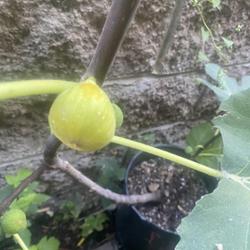
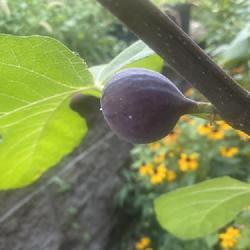
Fruits should be completely ripe before they are picked. Ripe figs will be fully colored, starting to bend over at the neck and will be slightly soft. Pick them with the stem still attached. Some people find the milky sap of the tree irritating, so you may want to wear gloves when harvesting.
To encourage late-season fruit to ripen, some gardeners dab the bottom (eye) of individual figs with a small amount of vegetable oil when the fruit's flesh turns pink. If applied too early the figs may drop from the tree; if applied too late it has no effect. When successfully applied, figs typically ripen within 5 days.
Fresh figs will keep in the refrigerator for 2 or 3 days.
Frequently Asked Questions about Figs
My newly planted fig has curled, droopy old leaves but is pushing new shoots. Is it dying?
Almost certainly not. Newly planted figs often hold curled, tired looking old leaves for weeks after transplanting even while the rest of the tree comes away well. That is transplant shock, and it resolves on its own.
The thing to get right meanwhile is watering, and the mistake is judging it at the surface. Push a finger into the soil under the tree; if there is still moisture down at root depth, wait. When you do water, water slowly and deeply so it reaches where the roots are working, then dig down a few hours later to see how far it actually traveled. Frequent shallow watering encourages surface roots and leaves the tree more drought prone, while deep infrequent watering builds resilience. Once the rhythm is right, the stressed old leaves recover and the tree settles in.
How can I keep squirrels out of the figs?
Physically, or not at all. No repellent stops them reliably, so the defenses that work are barriers and timing. Cage the tree in wire mesh, or drape netting over the canopy through the weeks when the fruit is ripening, as suggested in the care section above. A dog or cat patrolling the yard helps a little, though a determined squirrel ignores it. The realistic plan combines exclusion during the vulnerable weeks, bringing nearly ripe fruit indoors when pressure is heavy, and accepting that some years they take a share anyway.
Which figs survive cold winters, and will a tree that freezes to the ground come back true?
It will, and this is the useful thing about how figs are propagated. Trees grown from cuttings are on their own roots rather than grafted, so if the top freezes back, the sprouts that come from the base are the same variety as the tree you planted and will bear the same fruit. Cut out all the genuinely dead wood, leave the live sprouts, and let the tree rebuild. Expect a season or two before it fruits again.
On variety choice, treat label hardiness claims with some caution, because many do not hold up in hot dry regions with sharp winter temperature swings. 'Peter's Honey' and various other cutting grown sorts die back in those conditions despite what the tag says. For dependable hardiness and cropping in hot arid climates, 'Brown Turkey' and 'Mission' are far more reliable. 'Brown Turkey' carries the bulk of its crop on shoots made in the current season, so dormant cutting back renews the fruiting wood, and it bears medium mahogany to purple fruit best eaten fresh. 'Mission' ripens larger dark purple figs with a robust flavor that take well to drying and canning, and it needs only light pruning to stay in shape.
Restraint still pays with both. Figs also carry an early breba crop on wood made the previous year, and hard dormant pruning removes it, so take out crossing, dead and worn out wood and shorten the rest rather than cutting the whole tree back.
Shoots are coming up around my fig. Will they bear the same fruit?
That depends on which of two things they are, and a shovel will tell you.
A root sucker grows directly from the parent's own root system. It is genetically identical to the parent and will fruit exactly like it: same size, same flavor, same bearing habit. Dig carefully and you will find a thick root running back toward the parent tree, with the shoot attached to it the whole way.
A seedling, grown from a seed inside a dropped fruit, is a genetic cross. Its mother is your tree but its father is whatever pollen reached the flower, and the result may be anything, including a male caprifig that bears nothing edible. A seedling has its own small independent root system with no connection to the parent, and it usually turns up at some distance in an odd place.
So dig around the base of the shoot and follow what you find. A thick root back to the parent means a sucker you can plant with confidence; only thin roots and no connection means a seedling and a coin flip.
One extra check: most figs sold in the United States are on their own roots, but look at the base of the parent for a graft union, a swollen and often crooked joint low on the trunk. Any shoots from below such a union are rootstock rather than the named variety and will not give you the fruit you want.
How do I move a rooted sucker?
Move it while the tree is dormant, in late winter or early spring before growth starts, rather than in summer. Sever the root connecting the sucker to the parent with one clean spade cut, then dig down and around the sucker and lift it with as much root as you can keep. Cut the top back by about a third to balance what the roots have lost, replant at the depth it was growing, and water it in deeply, then keep watering the root zone deeply and regularly through the first season. A rooted sucker of any size takes readily; figs are among the easier fruit plants to move.
Expect fruit within a few years rather than the first season. Because most home varieties fruit on the current season's growth, cutting a young tree back hard costs you the coming crop rather than harming the plant, which is worth knowing both at moving time and later.
Can I take a cutting instead of disturbing the parent?
Yes, and it gives a plant identical to the parent just as a sucker does, which makes it the answer when the volunteers around your tree turn out to be seedlings. Alongside the softwood method in the propagation section above, figs root easily from dormant hardwood: in late winter take pencil thick pieces of the previous season's wood with several buds, keeping track of which end was the bottom, set them upright with most of their length buried in a free draining mix, and keep them barely moist and out of direct sun. Roots and leaves follow over the next few weeks. Take several and keep the strongest.
Is fig sap dangerous?
It deserves respect. Fig sap is irritating to skin, and in sunlight it causes a phototoxic reaction that can produce genuine burns and blistering on exposed skin. Wear gloves and long sleeves when pruning, when harvesting, and when severing the root of a sucker, wash any sap off promptly with water, and keep it away from your eyes.
The same irritant is present in unripe figs and in the milky latex they exude, so unripe fruit is not something to eat. There is no reason to anyway, since a fig picked underripe never improves off the tree.
My variety stays green when ripe. How do I know when to pick?
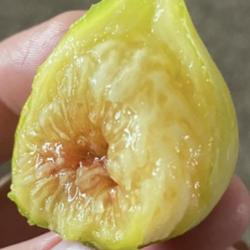
Skin color only tells you a fig is ready once you know what color that variety is supposed to be. Dark sorts such as 'Brown Turkey' and 'Mission' deepen to brown or purple, but a green skinned variety like 'Kadota' is ripe while still green, with the change happening inside as the flesh turns a soft creamy amber. Waiting for a green fig to color up means waiting for something that will never happen.
Use the physical signs instead, which work on every variety. A ripe fig softens, and the neck weakens so the fruit hangs down rather than standing out from the branch. Many figs also show a bead of nectar at the eye on the underside as they finish, and that bead is a reliable few days' warning that picking time is close. Hot weather speeds the whole process, so there is no calendar date to trust; check the tree every day or two once the first fruits begin to soften.
Will figs finish ripening after I pick them?
No. A fig picked firm stays firm and never develops flavor, so leave the fruit on the tree until it is fully ripe even though that means picking over the tree repeatedly and losing a few to birds. This is the opposite of the habit most gardeners bring from tomatoes or pears.
The practical consequences are in the harvest section above: pick with the stem attached, handle the soft fruit gently, and plan to use it quickly, since ripe figs hold only a couple of days in the refrigerator. For a late crop running out of season, the vegetable oil trick described there is the standard way to push individual fruits over the line, and it works only on figs that have already begun to ripen.