

Introduction
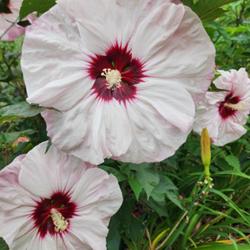
Hibiscuses are large shrubs or small trees that produce huge, colorful, trumpet-shaped flowers over a long season. They are generally divided into four groups: Hardy Hibiscus, Rose of Sharon, Tropical Hibiscus, and all the various species of Hibiscus. There are also some annual varieties, such as the flower-of-an-hour (Hibiscus trionum).
Propagation
There are many species of Hibiscus and there is a myriad of ways to propagate them. Many hibiscuses do produce seeds, but some, like Hibiscus rosa-sinensis, rarely do. In any case, most perennial or bush hibiscuses can be propagated by cuttings. Snip a young twig in summer, cut the bottom to a 45° angle, and let it sit in water or soil. Roots will develop in a few weeks. If you want to propagate these plants by seed, the method will vary depending on the species. Some merely need scarification (which you can achieve using sandpaper or by shaking the seed in sand), but those that come from colder climates often need stratification, which you can do by placing the seeds in the fridge or freezer for a few months. Annual hibiscuses may be propagated from seed sown each spring.
About hibiscus
Hibiscuses are deciduous or evergreen shrubs. The plants can grow to 15 feet tall in frost-free areas. Hibiscuses can be planted singly or grown as hedge plants; they can also be pruned into a single-stemmed small tree.
Special features of hibiscus
Hibiscuses are well-known for attracting a myriad of pollinators, like hummingbirds, bees, butterflies, bees, and other beneficial insects.
Choosing a site to grow hibiscus
Select a site with full sun and well-drained soil. Hibiscuses also adapt well to growing in containers. If you are growing the plant from seed, you may want to gradually harden off the young plant to ensure that it gets used to sunlight.
Planting Instructions
Plant hibiscuses in spring, summer, or fall, spacing plants 3 to 6 feet apart. Dig a hole only as deep as the root ball and 2 to 3 times as wide. If your soil is in very poor condition, amend the soil you've removed from the hole with a small amount of compost. Otherwise don't amend it at all. Carefully remove the plant from the container and set it in the hole. Fill the hole half full with soil, then water it well to settle the soil and eliminate air pockets. Let the water drain, then fill the remainder of hole with soil and water thoroughly.
Ongoing Care
Most hibiscus species require at least 1 inch of rain (or equivalent watering) each week. They like to be constantly moist, but not wet. Feed twice a month during the growing season and prune as necessary to control plant size and cut back errant branches. Cut branches back to just above a side shoot. Many tropical hibiscus species are sensitive to cold and should be protected when temperatures dip into the 30s; container-grown plants should be brought indoors. Check plants periodically for pests such as aphids, white flies, and mealybugs. Use a horticultural oil or insecticidal soap to control these pests.
Hibiscus Tea
The flowers of hibiscus steeped in boiling water produce a delicious and healthy tea with a taste similar to cranberry juice. It is said to lower blood pressure and contains numerous valuable vitamins and essential fatty acids. Some hibiscus species, like roselle, are valuable vegetables and are specifically cultivated for that purpose. Okra was once considered to be a Hibiscus but is now in a separate genus.
Frequently Asked Questions about Hibiscus
Which hibiscus do I actually have?
Almost every hibiscus question turns on this, because the plants sold under one name are not interchangeable, and advice that fixes one will keep another from flowering. Sort your plant into one of these groups before you change anything.
Tropical or Chinese hibiscus (Hibiscus rosa-sinensis) is the glossy, deep green evergreen sold in bloom in pots and very often trained as a braided standard or a spiral. It is frost tender. Where winters stay frost free it becomes a substantial shrub, capable of 30 feet tall and 20 feet across; anywhere colder it is a container plant that summers outdoors and winters inside. Given warmth and light it blooms on and off all year.
Rose of Sharon (Hibiscus syriacus), also sold as shrub althea or simply as hardy hibiscus, is the hardy upright deciduous shrub. It flowers in mid to late summer on the growth it makes that season, drops its leaves for winter, comes back from bare wood, and tolerates ordinary soil and a wide range of climates. It is the easy one.
Perennial or hardy hibiscus, the rose mallows (Hibiscus moscheutos, H. coccineus, H. mutabilis and their hybrids), are herbaceous. They throw up thick, almost woody stalks each season, carry the enormous crepe textured flowers people call dinner plate size, then die completely to the ground over winter and start again from the crown. They emerge very late in spring.
If you are not sure which you have, wait for winter. The tropical keeps its leaves and dies at a frost, rose of Sharon drops its leaves and keeps its woody frame, and a rose mallow vanishes entirely to ground level. Otherwise check the plant tag, the nursery receipt, or a photo of the whole plant against those three descriptions.
What is the difference between rose of Sharon and hibiscus?
Rose of Sharon is a hibiscus, which is the source of the confusion. The useful comparison is against the tropical Chinese hibiscus most people picture.
| Rose of Sharon (H. syriacus) | Chinese hibiscus (H. rosa-sinensis) | |
|---|---|---|
| Hardiness | Hardy deciduous shrub | Frost tender, evergreen |
| Mature size | 8 to 12 feet | To 30 feet tall and 20 feet wide where frost free |
| Bloom | Midsummer into fall, and in warm regions right up to frost | Whenever it is warm and growing |
| Flowers | Singles and very showy doubles; older forms in lavender, white and pink, newer ones in salmon and bicolors | Broad tropical color range |
| Site | Full sun to part shade, any reasonable soil, good or bad | Full sun, sharp drainage, protection from cold |
| Maintenance | Low. Prune once in late winter | Higher. Container culture and an indoor winter in most of the country |
The practical point: rose of Sharon flowers on wood the plant makes in the current season, and it does so whether the soil is good or poor. That combination is why it survives in neglected hedgerows, and why it can also seed itself around more than you want. Check your state invasive species list before planting one, since it is treated as a problem plant in some regions.
My rose of Sharon is a shrub and my neighbor's is a small tree. Are they different plants?
Almost certainly not. Rose of Sharon is routinely trained to a single trunk or grafted onto a standard, so the same species turns up as a multistemmed shrub in one yard and a lollipop tree in the next. Habit reflects how the plant was grown, not what it is.
Judge identity by flower and leaf instead. If you want the tree form, it is a training decision you can make yourself: select one strong stem, remove the competing ones at the base, and keep rubbing off the low sprouts as they appear.
Which perennial hibiscus gives me 6 to 10 feet in a sunny to partly sunny bed?
This is a warm-zone question with several good answers, so here they are by mature size.
- 'Southern Belle' (H. moscheutos) carries its dinner plate flowers on stalks above 6 feet. It is the standard choice when you want scale from a moscheutos type.
- Texas star (H. coccineus) reaches 6 to 8 feet and often more, with deep red, funnel shaped flowers. Its deeply lobed leaves are the easy way to recognize it, and it is the only one on this list you can push into a drier, partly shaded spot, though full sun and steady moisture suit it best.
- 'Lord Baltimore' and 'Lady Baltimore' are hybrids between Texas star and other perennial species, and they land shorter, at 4 to 5 feet. 'Lord Baltimore' flowers a vivid red, 'Lady Baltimore' pink with a red eye. Choose these when 8 feet would be too much.
- 'Disco Belle' is the dwarf moscheutos series at 2 to 3 feet. Worth naming here so you do not buy it by mistake for the back of a border.
- Confederate rose (H. mutabilis) is the giant, capable of putting on 15 feet or more in a single season. Two catches: it flowers only late in the year, and it is reliably hardy only in the warmest parts of zone 9. Where winters bite, take cuttings before the first frost as insurance.
- Straight rose mallow (H. moscheutos), the wild marsh mallow, is tall with large white flowers and is the parent of most of the named selections above.
Bloom season for the moscheutos group runs June into early fall, in white, pink and maroon with bicolors among them. All of them want as much sun as you can give, moist ground, and soil with plenty of organic matter worked in. Give them room at planting, because these plants get wide as well as tall.
Two habits to plan around. They emerge very late in spring, only once the soil has genuinely warmed, so mark the crowns in fall or you will dig into them believing they died. And their large, coarse leaves get chewed by leaf eating insects most years. Unless the damage is bad enough to spoil the look of the plant, it costs you nothing in flowers, so the honest recommendation is to leave it alone.
My tropical hibiscus has looked healthy for two years and has never flowered
A hibiscus that grows well and refuses to bloom is nearly always short of light, short of warmth, or being cut at the wrong moment.
Light comes first. Tropical hibiscus wants full sun, and the most common story behind two flowerless years is a plant that was moved into shade, or one that has been wintered indoors and never went back out. If it has been in low light, do not carry it straight into midday sun. Move it out for a couple of hours a day and lengthen that over two weeks or so, otherwise the leaves scorch.
Warmth is second. Tropical hibiscus needs temperatures above 55 degrees Fahrenheit to grow and flower properly. Sustained cooler weather, and cool spring and fall nights in particular, will slow flowering or stop it outright while the plant still looks perfectly healthy. If your nights are dipping into the low 50s, the plant is not sulking, it is waiting.
Pruning is third, and it is the one people trip over. Tropical hibiscus flowers on new growth, so a cut is not the enemy, but each cut costs you the time it takes those shoots to grow, mature, and set buds. Cutting the whole plant back in early summer buys you a flowerless summer. Prune it in fall as you bring it in, or in late winter before it starts moving. If it is simply outgrowing its space, take the longest branch back one at a time through the year, so the plant is never all cut back at once and something is always mature enough to bloom.
Then look at the pot. The soil should stay evenly moist, never sopping wet and never dried out to the point of wilting. Check that the drainage holes actually run free. Potting up into a much larger container is not a cure by itself, and an oversized pot of mix that stays wet is its own problem. Repot when roots are circling the ball, not on a schedule.
To push a well grown plant toward more bloom, pinch out the tips of new growing stems in late spring and early summer. That builds more branches, and more branches mean more flower buds. If the plant is in bloom and you are thinking of repotting it into a larger container, wait until winter when it is resting, because disturbing the roots during active bloom can interrupt flowering for the rest of the season.
Buds form, then fall off before they open
Three causes account for most bud drop, and you can sort between them in an afternoon.
Cold. Below about 55 degrees Fahrenheit, and spring nights are the usual culprit, a tropical hibiscus drops buds. If the drop started when the weather turned, that is your answer, and it stops on its own when the nights warm.
Water swings. Both directions do it. A root ball that goes bone dry between waterings, or one that sits sodden because the mix is old and airless or the drainage hole is blocked, will abort buds. Even moisture is what the plant wants, and consistency matters more than frequency.
Bud feeding insects. Small larvae feed inside unopened buds. Pick a dozen buds off the ground and a dozen still on the plant and look each one over for a single small hole in the side. If you find holes, that is the cause. The control is mechanical and it does work: go over the plant and pick off every bud with a hole, and get them off the property or into a sealed bag rather than dropping them under the shrub, since you are removing the larvae and the generation that would follow them.
Rose of Sharon sets buds so heavily that losing most of them is conspicuous, and the same three checks apply: the weather at the time the drop started, how evenly the ground stays moist through the season, and whether the fallen buds have a hole in the side. A shrub in a spot that takes roof runoff is worth watching on the water question in particular. Where a mature rose of Sharon has stopped opening flowers altogether rather than dropping formed buds, look at pruning timing instead, which is covered below.
The buds look cleanly cut, and there is white material on the plant
That combination is worth separating into two problems.
A bud that has dropped on its own leaves a clean, flat scar where it detached. Plants shed buds at a purpose built layer of cells, so the break really does look cut with a blade, and a clean break with no hole and no ragged edge points to the environmental causes above rather than an insect. Something chewing buds off leaves ragged tissue or drops the bud with the stub still attached.
The white material is a separate question and needs identifying before anything is done about it. White cottony tufts in leaf axils and where stems join suggest mealybugs. Tiny white moth like insects that fly up in a cloud when the plant is disturbed are whiteflies. A white powdery coating on the leaf surface itself is more likely a mildew. Flat white or tan bumps stuck to stems are scale. Each of those calls for a different response, and the cheap first step for mealybugs and whiteflies on a container plant is a hard spray of plain water and wiping the colonies off by hand.
If you cannot tell what you are looking at, take close photos of the whole plant, an affected bud, and the white material, and take them to your county extension office or a good local nursery. That matters more when the problem is spread across a whole planting than on a single pot, because a diagnosis for forty five shrubs is worth getting right before you spend anything.
When should I prune rose of Sharon and perennial hibiscus?
Rose of Sharon blooms on the growth it makes in the current season, so it can be cut back fairly hard in late winter or early spring, before growth starts, without costing any flowers. Shortening the stems prompts multiple new shoots, each carrying its own flower buds, so a pruned plant is usually both fuller and more floriferous than an unpruned one. Take out winter damaged and dead wood at the same time, then leave it alone. Once it has started into growth for the year, every cut removes the wood that was going to flower, which is the single most common reason a mature rose of Sharon quits blooming.
Fall pruning is not the disaster people fear, since a fall cut does not remove next summer's flower buds the way they would on a lilac, but late winter is the better window, roughly late February in the middle of the country. You can see the whole framework with the leaves gone and the buds not yet swelling, the cuts spend only a few weeks exposed before the plant starts healing them, and the fresh stems that follow are exactly the wood that will carry flowers. In a cold zone, or after a year when growth was still soft going into winter, the late winter shift saves you dieback at the cuts. Pinch the tips of new shoots in late spring and early summer to multiply the branch ends that can flower.
Perennial hibiscus needs no shaping at all. Cut the dead stems down in late winter or early spring. It emerges very late, often weeks after everything else, so give it until early summer before you decide it has died. Mulch it heavily in late fall, then pull the mulch back off the crown in spring so the sun can warm the soil and get it up sooner.
Should I deadhead my hibiscus?
It depends on the type, and the answer is genuinely different for each.
Rose of Sharon: no. Deadheading has not proved to extend its bloom, and once the shrub is any size the job is impractical anyway. Its heaviest bloom comes in cooler weather with soil kept evenly moist. The seedheads left behind are ornamental to some eyes, and you can leave them for winter. If you would rather not have them, or want to stop the shrub seeding itself around the garden, trim the whole plant back in late fall, which removes the seedheads along with the top growth.
Tropical hibiscus in a container: yes. Here deadheading does appear to keep the flowers coming, and it keeps the plant looking tidier.
How much water does a hibiscus want?
They like water and they will not tolerate standing in it. Both halves are true, and root rot is what happens when only the first half is observed.
For a hardy hibiscus in the garden, aim for evenly moist soil that is not saturated or sopping. The benchmark worth remembering is a wrung out sponge: damp all the way through, with no water to give up when squeezed.
For a hibiscus in a container, let the soil dry somewhat between waterings, which protects against root rot. Check the saucer half an hour after you water and tip out anything still sitting in it, since that leftover water is what keeps the roots waterlogged.
When you do water a pot, water slowly and deeply and let it run out of the drainage holes rather than giving a light sprinkle. The reason is salts, covered next.
How do I keep salts from building up in a potted hibiscus?
By watering in a way that carries them out of the pot.
Water slowly and deeply enough that water actually drains out of the bottom. That flow takes accumulated salts with it. Frequent light sprinkling does the opposite: the water evaporates from the surface and the salts stay behind, concentrating in the root zone until they burn the roots. In hard water and desert regions this is one of the most common reasons a container hibiscus declines.
Feeding adds to the load, so pair the two. A workable routine is to feed with nine waterings and then, on the tenth, water with plain water alone and let it drain freely. That flush resets the pot.
What is the feeding schedule?
Prolific flowering takes regular feeding through the growing period, which runs from about March through October.
For a tropical hibiscus, feed weekly during that stretch, or use a water soluble fertilizer diluted to half the label strength at every watering, which is a gentler way to deliver the same nutrition. A balanced general purpose product that includes micronutrients, something along the lines of a 10-10-10 with minors, suits it well, and for a container plant a product formulated for containers is easiest to get right, since potting mix holds almost no nutrient reserve of its own. Apply at the current label's stated rate for the dilution you have chosen, keep fertilizer stored out of reach of children and pets, and use the tenth watering as a plain water flush. Stop or reduce feeding in winter while the plant is resting indoors.
For rose of Sharon, a single application of a general purpose granular or slow release fertilizer in early spring at label rate is plenty, and a topdressing of good compost will do the same job. For perennial hibiscus, feed in spring, feed a second time as summer opens, and topdress with compost or well rotted manure each spring.
Two limits matter more than the schedule. Never feed a plant whose soil has dried out, because fertilizer applied to dry soil damages roots; rehydrate first by standing the pot in a bucket holding about 2 inches of water for 30 minutes, then let it drain and return it to its place. And do not push a plant that is struggling in heat. In the low desert, summer functions as a rest period for many plants that are not native to it, in the same way it does for roses, and forcing growth with fertilizer during that period stresses the plant and can burn it outright. Stop feeding through the worst of the heat, resume when the weather cools in fall, and feed again in spring.
Two cautions apply to all three types. Overfeeding, especially heavy nitrogen, buys leaves at the expense of flowers, and a shrub already growing vigorously without blooming is the last thing that needs more fertilizer. And fertilizer never fixes a light, root, water, or pest problem, so sort those out first rather than feeding harder.
What soil should I use in a container, how often should I repot, and can I do anything about humidity?
Hibiscus prefer acid conditions. Use a good potting soil, mix peat into it to acidify the blend and hold moisture, and choose a fertilizer formulated for acid loving plants rather than a general purpose one, applied at the current label's rate.
Repot a tropical hibiscus in a container annually. The point is as much refreshing the soil as giving the roots more room, since potting mix breaks down and accumulates salts. Late winter to early spring is the time, just as the plant is coming into its growing season.
Humidity in a desert climate is close to unwinnable outdoors, and it is fair to say so rather than pretend otherwise. The best available measures are to group the plant with other containers, so the plants share the moisture they transpire, and to site that group where it is protected from wind and from afternoon sun. Both of those reduce the water demand on the plant, which is the practical problem low humidity creates.
My braided hibiscus is losing its inner leaves, and there is a shoot coming up at the base
If the plant is growing well and the healthiest leaves are at the branch tips, the likeliest answer is that the plant is shading out its own lower leaves. That is a management question rather than a disease. Rule out the other common causes first: overwatering, underwatering, warm or cold drafts, a recent move to a new location, and insects. Any of these will also drop leaves.
Tropical hibiscus grow large and rangy with time, so the underlying fix is pruning, and you have two ways to do it. Prune it back each winter, which is one decisive annual cut and simple to remember, or trim gradually all year, taking one branch at a time. Pruning delays flowering, which is why many people prefer the gradual method: it spreads the delay out instead of costing a whole flush at once.
The shoot at the base is a sucker. If you want to keep the braid, cut it off, because left alone it will outgrow and overwhelm the braided trunks. There is an exception worth knowing: on an older braided plant the trunks can begin to strangle each other as they thicken, and severe leaf trouble is sometimes the symptom. If that is what you find, the better long term move is to cut the braided portion away and grow the sucker on as the main plant. You lose the novelty shape and keep a healthy hibiscus.
As for the tie holding the braid together, you can take it off or leave it. What matters is that it is not cutting into the bark. Check it each year, because a tie that was loose when the plant was young becomes a girdle as the trunks expand.
When can I move a hardy hibiscus that has grown into its neighbors?
Rose of Sharon transplants fairly well, so this is a reasonable project. Very early spring is the best window, and fall works too.
- Water the plant thoroughly the day before you dig. A well hydrated plant moves better.
- Prepare the new hole first, so the plant goes straight from one hole into the next with no waiting.
- Dig up as much of a root ball as you can physically handle. Arrange help before you start, because a root ball on an established shrub is genuinely heavy.
- Set it in the prepared spot at once.
- Cut the top of the shrub back. You have unavoidably left roots behind, and reducing the amount of growth those remaining roots must support is what gets the plant through the move.
- Water it in well and mulch.
- Keep it adequately watered from then until the ground freezes, and again all through the following summer. The second season matters as much as the first.
A braided tropical hibiscus standing too close to the house is a different case, since it is a tender container subject rather than a hardy shrub. Move it as you would any potted plant, and if it has been in the ground in a frost free climate, lift it in early spring. Declining leaves and flowers on such a plant usually point to light, root room, or feeding rather than to the move you are considering.
How do I settle a new hibiscus into sandy desert ground, and why is my potted one dying branch by branch?
Start honest: tropical hibiscus are widely sold in the low desert but they are not native to that climate, and it wears on them. The environment takes a cumulative toll even on plants that appear to be thriving, which is why a plant can look excellent for two seasons and then fail branch by branch. Buy a selection known to perform in desert heat, and site it where it gets protection from afternoon sun and from strong, drying wind. Both matter as much as anything you do to the soil.
Watering, first two months: hold the whole root ball and the ground out to the drip line, meaning the edge of the canopy, evenly damp without ever letting it turn soggy. That is what builds a root system wide enough to support the plant later. Afterward, go slow and deep every time, enough that water moves down past the root zone and carries dissolved salts with it. Frequent light sprinkling is the practice that kills plants in that country.
Feeding: fertilize at the start of growth in February and again as the weather cools in fall, and skip the summer entirely. Water thoroughly before you apply anything and again afterward, and never fertilize soil that has dried out. Desert soil is alkaline and hibiscus prefer acid conditions, so a fertilizer formulated for acid loving plants is a reasonable choice. Use only a product whose current label covers your plants and the use, follow the label rate rather than estimating, wear whatever protective equipment the label specifies, and store the container out of reach of children and pets.
Cold: tropical hibiscus are frost tender even in the desert. Watch the forecast in winter and cover the plant when frost is predicted.
One caution on diagnosis. Yellowing leaves on hibiscus have a long list of possible causes, including overwatering, underwatering, salt burn, a nitrogen shortage, chlorosis from unavailable iron, root burn from fertilizer, and the shock of a recent move. That is why the same symptom on two plants can have two different explanations, and why identical care can lose one plant and not its neighbor.
Will hibiscus grow in a cool, wet climate, and how do I overwinter a tropical one?
Yes, if it is a perennial hibiscus. Plant it in a sunny spot, water moderately through the growing season, and mulch the ground with organic matter to hold moisture and suppress weeds. It will die back over winter, break dormancy late, send up new stems in spring and flower on them through summer. The rose mallows want full sun and rich, moist soil to produce those big crepe textured blooms in mid to late summer.
A tropical hibiscus in the same garden is a different arrangement: a container plant that lives outdoors for the warm months and indoors for the rest of the year. Indoors it wants ordinary household temperatures, the brightest light you have, and soil kept moist without ever going soggy. Mist the foliage to raise humidity around the plant, and pinch back stems that stretch.
Move it gradually in both directions, because the shuttling is where most plants are lost. Bring it in before hard weather, over a week or so rather than in one afternoon; a gradual transition keeps the leaves on the plant and makes it far less likely to arrive indoors carrying pests. Send it back out in spring only once daytime temperatures hold at 60 degrees Fahrenheit or above, and add a little more sun each day across about a week. Feed it while it is in growth, which in practice means roughly from March until the end of August, and let it rest the remainder of the year.
How do I raise perennial hibiscus from seed?
Rose mallow makes woody seed capsules after it flowers, and the seed is easy to work with.
Two routes. Sow in spring, soaking the seed in water overnight first, which softens the coat and improves germination. Or scatter the seed outdoors in fall and let it come up on its own the following spring.
Either way, be patient in spring. These plants will not push through until the soil has warmed, and every year gardeners give up on seedlings and crowns that were simply waiting.
My hardy hibiscus came up short this year with brittle, curled leaves and deformed flowers
Something has stunted it, and the honest answer is that this one cannot be diagnosed at a distance. The candidates include weather extremes over winter or during spring, a shortage of water, an excess of fertilizer, and insect attack. Good leaf color argues against a virus, but it does not rule out a fungal or bacterial infection.
Take a sample of the affected growth to your county cooperative extension office. They can examine the plant in hand, identify what is actually wrong, and recommend a treatment that fits it. That is a far better use of a season than treating a guess, and it avoids applying a product the plant does not need.
Do deer eat hibiscus?
Deer resistance is never a fixed property of a plant. It depends on how many deer you have and how much else there is for them to eat, and a plant they ignore in a good year gets browsed in a hard one.
For rose mallow specifically, deer damage it occasionally, as reported in the Pacific Northwest. That puts it in the middle of the range rather than at either end.
Given the choice between planting one behind a fence and planting it out in the open where it would look better, the cautious call is the fence, at least until you know how much pressure your own deer put on it.
Ants are swarming the flowers and buds. Are they hurting the plant?
Not directly. Hibiscus flowers hold nectar at the base of each bloom, and that sweet liquid is what the ants are after. It is common to cut a perfect flower for the house and find ants walking out of it later. This feeding does the plant itself no injury.
The indirect harm is real, though. Ants also farm aphids for the honeydew they excrete, carrying them onto the plant, moving them from shoot to shoot, and driving off ladybugs and other predators that would otherwise keep aphid numbers down. Aphids disfigure new growth and can carry plant viruses from one plant to another. Sooty mold then grows on the honeydew itself: the black film does not feed on the leaf, but it blocks the light the leaf needs and looks dreadful.
So treat the ants and the aphids as a single problem. Wash honeydew and mold off with plain water, control the aphids with a labeled insecticidal soap or horticultural oil, and where a colony keeps restocking the plant, use an ant bait labeled for the ants you have rather than spraying the foliage more heavily. Baits work by being carried back to the nest, so they must be left undisturbed for several days. Place bait stations where children and pets cannot reach them, and follow the label directions.
A green caterpillar strips my hardy hibiscus every year
Hardy perennial hibiscus (Hibiscus moscheutos and its hybrids, which include the older 'Disco Belle' types) attracts caterpillars capable of defoliating a plant quickly. A green larva about an inch long when fully grown is often a moth caterpillar that feeds across this plant family, taking hollyhock and flowering maple as readily as hibiscus, but several other caterpillars look much the same at a glance.
Because the sensible response depends on which insect you actually have, get it identified by someone who can see it. Your county extension office does this, and a clear photograph is usually enough.
If caterpillars are confirmed, a biological insecticide containing Bacillus thuringiensis subspecies kurstaki is the lowest toxicity option and is stocked by most garden centers. It only works when caterpillars eat treated foliage, and it works far better on small larvae than large ones, so treat at the first sign of chewing rather than after the plant has been stripped, and follow the label directions. On a single shrub, hand picking is entirely practical and needs no product at all.
My hibiscus by the pool has attracted sweat bees. What can I do?
Understand what is drawing them, because that determines what will work. Sweat bees seek out the salt that human perspiration leaves on skin. The bold, showy hibiscus flowers brought them into the yard, and the people around the pool are what keeps them interested.
As long as the plants are in flower they will draw bees, so there is no treatment that solves this while leaving everything else in place. Shifting the plants to a different corner of the yard, well away from where people gather, is the realistic answer.
Do not spray them. These are pollinators, insecticide applied to flowers in bloom kills the bees visiting them along with other beneficial insects, and it would not keep new ones from arriving at the next flush of flowers. If anyone using the pool area has a known sting allergy, treat relocating the plants as the priority rather than an option.
If you do decide to spray
Identify the pest first. Almost everything above is fixed by moving the plant, changing the watering, or picking buds, and a spray applied to the wrong target costs money and does nothing.
If you do treat, use only a product whose current label names hibiscus and the pest you have confirmed, and follow that label on rate, protective equipment, and timing. Skip products the label restricts around open flowers, since hibiscus blooms draw pollinators. Store everything out of reach of children and pets, and keep both away from treated plants for as long as the label says.
A commercial insecticidal soap is a better choice than a homemade dish soap spray. Those products are formulated and labeled for use on plants, they are sold at a concentration known to work against soft bodied pests such as aphids and whiteflies, and they are much less likely to scorch foliage than something mixed at the kitchen sink. Household dish detergents vary widely in what they contain, and additives such as degreasers and citrus oils can burn leaves; a home remedy is used entirely at your own risk. With any soap or oil spray, follow the label directions for that product, treat in the early morning or the evening rather than in full sun, and test a few leaves a day ahead before wetting the whole plant. Do not mix up a homemade spray for a plant you are trying to coax into bloom; an untested mixture is more likely to burn the buds you are trying to save.