

Introduction
Hydrangeas are deciduous shrubs or vines with large leaves and showy flowers. The flowers are arranged in large clusters for a dramatic show.
About hydrangeas
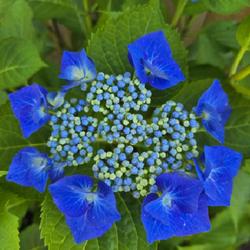
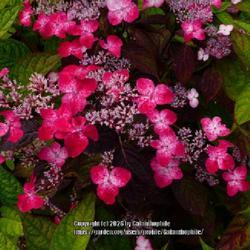
Hydrangeas bloom in midsummer to fall, depending on the species. Flower colors include blue, pink, red, and white. The most common type, bigleaf hydrangea (H. macrophylla), generally grows 3 to 6 feet tall and wide and bears huge, ball-shaped or flat-topped (lacecap) clusters of flowers. Flower color is influenced by soil pH: acidic soils yield plants with blue flowers, while alkaline soils lead to pink flowers. Bigleaf hydrangeas produce flowers on the previous year's growth. In northern areas, the plants may die back to the ground in winter, so although the plants may survive, they will not flower. Climbing hydrangea (H. anomala) is a clinging vine that grows well on stone walls, arbors, brick walls, and even other trees. It can reach 50 feet tall and becomes heavy and woody with age, so it needs sturdy support.
Special features of hydrangeas
Good for cut flowers
Ongoing Care
Apply a layer of compost under the tree each spring, spreading it out to the dripline (the area under the outermost branches). Add a 2- to 4-inch layer of mulch to retain moisture and control weeds, keeping mulch a few inches away from the tree trunk. Hydrangeas like consistently moist soil, so water plants during the summer if rainfall is less than 1 inch per week.
Choosing a site to grow hydrangeas
Select a site with full sun to light shade and moist, well-drained soil. In regions with hot summers, choose a spot with afternoon shade.
Planting Instructions
Plant in spring or fall. Space plants 3 to 10 feet apart, depending on the expected mature size of the plant. Dig a hole only as deep as the root ball and 2 to 3 times as wide. If your soil is in very poor condition, amend the soil you've removed from the hole with a small amount of compost. Otherwise don't amend it at all. Carefully remove the plant from the container and set it in the hole. Fill the hole half full with soil, then water it well to settle the soil and eliminate air pockets. Let the water drain, then fill the remainder of hole with soil and water thoroughly.
Changing Bloom Color
Hydrangea bloom color is determined by soil pH and aluminum availability. Acidic soils (low pH) make aluminum available to plants, producing blue blooms. Alkaline soils (higher pH) limit aluminum availability, resulting in pink blooms.
To change blooms from pink to blue, add 1/2 cup of sulfur per 10 square feet, mix it into the soil surface, and water well. To change blooms from blue to pink, add 1 cup of lime per 10 square feet to the soil. These soil amendment methods can take months to a year to fully change bloom color.
For faster results when changing from pink to blue, dissolve 1 tablespoon of alum (aluminum sulfate) in a gallon of water and drench the soil around the plants three times, four weeks apart in spring. To rapidly change from blue to pink, substitute 1 tablespoon of hydrated lime for the alum and apply the same way. Always apply these solutions to the soil only, not to blooms or foliage.
Pruning Hydrangeas
The best time to prune hydrangeas is immediately after they finish blooming in summer. Thin out old, non-productive canes, and prune other canes to reduce height if needed, but retain some terminal shoots for next summer's blooms. In cases of winter damage, light cleanup pruning may be done in early spring, but avoid heavy pruning.
Frequently Asked Questions about Hydrangeas
Which hydrangea do I actually have, and why does it decide everything else?
"Hydrangea" names several distinct shrubs that behave very differently, and the difference that matters most is which wood they flower on.
Bigleaf hydrangea (Hydrangea macrophylla), the familiar mophead and lacecap, flowers on the previous season's wood, 3 to 6 feet tall, and is the one whose flower color responds to soil pH. Winter cold and late pruning remove all its buds, which is why it struggles in cold climates. Oakleaf hydrangea (H. quercifolia) also flowers on old wood but is somewhat more forgiving. Panicle hydrangea (H. paniculata) and smooth hydrangea (H. arborescens) flower on the current season's growth, so winter cannot take their buds and cutting them back hard in late winter costs nothing. Rough-leaved hydrangea (H. aspera) is the big shrub of the group. Climbing hydrangea (H. anomala subsp. petiolaris) is a self-clinging vine and the answer for walls.
If your question is about winter survival, hardiness, pruning timing, or bloom failure, the answer depends on which of these you have.
Why did my hydrangea produce leaves but no flowers?
Nearly always the flower buds were lost over winter or removed by pruning, and which of those it is depends on your type. This one distinction explains most bloom failures.
Bigleaf and oakleaf hydrangeas form next season's flower buds on the current year's stems during late summer and carry those buds through winter on bare wood. Anything that destroys those stems destroys the flowers: a hard winter, a late spring freeze after the buds have swelled, or a tidy fall cutback. A plant killed to the ground in a cold winter regrows strongly from the crown and produces a full canopy of healthy leaves without a single bloom, which is exactly the situation that puzzles gardeners most.
Panicle and smooth hydrangeas work the other way, flowering on growth made in the current season.
To tell which you have, watch the plant in spring. Buds swelling along last year's bare stems mean an old-wood bloomer, and those stems must be left alone. Growth appearing only from the base, with last season's stems staying dead, means either a new-wood type or an old-wood type that was killed back. Insufficient light is the other cause worth checking, though roughly four hours of morning sun is generally enough. A newly planted hydrangea also needs a year or two to establish before it blooms at full strength, so avoid heavy pruning early on and wait until spring to remove winter-killed branches.
When should I prune, and how much?
Match the timing to the type. For bigleaf and oakleaf hydrangeas, prune just after the flowers fade in summer and stop well before late summer, so the buds forming for next year are not cut off. Take out old unproductive canes at the base and shorten others if height needs controlling, but always leave a good number of the stem tips intact, because the tips are where the flowers come from. Panicle and smooth hydrangeas are pruned instead in late winter or early spring before growth starts, and they tolerate being cut back hard.
Whatever the type, in spring confine yourself to removing wood that is genuinely dead. Scratch a stem with a thumbnail: green underneath means live wood that may still flower, so leave it.
Which hydrangeas are worth planting in a cold region?
In zones where bigleaf hydrangeas are routinely killed back, the reliable choices are the ones that bloom on new growth. Panicle hydrangeas are the hardiest widely grown group and flower dependably after severe winters, and smooth hydrangeas behave the same way. Both are cut back in late winter as a matter of course, so winter dieback costs no bloom.
If you specifically want the mophead look in a cold garden, choose one of the reblooming selections bred to flower on both old and new wood. A winter that takes the old stems only delays them rather than cancelling the season. Give any bigleaf type in a cold region a sheltered spot out of sweeping winter wind, and mulch deeply over the crown.
What is the difference between 'Endless Summer' and 'Penny Mac'?
Both are mopheads, both are excellent, and either will grow well in zone 5. They differ in useful details.
'Penny Mac' was named for Penny McHenry, who founded the American Hydrangea Society. It reblooms until frost stops it, carrying light to medium blue balls about 7 inches across, with some opening bright blue and occasionally deep purple. It is vigorous and quick, reaching about 5 feet tall and as much across, hardy in zones 5 through 9, and it sets buds on new wood, which is what makes it dependable where old-wood buds get killed. Its real differentiator is fall foliage, blending purple and burgundy with dark green, which is more than most hydrangeas offer at the end of the season.
'Endless Summer' blooms on both old and new growth, a trait called remontancy, and that dual habit produces flowers continuously through the summer rather than in one flush. Its flowers reach up to 8 inches across, the larger of the two, and it is hardy to zone 4, so it is the choice if you are colder than zone 5. It is pink in alkaline soil and blue in acid soil. Because it flowers on new growth, deadheading encourages another round rather than merely tidying the plant.
If fall color decides it, choose 'Penny Mac'. If winter hardiness or the largest flowers decide it, choose 'Endless Summer'. Both want the same conditions: well-drained soil, shelter from afternoon sun, plenty of good dark compost, and even moisture. Hydrangeas have no drought tolerance to speak of, and that is the constraint most likely to cost you plants in a long row far from a hose.
Which hydrangea is the tallest and fastest growing?
Leaving the climbing hydrangea aside, since a vine is a different proposition, the answer is Hydrangea aspera. It is the tallest, widest and quickest growing of the shrubs, reaching 10 to 12 feet in both height and spread, with flowers ranging from purplish through pink to blue. Two subspecies are worth knowing by name: H. aspera subsp. sargentiana carries the larger flower clusters, light purple in color, and H. aspera var. villosa flowers blue or purple.
For a hedge or screen this is the species to start from, since a row of bigleaf hydrangeas topping out at 5 feet will not screen anything above waist height. Space plants on the assumption they will reach that 10-to-12-foot width, and expect a specialist nursery rather than a general garden center to be the source.
Will hydrangeas grow in the Deep South, or in a hot dry climate?
In the Deep South and south Texas, yes, with the right species and the right spot. Bigleaf hydrangea is the one to grow, and lacecap forms of the same species and oakleaf are the other traditional choices. Expect a shrub 3 to 6 feet tall flowering in June and July, and plant it in part shade, which in the Deep South is not optional. Panicle hydrangeas generally take heat well, though some older selections were bred for cooler summers and sulk, and panicle is the one to leave out of a deeply shaded spot because it wants more sun than the others. Smooth hydrangea is dependable but wilts dramatically on hot afternoons and needs shade. Bigleaf and smooth both want consistently moist soil; oakleaf tolerates drier ground than either. For cultivars, ask at local nurseries, since which selections perform in a given region changes faster than any article can track.
In a low-desert climate like Phoenix you can grow one with modest expectations. Siting is the whole game: find a spot with early morning sun and full protection from about 10 a.m. onward. A few hours of morning light is enough to grow and bloom on; what the plant cannot survive is desert afternoon sun. Keep the soil moist without letting it stay soggy. One thing not to do is shuttle the plant indoors for the worst of the summer and back out again, which subjects it to repeated acclimation shocks and does not solve the underlying exposure problem. Find one mostly shady position and leave it there.
In a warm subtropical zone, hardiness is not the question at all, since every hydrangea survives those winters. What matters is light. Under deep shade from established trees, oakleaf and bigleaf are the shade-tolerant choices, and remember that tree roots compete for water as much as the canopy shades the foliage, so consistent watering matters more there than in a sunnier spot.
How do I control whether the flowers come out pink or blue?
Soil pH drives it on bigleaf hydrangeas, but the real lever is aluminum, and that is the part most explanations leave out. Blue pigment forms when the plant can take up aluminum from the soil, and aluminum only becomes available to roots when the soil is quite acid. So a blue hydrangea needs two things at once: acid soil, and aluminum present in it. Get the pH down and the aluminum usually follows, which is why the advice is normally given in terms of pH alone, and it is also why the trick sometimes fails: where there is little aluminum to begin with, lowering pH alone will not produce blue.
The practical thresholds are roughly pH 5 to 5.8 for blue and pH 6 to 7 for pink. Note that pH 6 to 7 is neutral to slightly acid in ordinary soil terms even though it produces the pink response, so do not read "pink" as requiring genuinely alkaline ground. Most garden soils sit somewhere around 5.5 to 6.5.
Test before you treat, through your cooperative extension service or a garden center that offers testing. Guessing wastes a season, and if you have hydrangeas in two parts of the garden it is worth testing both, because they can differ substantially.
To move toward blue, an acidifying fertilizer of the kind sold for azaleas and camellias is the gentle default, along with acidifying mulches such as pine needles or pine bark. Aluminum sulfate worked into the ground at the base of the shrub is the standard material where you want a faster result, because it supplies both halves of the equation, the acidity and the aluminum. Follow the label rate exactly and do not exceed it, because too much aluminum sulfate burns roots and this is a product where more is emphatically not better. Soil sulfur is a gentler alternative that acidifies more slowly and is harder to overdo, though it supplies no aluminum. Whatever you use, follow the label for rate, wear the personal protective equipment it specifies, and store the product out of reach of children and pets. Repeat as the label directs, since soil pH drifts back toward its natural state.
Also watch the phosphorus. High soil phosphorus ties aluminum up chemically and keeps it out of the plant, so a general fertilizer with a large middle number works directly against the blue you want. Use a low-phosphorus feed on a hydrangea you want blue, with potassium sulfate or muriate of potash where potassium is needed without the phosphorus. Ammonium sulfate is often recommended here, and it does help hold a soil acid while feeding the plant, but there is no universal dose: follow the label rate for shrubs, apply it in small repeated doses rather than one large application, and water it in, since it is a salt and a heavy application on dry soil scorches roots.
Two caveats save disappointment. This works only on the big-leaved hydrangeas; panicle and oakleaf types do not change color with pH at all, and white hydrangeas stay white. And some cultivars are bred to be pink, or to open white from pink buds, whatever the soil does, so find out which variety you have before starting a campaign on your soil.
My hydrangea used to be pink and has turned blue. How do I get the pink back?
You are in the common situation for a high-rainfall region: areas with heavy rain tend toward acid soils, dry regions toward alkaline ones. Acid soil gave you the blue, and raising the pH brings back the pink.
Ground limestone is the standard material. It breaks down slowly and, unlike quick lime, will not burn plants. Apply it in the fall to give it the months it needs to act before the next growing season. As a rule of thumb on a slightly acid soil, about 5 pounds of ground limestone over 100 square feet, a bed of roughly 5 by 20 feet, lifts the pH by one point. Test first, because how much your soil needs depends on where it starts and on its texture.
Wood ash also raises pH, and it is fast. It is up to 70 percent calcium carbonate and supplies potassium, phosphorus and trace elements as well. Because it is a fine powder it acts quickly, which is exactly why it needs restraint: over that same 100 square feet the cap is 2 pounds, and any one area should be treated no more often than every other year. It is entirely possible to overshoot into a soil too alkaline for the plant to take up iron.
Handle wood ash carefully. It is caustic when wet, so wear gloves and eye protection and avoid breathing the dust. Use ash only from clean, untreated wood: never from charcoal briquettes, painted or pressure-treated lumber, or anything with plastic or coated paper burned in it. Keep the ash bucket away from children and pets.
If you would rather add nothing at all, work organic matter into the soil. Compost buffers a soil in both directions, gradually pulling either extreme back toward the middle. It is the gentlest approach and the slowest, and you should expect three to four years before the flower color reflects it. Or sidestep the soil entirely and grow the plant in a large container of commercial potting mix, which is usually close to neutral. A container is the shortcut in either direction: in a pot you control the medium completely and can grow a blue plant in a garden whose soil will never support one.
Expect any soil-based change to take time. Soil chemistry moves slowly, and a color change generally appears the following season rather than the same one. Apply amendments in late winter or early spring each year so they are in place before flowering begins, and avoid extreme or rapid pH swings.
What should I feed a hydrangea, how much, and when?
Small, frequent doses, starting in spring. The rate that works for an established shrub is about a quarter cup of fertilizer per bush, or half a cup of cottonseed meal, repeated every three or four weeks from spring until midsummer. That is deliberately modest: hydrangeas do not want a single heavy feed, and small repeated doses keep growth steady instead of forcing a flush of soft foliage. If you feed only once, make it late spring to early summer, when the plant is building the growth that carries the flowers.
Stop by midsummer. Feeding into late summer pushes new shoots that have no time to harden before cold weather, and those are the shoots that die back over winter.
An acidifying fertilizer of the azalea and camellia type is a sensible default, particularly if you want blue flowers. Cottonseed meal suits the plant well if you prefer something natural, releasing nutrients slowly as it breaks down; work it into the soil surface or cover it with mulch rather than leaving it loose on top, where it does little and attracts animals. An ordinary balanced garden fertilizer is also fine, since hydrangeas are less demanding of acidity than camellias and gardenias. Camellias and gardenias sharing the same border are genuinely acid loving and want the azalea and camellia feed or the cottonseed meal rather than a general fertilizer, on the same dose and timing.
One thing not to use is a weed-and-feed lawn product. These contain herbicide as well as fertilizer, and the herbicide moves into the root zone of anything nearby. Hydrangeas planted in or beside a lawn are frequently damaged this way, and the symptoms, distorted and cupped new leaves, get blamed on disease. Keep lawn products for the lawn, follow the label rate on whatever you use, and store the container out of reach of children and pets. Do not fertilize a struggling plant at all; let it focus on roots first.
Should I use Epsom salts around my hydrangeas?
Probably not, and not for the reasons usually given. Epsom salts are magnesium sulfate, and magnesium is a genuine plant nutrient, so the product is not useless. But it is useful in one situation only: when your soil is actually short of magnesium. Applied to a soil that has enough already, it does nothing for flower color, nothing for the number of blooms, and nothing for stem strength, whatever the packaging suggests.
Get a soil test before applying any. That is the whole decision. Some soils are naturally magnesium deficient, and a few situations make it more likely: coarse sandy soils, soils formed from peat, alkaline soils, and any soil in a high-rainfall area where magnesium has leached away over the years.
Treat the claim that it cannot do harm with caution. Magnesium applied year after year to a soil that never needed it can interfere with the plant's uptake of calcium and potassium, and what does not stay in the soil washes into groundwater and streams. Adding a nutrient the plant is not short of is not a neutral act. And on hydrangeas in particular, magnesium is not the color control. If blue flowers are the goal, aluminum and pH are what you work with.
Will pine needles falling on my hydrangeas hurt them?
The needles are the least of it. Pine needles are often described as strongly acidifying, but as a mulch they change soil pH remarkably little, because the acidity of fresh needles is largely neutralized as they break down. They are a good mulch for hydrangeas.
Two other things matter far more. Root competition from the pine: a pine casting shade over the bed is also filling that soil with roots and will out-compete a hydrangea for both water and nutrients, which is a very plausible reason for shrubs stuck at 3 feet after three years. And the foundation: a shrub planted a foot from the house sits in soil that concrete has made distinctly alkaline over the years as lime leaches out of it, which pushes hydrangea flowers pink and works in the opposite direction from the needles. Do not use lime near a plant you want blue, and do not plant one against new concrete.
The plant itself may also simply be doing what it does, since hydrangeas vary enormously by variety in mature size and flower color. Three feet may be its full size.
Test the soil for pH and general fertility and ask your county extension service to interpret the result for hydrangeas specifically. That single test tells you whether the foundation is the problem, whether the site is short of nutrients, and whether moving the plants would fix anything, and it is worth doing before digging up an established shrub, since the move sets plants back a season and may not address the actual cause. Note also that a foot from a foundation is too close for a shrub of this eventual size in any case, both for the plant and for access to the wall.
Why are my hydrangea blooms dragging on the ground?
Heavy flower clusters on weak or non-woody stems bend and drag. This happens most often with 'Annabelle' and its relatives, which naturally have softer stems.
The usual causes are overfeeding with nitrogen, insufficient light, and inadequate water. Too much nitrogen promotes leafy growth at the expense of stem strength, and plants in shade or dappled light stretch for light, which weakens stems further. Move them somewhere with at least morning sun or bright all-day dappled light. These types bloom on new wood, so prune them back hard in late winter; shorter, bushier plants produce stronger stems. Keep the soil consistently moist but not waterlogged and avoid over-fertilizing. Improvement is gradual and usually shows over the next growing season.
Why did my newly planted hydrangea wilt and lose its leaves?
Newly planted hydrangeas often suffer transplant shock from the move and an undeveloped root system, showing wilting, leaf loss and drooping even while the rest of the plant looks healthy. Inadequate water, too much sun, or poor soil all make it worse, and sandy or fast-draining soil is particularly troublesome because water runs through too quickly.
If the stems are still supple and green when you scratch the bark, the plant may recover. Improve the soil with plenty of organic matter such as compost, which helps sandy soil hold moisture, mulch around the base to conserve water and moderate soil temperature, and water deeply once or twice a week rather than sprinkling lightly and often. Do not fertilize a struggling plant. It may take a year or two to establish fully.
Why is my hydrangea wilting every afternoon?
Hydrangeas want morning sun with shade from the hottest afternoon sun. In a climate with hot summers, a plant taking intense afternoon sun wilts visibly during the heat of the day even when the soil is adequately moist. That is a temporary heat response, not a sign of trouble, and the plant recovers overnight. If it wilts only in the hottest part of the day and looks normal by morning, the cause is heat stress rather than disease, pests, or bad cultivation.
Persistent wilting that does not recover overnight points to inadequate water, poor drainage, or root damage. Soil should be consistently moist to the depth of the root zone, typically 6 to 8 inches down, but not waterlogged. To test drainage, dig a small hole where water seems to sit and fill it: draining within an hour or two is adequate, while standing water is not. Improve poor drainage by working plenty of organic matter in to a depth of 8 to 10 inches, or replant into a raised or mounded bed if the whole area drains badly.
I planted a hydrangea in a bed of white gravel over plastic and it wilted every day. Why?
The planting area is the problem, not the plant, and three faults are working together.
The plastic under the rock blocks roots from spreading and prevents proper drainage. Roots need room to run and water needs somewhere to go, and a sheet of plastic denies both.
The depth. Most shrubs need a good 2 feet of soil to root into, and smaller perennials manage in about 1 foot. A shallow bed cannot support a shrub whatever you put in it.
The white rock, which both traps heat and reflects it, punishing for any plant not adapted to sun and heat. A plant wilting through the day and recovering only after sundown is describing a heat load, not a watering error. The same property has an upside elsewhere, since stored warmth can extend the season for frost-sensitive plants.
To fix it: remove the plastic, dig the soil at least a foot deep and improve it with compost, then plant something whose mature size fits the space. A bed a couple of feet by five is small, and a hydrangea will outgrow it, leaving you cutting the plant back constantly as it spills onto the deck, which is not healthy long term. If the plastic was there for weeds you do not need it, since the rock alone suppresses them. And if you want to keep the white rock, top it with bark chips or compost, which ends both the stored heat and the glare bouncing up into the foliage.
Can I plant hydrangeas where ivy has been growing?
Yes, provided you stay on top of the ivy. Be clear about what cutting it back accomplishes, which is not much: cutting ivy back will not kill it. If you want it out of the bed entirely, dig it out roots and all and expect to go back for the pieces you missed. If you leave it, it makes a decent groundcover and the only rule is that you keep it off the shrub, because ivy climbing a hydrangea will smother it.
Worth checking before you decide to keep it: English ivy is classed as invasive across much of the country, spreading into woodland and climbing trees. Look at your state's invasive species list, and if it appears there, removing it while the bed is being replanted is the better call, with a locally recommended groundcover in its place.
What can I grow against a shady north or east wall?
Climbing hydrangea is the plant that answers this. It handles a wall that gets morning sun in spring and shade the rest of the time, which rules out the fruit trees people usually espalier. It is self-clinging, so it attaches to brick without wires or a trellis and can be trained into the shape of a traditional espalier, and it looks genuinely good against brick with white blooms and clean green foliage. It wants rich soil, well drained but moist, meaning damp rather than soggy, and a deep overhanging roof keeps that soil dry, so plan on watering it deliberately rather than relying on rain reaching the base of the wall.
The one real drawback is that growth is extremely sluggish through its first two or three seasons while it establishes. After that it moves. Choose it if you can wait, and not if you need coverage next season.
Can a climbing hydrangea grow on vinyl siding, or in a container?
Better not to let it climb vinyl. Climbing hydrangea clings by aerial rootlets, and while that works beautifully on stone, brick and masonry, it is a poor match for vinyl. A mature vine becomes genuinely heavy and its rootlets grip hard, so over the years it can lift, bow or pull panels loose, and it holds moisture against the wall behind it. Smooth siding also gives the rootlets little to grip, so the vine tends to peel away in sections just as it is getting large. The same rootlets are strong enough to damage or dislodge stucco and crumbling mortar, so make sure any wall is structurally sound before planting.
Give it something of its own to climb instead: a sturdy trellis or heavy gauge guide wires mounted a few inches off the wall lets the vine cover the same area, keeps air moving behind it, and leaves you able to take the whole thing down if the siding ever needs work. Build for the eventual weight rather than for the plant in front of you.
A container is technically possible but not ideal. The plant takes several years to establish and start climbing and several more before blooming, and a container extends that wait while making it difficult to refresh the soil without disturbing the roots. If you do grow one in a pot, protect it in winter by sinking the pot into the ground or heavily insulating it, or the roots will suffer freeze-thaw damage.
How do I prepare a hydrangea for winter?
Bigleaf hydrangea is hardy well below the range in which it blooms dependably. In zone 5 the roots and crown come through winter even though the flower buds are killed, and in zone 4 the crown itself is at risk without shelter. A newly planted bigleaf in zone 4 or 5 does not need to be dug up and brought indoors. What it needs is loose, airy mulch over the crown once the soil has frozen in late fall, and that mulch removed in spring so the crown can warm with the season.
Salt marsh hay is a good choice because it carries no weed seed, so it does not sow the bed with grasses the way ordinary hay can, and it is loose and springy, which is what you want around a crown. Straw or whole oak leaves do the same job. The purpose is to insulate the crown against the freeze-thaw cycle, not to keep the soil liquid. Once the soil is frozen, pile the mulch loosely over the crown about 6 to 8 inches deep and leave it until midspring.
For maximum protection of the stems in an exposed windy spot, enclose the plant in a wire mesh cylinder, wrap it in burlap, and stuff the interior with dry, loose material such as straw or oak leaves. Top it with a tarp to keep moisture out, leaving small ventilation holes and gaps at the sides so heat and condensation do not build up on sunny days. Install it in late fall after dormancy and remove it in spring. A burlap screen or hedge as a windbreak helps in any windy site.
Wait until spring to prune, then remove branches killed by frost and shape as needed. Even where stems are killed back entirely, many hydrangeas regrow and bloom later in the summer on new wood, and a reblooming bigleaf will still flower on that new growth, though less heavily than it would in a mild zone.
If your plant is exposed to road salt, that is a different problem from winter cold: the concern is chemical burn from salt dissolving in soil water and being taken up by the roots. Managing it has two parts, a physical barrier such as burlap or snow fencing between the street and the plant through the salting season, and a deep soaking of the root zone in spring once the soil has thawed and before growth starts hard, to leach the salt through. If the exposure is severe and the plant is young, moving it away from the street beats managing salt damage season after season.
What is causing black spots or browning on the leaves?
Fungal or bacterial leaf spots typically appear as brown or black circular patches, sometimes water-soaked or yellow-edged. They spread through water splash from rain or overhead watering and through dirty tools or contact. Remove infected leaves when the plant is dry, rake up and discard fallen leaves from around the base, and water at soil level rather than overhead. If leaf spot persists, apply a fungicide according to its label.
Black or brown edges on leaves usually signal something else: overwatering, over-fertilizing, or poor drainage, since excess fertilizer salt burns leaf margins. Amend the soil with organic matter to improve drainage, cut back on fertilizer, and adjust watering so the soil stays moist but not soggy. If the whole bed drains poorly you may need to dig the plants up, amend, and replant. Drift or residue from a weedkiller used nearby also scorches and distorts foliage, and hot afternoon sun on a plant that wants morning sun will brown the edges on its own.
Could the iron in my well water be browning my leaves?
Almost certainly not. Iron is a nutrient plants need, and trouble with it in gardens is nearly always shortage rather than excess. Genuine iron excess is rare, and where it does occur the usual symptom is stunted growth rather than browned leaf edges.
On newly planted hydrangeas, browning leaves point at watering far more often than at water quality, and both too little and too much will produce it. Push a finger a few inches into the soil and water only once it has begun to dry, keeping the soil evenly moist, never sopping and never bone dry. Water slowly and thoroughly at the roots so it soaks right through the root ball, keep the foliage dry, and lay a few inches of organic mulch over the root zone, held back from the stems.
Rule out the other causes above before blaming the well. The most useful test is simply whether anything else watered from the same source is affected. If only the new plantings are suffering, the water is not the problem, and gardening neighbors drawing on the same supply are worth asking too.
What is causing the bark to split on my hydrangea?
Usually frost crack, where rapid temperature swings in late winter damage the bark. Mechanical injury from lawnmowers, deer rubbing or rodent chewing can also do it, and a secondary disease sometimes follows the wound.
Once bark is split and branch death has begun, recovery is uncertain. The best approach is to propagate new plants from the healthy portions of the shrub, taking softwood cuttings in early summer as described below and establishing replacements over the next year or two. To prevent future splits, site hydrangeas where they get some afternoon shade to moderate temperature swings, keep the base free of grass and weeds so rodents have less cover, and avoid striking the trunk with lawn equipment.
What insects turn up on hydrangeas, and do they matter?
Hydrangeas are seldom targeted by serious infestations, even growing alongside plants that harbor large pest populations. Their foliage chemistry, waxy leaf surface, and the general health of mature plants all contribute. When pests do appear they are often merely sheltering in the plant rather than feeding on it, which is worth knowing before you decide to act.
Before any control action, observe what is actually present and whether it is feeding. Examine the plant during the warmest part of the day and again in early morning and evening. Look under leaves, in curled or new foliage, between flower petals, in the joints where branches meet the stem, and at the base near the soil line, and note whether you see active movement, feeding damage such as holes or skeletonized areas, sticky honeydew, or wilted new growth. If you find insects you cannot identify with certainty, collect a few in a small sealed container and take them to your cooperative extension office or a well-staffed nursery, who can tell you what you have, whether it is doing damage, and what is appropriate for hydrangea specifically.
There are earwigs all through my hydrangea flowers
Earwigs are among the most frequent visitors, particularly in mid to late summer: reddish-brown insects about half an inch long with prominent pincers at the rear, appearing in numbers seemingly overnight and clustering in the centers of blooms and between petals.
They are primarily nocturnal scavengers feeding on decaying plant material, fungi and pollen, and they shelter in flowers during the day, leaving when the plant dries out in late afternoon or when you brush against it. In most cases they do not feed on living hydrangea tissue, occasionally nibbling soft new foliage or petals but rarely doing significant damage. The real nuisance is harvesting: a sudden shower of dozens of earwigs out of a seemingly intact flower is unpleasant.
Trapping is the safest control and poses no risk to other wildlife or the plant. Set shallow containers such as yogurt cups or tuna tins on the soil near the base of the shrub, fill them halfway with water, and put a small portion of bait in the bottom, whether canned cat food, canned fish, or a small piece of raw meat. Do not rinse the bait containers, since the odor is the attraction. Float a thin layer of vegetable oil on the water so earwigs that crawl in cannot climb out. Check traps daily and dispose of what you catch, refreshing bait and water weekly. Started in early summer before populations explode, this significantly reduces numbers by harvest time.
A sticky band around the lower stem intercepts climbing insects, and the application method is critical. Wrap a band of paper, fabric or rubber around the stem and apply the adhesive to that band, never directly to the bark, which causes injury, particularly on young or thin-barked plants. Make the band 2 to 4 inches wide and position it 6 to 12 inches above the soil line, following the label for the adhesive. Be aware that these barriers trap non-target creatures: beneficial insects, tree frogs, lizards and occasionally small birds get stuck alongside the pests. Check the band two or three times a week, and if you find a beneficial creature stuck, free it gently with a small dab of vegetable oil to soften the adhesive on its legs or wings and release it away from the trap. The adhesive is extremely difficult to remove from plant material and skin, so handle the bands carefully and plan to take them off before the season ends so the adhesive does not harden permanently on the stem, using rubbing alcohol or a citrus-based solvent for any residue.
When harvesting, cut during the day when earwigs are less active, then hold the stem so the bloom is inverted and shake it gently over a trash can before bringing it inside. For flowers you plan to dry, drying them outdoors or in a well-ventilated space for a few days lets any remaining insects leave naturally; properly dried hydrangea flowers are stiff and papery, which makes them poor hiding places.
How do I deal with mealybugs?
Mealybugs appear as white, cottony clusters on stems, in branch joints and on leaf undersides, the cottony look being a waxy coating they secrete. They feed by inserting a stylet and drawing sap, so infested leaves may yellow, wilt or drop early, and they excrete honeydew, which coats leaves and attracts sooty mold, a black fungus that disfigures the plant without directly damaging it.
They infest hydrangeas both outdoors and in containers indoors. Outdoor infestations are usually lighter because ladybugs and parasitic wasps help control them; indoor plants are more vulnerable because those predators are absent and the warm sheltered environment favors rapid reproduction.
The lifecycle matters for control. Most species produce several generations a year. Eggs hatch into mobile crawlers that wander the plant for a few days before settling in protected spots, insert their stylet, and build their waxy coating. The mobile crawler stage is the only time insecticides reliably kill them, because once settled the coating blocks contact sprays. That is why any spray treatment requires repeated applications: spray every seven to ten days for at least three to four weeks to catch successive generations as they emerge.
For a light infestation caught early, swab visible colonies with rubbing alcohol on a cotton swab, letting it soak in for a few seconds on each colony, and repeat every few days for a week or two. For heavier infestations, spray the whole plant with insecticidal soap or neem oil, both of which are considered safe for hydrangea.
Insecticidal soap is formulated as potassium salts of fatty acids, which disrupt the waxy layer and cell membranes of soft-bodied insects. It breaks down quickly in sunlight and leaves no persistent residue. Follow the label for mixing, rate and safety, and apply thoroughly to all leaf surfaces, upper and lower, and to stems and branch joints where mealybugs hide.
Neem oil is derived from neem seeds and contains azadirachtin, working similarly while also having some fungicidal action. Follow its label carefully, because neem oil can burn plant tissue if applied in direct sun or at high temperatures, or if mixed with certain other products. Apply it in early morning or late evening, and do not apply it immediately before or after a sulfur application, which is sometimes used for powdery mildew.
If you use these sprays indoors on a container plant, ensure good air circulation and keep the plant away from pets and children during application and until it has dried completely, typically several hours. Wash your hands after application and before touching your face or eyes.
Something is eating holes in my leaves
If you see holes but cannot find what made them, the culprit is likely a caterpillar or sawfly larva that has already moved on, since many leaf-feeding insects are mobile and spend only a short time on any host. Once the insect has departed and no new damage is appearing, nothing will repair the damage already done, and the only response is to prune out the worst branches to improve appearance and encourage new growth.
If you do catch one actively feeding, physical removal and pruning are the best options: pick caterpillars off by hand, or prune out infested branches and dispose of them in the trash. If chemical control seems necessary, have your extension office or a knowledgeable nursery identify the species and confirm a treatment appropriate for hydrangea.
Which insecticides are safe on hydrangea?
This deserves its own answer, because hydrangea responds poorly to certain insecticides that work well on other plants. What is fine on roses or beans can seriously harm hydrangea flowers and foliage.
Carbaryl, historically sold under a familiar brand name and in various generic formulations, is a case in point. It is registered as a broad-spectrum insecticide, but hydrangea is sensitive to it and applications often produce russeting or severe discoloration of flowers, wilting foliage, and general plant damage. The reason is not fully understood; the plant simply does not tolerate it.
And here is the critical lesson: a familiar brand name no longer reliably identifies the active ingredient in the product sold under it. Manufacturers reformulate, ingredients change, and different companies now produce products under the same long-established labels. You cannot assume a product carries the same active ingredient it did twenty years ago.
So the only reliable way to choose is to read the active ingredient statement on the label in your hand rather than relying on the brand name or past experience; find out whether that specific active ingredient has been used safely on hydrangea; confirm the label covers use on hydrangea ornamentals; and if the label does not explicitly cover hydrangea, do not apply it. Then follow all the label directions on mixing, rate, timing, safety precautions, and any waiting period where the product will be used near edible plants. If you are unsure, contact your cooperative extension office before applying. That takes a few minutes and can save the plant.
If damage has already occurred, discontinue the product immediately and do not use it again. Flush the foliage gently with clear water from a hose to rinse away residue, move the plant to afternoon shade if it was in intense sun, keep the soil consistently moist but not waterlogged, and avoid fertilizing during recovery so the plant can focus on healing. New growth weeks or months later should appear normal, though discoloration on blooms already open may be permanent for that season. Plants often recover fully by the next growing season.
Are hydrangeas toxic to children or pets?
Hydrangea leaves and stems contain cyanogenic glycosides, compounds that can release cyanide when plant material is ingested or when leaves are wilted and decomposing. This is a genuine concern if you have young children or pets that might chew on foliage, though typical garden exposure does not create a hazard.
In children, ingestion of leaves or stems causes nausea, vomiting and stomach discomfort. The concentration is moderate and most children stop after tasting the bitter flavor, but significant ingestion can cause more serious poisoning. Teach children not to chew on plant parts, and if a child eats hydrangea leaves and develops nausea or vomiting, contact poison control or seek medical attention.
In pets, particularly dogs, the result is similar gastrointestinal upset. Dogs are more prone than cats to chewing plants and some will consume substantial quantities given the opportunity. Wilted leaves carry higher concentrations than fresh ones, so take particular care to keep pets away from piles of pruned branches, fallen leaves and leaf litter. If a pet eats hydrangea foliage and shows vomiting, loss of appetite or lethargy, contact a veterinarian immediately and mention the hydrangea.
None of this is a reason to avoid growing the plant. Most exposures are accidental and minor, and preventing access to large quantities of foliage is the best protection.
How do I propagate a hydrangea?
Layering is the easiest method and needs no equipment. Choose a low, flexible branch, bend it down until a section of stem lies against the soil, scratch the stem lightly where it will meet the ground to encourage rooting, and hold it there with a brick or a couple of stones. Keep the area moist and leave it alone. Roots form where the stem meets the soil, and once they have you sever the new plant from its parent and move it. It works so reliably because the branch stays attached and supplied while it roots.
Softwood cuttings are the other route, and they root readily with attention to a few details. Take them in early summer, when new growth is still slightly flexible but beginning to firm up, about 6 inches long with at least two leaf nodes, and remove all but the topmost leaf.
Cleanliness is critical. Sterilize pots and tools with a bleach solution, one part bleach to nine parts water, before starting. Use a sterile, soilless potting mix with no added fertilizer, moisten it thoroughly until it resembles a wrung-out sponge, and firm the cuttings into it so they make good contact.
The commonest problem is fungal rot from excess moisture or poor air circulation. You have two options. Place the pot in a clear plastic bag propped away from the cuttings with a coat hanger or similar support and set it in bright indirect light out of direct sun, without watering, since the bag maintains the humidity; open it occasionally for air exchange. Or set the pot outdoors in a bright, shaded spot on the north side of a building and check periodically to keep the mix moist but not dripping. Roots typically form within a few weeks, after which you gradually open the bag or acclimate outdoor cuttings to more light and air.
Rooting hormone is optional and many gardeners skip it entirely with good results. If you use it, remember it is a registered product: apply it at the label rate, wear what the label requires, store it away from children and pets, and decant a small amount to dip into rather than returning used cuttings to the container.
How do I cut hydrangea flowers for a vase, and how do I dry them?
Let the blooms mature on the shrub for some weeks before cutting any. The season's very first flush of brand-new blossoms does not hold up once cut, and slightly more mature flowers last far better in water. That is the commonest reason cut hydrangeas collapse within a day.
For fresh arrangements, condition the stems by standing them in cool water for several hours after cutting, then arrange without recutting. Some gardeners seal the cut end to reduce wilting, either by singeing it in a gas flame or by plunging the stem end in boiling water for about 30 seconds; in both cases wrap the leaves and flower in newspaper to protect them from the heat, and take the usual care around an open flame or boiling water. Keep the vase filled with cool water, mist the blooms, and change the water every few days.
For drying, panicle hydrangeas and mature bigleaf flowers work especially well. Cut blooms when they are beginning to age and lose their glossy appearance, since immature flowers wilt and shrivel as they dry. Condition them by standing the stems in warm water for a few hours, then hang them upside down in a dark, dry, warm place with good air circulation. This works best with flowers cut in late summer, when temperatures are warm and humidity is lower.
Can I grow a hydrangea indoors as a houseplant?
They are challenging long term. Although they are sold as flowering houseplants, getting one to rebloom indoors takes specialized care.
A container hydrangea indoors wants bright indirect light and consistent moisture. The foliage is thin and loses water quickly, so you may need to water more than once a day, and a humidifying tray helps prevent rapid drying. Avoid bright direct sun, which bleaches the flowers. Keep temperatures moderate while it is in bloom, ideally nights around 55 to 60 degrees and days near 70, and do not fertilize during bloom.
To attempt reblooming after flowering, cut the plant back to two nodes from soil level and repot in fresh potting soil, then move it outdoors for the summer, keeping it moist and feeding with a balanced houseplant fertilizer every two weeks. In fall, while the leaves are still on, give it at least six weeks below 65 degrees, then, after the leaves drop, another five weeks between 35 and 45 degrees. That cold period is what triggers flowering. Return it indoors to a cool spot in spring and it should bloom in about two months.
If you lack a cool space for the winter dormancy, take cuttings in spring to start new plants instead, since repeat blooming will be difficult. Expect these plants to need patience and some experimenting.