

Introduction
Plumerias are tropical trees famous for their gorgeous flowers which are used to make leis (floral garlands). In regions with cold winters, plumerias can be grown in containers and brought indoors when the weather cools in autumn. Other common names are frangipani and Hawaiian lei flower.
About plumerias
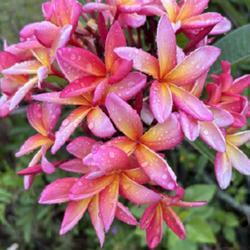
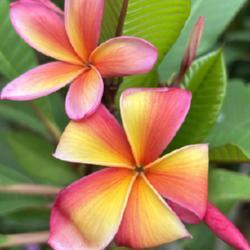
Plumerias have thick stems, leathery leaves, and an abundance of flowers from early summer until fall. In the tropics some varieties can grow to a height of over 30 feet. Shorter varieties can be planted and pruned into a large hedge. Plumeria's waxy, 2- to 4-inch flowers are very fragrant, so plant trees close to windows or patios to enjoy the enticing fragrance. Flower colors include pink, red, white, and yellow. Plumerias are often planted in containers and make excellent cut flowers.
Special features of plumerias
Fragrant
Good for cut flowers
Choosing a site to grow plumerias
Select a site with full sun to light shade and well-drained soil.
Planting Instructions
Plant in spring. Space plants 10 to 20 feet apart, depending on the expected mature size of the plant. Dig a hole only as deep as the root ball and 2 to 3 times as wide. If your soil is in very poor condition, amend the soil you've removed from the hole with a small amount of compost. Otherwise don't amend it at all. Carefully remove the plant from the container and set it in the hole. Fill the hole half full with soil, then water it well to settle the soil and eliminate air pockets. Let the water drain, then fill the remainder of hole with soil and water thoroughly.
Ongoing Care
Plumerias require at least 1 inch of rain (or equivalent watering) each week. More water may be required for plumerias growing in containers, but don't overwater or the trunks will rot. Feed plants twice a month during the growing season with a high phosphorous fertilizer. Plumerias normally require little pruning, but any shaping should be done in spring. Plumerias are sensitive to cold and should be protected when temperatures dip into the 40Fs. Check periodically for pests such as spider mites, white flies, and mealybugs. Use a horticultural oil or insecticidal soap to control these pests.
Frequently Asked Questions about Plumerias
My plumeria keeps making leaves but has never flowered. What is missing?
Light, in most cases. Plumerias flower on wood that has ripened in strong sun, and a plant kept in ordinary room light will produce perfectly good foliage for years without ever setting a bloom. A plant a foot and a half tall and growing steadily is usually old enough to flower, so age is not the obstacle.
Give it the brightest position you have, including direct sun, and move it outdoors for the warm months once nights are reliably mild. Introduce full sun over a week or two rather than all at once so the leaves do not scorch. Plants that spend the summer outdoors in full sun and come inside only for winter are the ones that bloom most reliably.
Two other things hold plants back. Plumerias want a genuine dry rest, with much less water once they drop their leaves, and a plant watered on the same schedule all year often keeps growing instead of setting flower buds. And a plant just moved into a much larger container tends to put its energy into roots first, so step up one pot size at a time.
My young plant keeps sprouting leaves that brown and drop, and it is not growing. What should I feed it?
Almost certainly nothing, for now. The feeding is more likely to be part of the problem than the cure.
Start with what the numbers on the box mean. A 15-30-15 feed is already a high phosphorus fertilizer, so anyone advising you to switch to something high in the middle number is telling you to keep doing what you are doing. The old rule that plumeria need a phosphorus heavy bloom food has not held up well. What matters far more is that the plant is fed only while it is in active growth, and at label rate or weaker.
Feeding a plant that is not growing is how you burn it. A young plumeria just out of dormancy, or one sitting in a cool dim room in late winter, has almost no working root system and no way to use what you give it. The fertilizer salts stay in the mix, concentrate as the surface dries, and scorch the fine roots and then the leaf edges, producing exactly that pattern of small new leaves that brown and drop while the plant stands still. Twice a month is reasonable for a plant in full growth in midsummer and far too much for one that is not moving.
The schedule that works is simple. Wait until the plant has pushed a full head of leaves and the new growth is obviously extending, which in most places means late spring. Feed then every two to four weeks at label strength, and stop by late summer, roughly six to eight weeks before you expect to bring it in, so the new growth firms up rather than going into the cold soft and sappy. A balanced feed is fine. If you have been feeding heavily already, flush the pot first by running several pot volumes of water slowly through it.
Then look at the mix, because this is where the old advice is worth throwing out. Topsoil with a quarter peat added is close to the worst thing you can grow a plumeria in: it packs down, holds water for days, and suffocates roots that evolved on rocky, sharply drained ground. You can water such a pot lightly and honestly believe you are not overwatering while the bottom two thirds never dries at all. Repot into a coarse, fast draining mix instead, such as a bagged cactus and succulent compost opened up further with extra perlite, pumice or fine bark, aiming for something water runs straight through. Use a pot barely larger than the root ball, with real drainage holes, and never a cachepot that holds standing water.
Check the base of the stem while you have it out and squeeze it. Firm all the way down is good; soft, spongy or dark is stem rot, which is the most common killer of young plants in wet mix.
Rule out the other two common causes while you are there. Brown crisp tips and edges on otherwise healthy leaves point to salt buildup, from feed or from softened water. Yellow to orange powdery pustules on the leaf undersides, with matching pale spots on top, are plumeria rust, a fungal disease that drops leaves early, usually from late summer on. Pick off and bin the affected leaves, clear fallen ones from under the plant rather than leaving them to reinfect it, water at soil level instead of over the foliage, and give the plant space and air. Rust is disfiguring but rarely fatal, and a plant heading into dormancy anyway needs no spray at all.
Finally, warmth and light. Plumeria want at least six hours of direct sun and real heat: growth slows badly below about 60 degrees Fahrenheit and stops near 50, so a plant on a windowsill in February will not grow whatever you feed it. Leaves browning and dropping in fall and winter are usually no problem at all, since this is a deciduous tropical tree and going bare for the winter is what it is meant to do.
One expectation to reset. Plumeria are often described as reaching about six feet, which is a pot grown figure for a plant that is regularly cut back. In the ground in a frost free climate they are trees of 20 feet or more.
Do I have to store it for winter, and how cold can it get?
If you are anywhere that frosts, yes, and the routine is easy because the plant does most of the work.
Bring it in before the first frost. Once the leaves have yellowed and dropped, the bare stems can spend the winter in a cool dark place, an unheated garage or a basement, provided the temperature stays above about 40 degrees Fahrenheit and comfortably away from freezing, with around 50 ideal. Do not water it at all while it is leafless and dormant, and do not feed it. A dormant plumeria looks like a dead stick, and that is correct.
In spring, once nights are reliably above 50 degrees, bring it back into the light, repot if it needs it, and begin watering sparingly. Increase water as the leaves come, and start feeding only once it is growing properly. Move it back outdoors gradually over a week or two rather than putting a pale plant straight into full sun.
How do I repot a plumeria without setting it back?
Move it into the next size of container rather than a much larger one, and do it in spring as growth is starting. Fill the new pot with fresh, freely draining mix, set the plant at exactly the depth it grew before, firm the mix gently around the roots to close any air pockets, and water it in thoroughly. Setting the stem deeper than it grew before is a common cause of rot later on.
Are plumeria roots invasive? I want to plant one near a pool.
The roots themselves are not the thing to worry about. Several other things are.
Plumeria have a shallow, fleshy, relatively compact root system with no reputation for lifting paving, cracking pool shells or getting into drains, and they are widely and successfully planted in courtyards, raised beds and narrow borders. One piece of the old reasoning is worth correcting, though, because people apply it to other trees where it does real harm: root spread does not stop at the edge of the canopy. In most trees roots extend well beyond the branch tips, and plumeria are no exception. What makes plumeria safe near hard surfaces is that the roots are soft and non-aggressive, not that they stay inside a circle you can draw on the ground. Hard pruning to keep the top compact does keep the whole plant smaller, and that part holds.
The real siting questions near a pool are these.
Frost, first. In the ground, plumeria are reliable only in roughly zone 10 and warmer. A hard frost kills them outright and a light one takes off the growing tips. If you are colder than that, the answer is a large pot on wheels that goes under cover in winter, not a spot in the border.
Drainage, second. This is the plant that rots in wet feet. Never plant it at the bottom of a slope or anywhere water collects after rain. On heavy clay, plant on a mound or in a raised bed rather than in a hole that acts as a bucket.
Sun and shelter. Six hours of direct sun minimum, and out of the worst of the wind, because plumeria branches are thick, brittle and heavy and snap in a gust. Stake a young plant for the first year or two while the shallow roots take hold.
Litter. This is the one that actually affects a pool. A plumeria drops large leaves through fall and drops flowers all summer, and both end up in the water and in the skimmer basket. Give yourself eight to ten feet of clearance from the water's edge, and more on the prevailing downwind side, or accept the netting.
Splash. Chlorinated splash out is tolerable in small amounts, but water from a salt chlorinated pool is not, and repeated splashing of salty water onto the root zone will burn a plumeria over time. Keep it well back from the wet apron.
Sap. Every part of the plant carries a milky white latex that runs freely when a branch is broken or pruned. It stains paving and pool decking and it irritates skin and eyes, which is another reason not to plant one where people brush past in swimwear.
Is the sap dangerous? I have children and a dog.
Treat it as an irritant to keep off skin rather than as a poison to panic about.
The milky sap contains compounds that irritate skin and eyes, and some people develop a rash from repeated contact or a burning reaction that is worse in bright sun. Wear gloves and long sleeves when you prune, keep the sap away from your face, and wash any splash off promptly with soap and water. Sap in the eye needs flushing with plenty of water and a call to a doctor if the irritation persists.
Plumeria is listed as toxic to dogs, cats and horses, and eating any part of it can cause mouth irritation, drooling, vomiting and diarrhea. Serious cases are uncommon, largely because the sap tastes appalling and animals rarely persist, but a dog that has chewed a stem is worth a call to your veterinarian or a pet poison line, and a child who has chewed one is worth a call to poison control. Do not let anyone treat the flowers as edible: they are used decoratively in garlands and on plates, not as food. Clean up prunings and dropped material rather than leaving cut stems where a dog will find them, and wash tools after cutting.
The top of my plumeria has turned black and the stem is soft. Can it be saved?
Sometimes, if you act quickly and the roots are still sound. A blackened growing tip with soft mushy tissue below it is stem rot, which usually takes hold where a plant has been kept too wet and too cool, most often at the end of winter storage or through a cold damp spring. Some shriveling after a dry winter rest is normal and no cause for alarm, but softness is not.
Cut back to living tissue. With a clean blade, take the stem down in stages until the cut face is firm, pale and dry rather than brown or watery, sterilizing the blade between cuts so you do not carry the rot back down the plant. Let the cut end callus in a dry airy spot for several days before doing anything else.
If the rot has run a long way down, lift the plant, wash the soil off the roots and look. Firm pale roots mean it is worth repotting into fresh fast draining mix and keeping it barely moist until new growth appears. Soft, dark, foul smelling roots mean the plant itself is gone, though a firm section of upper stem can often be rooted as a cutting and will carry the same plant forward. A fungicide labeled for ornamental plants can be used on the cut surfaces as insurance, following its label directions, but cutting away every trace of soft tissue and correcting the watering matter far more than any product does.
My cutting has gone soft, squishy and wrinkled. Can it be saved?
The squishy part cannot. Whether anything can be saved depends on how far up the rot has gone, and that has to be checked with your hands rather than your eyes.
Read the two textures, because they mean opposite things. Soft and squishy means rot, and there is no recovery in that section. Wrinkled but still firm means only that the cutting is using up its stored water, which is normal in an unrooted cutting and is not by itself a reason to water. A cutting that is both needs the salvage job below: find where firm tissue starts.
Take the cutting out of the pot. Working from the bottom, cut off an inch at a time with a clean sharp blade and look at the cut face. Rotted tissue is brown, wet or hollow, and often smells sour. Keep going until you have a face that is clean and white or pale green right across, with no brown ring or streak running up the middle, then squeeze the piece above it to confirm it is firm along its length. Wipe or disinfect the blade between cuts so you are not dragging rot upward. If you are left with a firm piece of reasonable length you have a cutting; if everything is soft to the tip, it is finished.
Then let it callus, which is the step usually missed. Stand the trimmed cutting somewhere dry, shaded and airy, out of the pot, for one to two weeks until the cut end has dried and sealed. Only then plant it.
Plant it dry, in a small pot. Use a coarse gritty fast draining mix, barely damp, set the cutting two to four inches deep, and stake it so it cannot rock, because a cutting that wobbles shears off whatever roots it starts. Choose a pot only a little wider than the cutting itself: a large pot around a rootless stem holds a large volume of damp mix that nothing is drinking, so the common advice to move a struggling plant into a much bigger pot is exactly backwards here.
Now do not water it. This is the whole trick and it is where most attempts fail. A cutting has no roots, so it cannot take water up, and water in the pot simply sits against a wounded stem. Keep the mix dry to barely damp, keep the pot warm, ideally 80 to 85 degrees with gentle bottom heat if you have a propagation mat, and keep it in bright light but out of blazing afternoon sun while it is leafless. Expect six to eight weeks, sometimes longer, and begin watering lightly only when leaves are unfurling and clearly enlarging.
Do not trust the leaf buds. The most misleading thing a plumeria cutting does is push leaves from stored energy in the stem while it rots quietly at the base, so growth at the tip is not evidence of roots. The test for roots is a gentle tug: a rooted cutting resists, an unrooted one lifts. Do that once every few weeks, not every day.
Two smaller points. Rooting hormone is optional and makes little difference on a stem this fleshy, and rooting in a glass of water is worse than useless for plumeria, usually ending in the same soft dark stem you started with. Timing matters more than either: a cutting started in late summer goes into shortening days and cooling nights just as it needs warmth and will often sulk until spring, while late spring and early summer give it a full warm run to root and establish before its first dormancy.