

Introduction
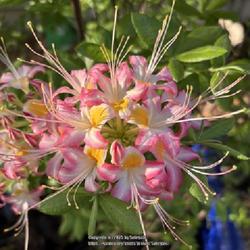
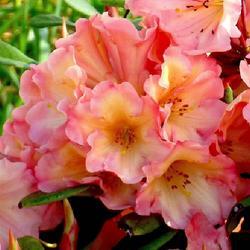
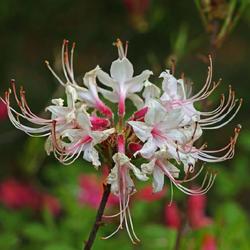
This popular genus includes the familiar spring-blooming rhododendrons and azaleas, both of which produce large clusters of colorful flowers.
About rhododendrons
Rhododendrons and azaleas perform best in regions with cool, moist summers. They bloom in late spring to early summer; flower colors include pink, red, violet, yellow, and white, depending on the species and variety. Size also varies considerably, from 1 or 2 feet to over 20 feet in height, so choose plants carefully to fit your garden situation. Although the distinction isn't clearcut, in general rhododendrons are evergreen, while most azaleas are deciduous (although there are evergreen types).
Special features of rhododendrons
Attracts hummingbirds
Shade tolerant
Planting Instructions
Plant in spring or fall. Space plants 2 to 6 feet apart, depending on the expected mature size of the plant. Dig a hole only as deep as the root ball and 2 to 3 times as wide. If your soil is in very poor condition, amend the soil you've removed from the hole with a small amount of compost. Otherwise don't amend it at all. Carefully remove the plant from the container and set it in the hole. Fill the hole half full with soil, then water it well to settle the soil and eliminate air pockets. Let the water drain, then fill the remainder of hole with soil and water thoroughly.
Ongoing Care
Apply a layer of compost under the shrub each spring, spreading it out to the dripline (the area under the outermost branches). Add a 2-inch layer of mulch to retain moisture and control weeds, keeping mulch a few inches away from the trunk. Water plants during the summer if rainfall is less than 1 inch per week. In regions with severe winters, protect evergreen rhododendrons in the fall by wrapping burlap around them. Prune to remove dead, damaged, or diseased branches anytime. Prune to reduce height after flowering in spring. Rhododendrons will grow back from old wood.
Frequently Asked Questions about Rhododendrons
Why won't my azalea or rhododendron bloom?
The most common cause is accidental pruning. Next year's flower buds form soon after this year's flowers finish, so pruning must happen right after bloom and before early July. Anything cut from August onward takes developing flower buds with it, and you get few or no flowers the following spring. If you like to tidy shrubs in summer, check your variety's bloom time first and prune only after the flowers drop.
Deadheading causes the same loss in miniature. The new buds form immediately behind the old truss, and it is easy to snap them off along with the dead flower head. Take the spent truss off with a careful downward push, or a clean cut just above the swelling growth buds, rather than pulling.
Bloom time itself explains some cases. Varieties flower weeks apart, and Gumpo types in particular bloom much later than common varieties such as Hershey Red. Poor light reduces flowering even though these are shade tolerant plants, and winter cold in a very exposed position kills flower buds before they open.
You can settle the question a season in advance. From midsummer onward, look closely at the buds at the branch tips: thin, narrow, pointed buds are leaf buds, and short, fat, rounded buds are flower buds. A shrub covered in fat buds in August will flower well the following spring. That tells you whether the problem is bud formation or bud survival, which are different problems with different fixes.
If a normally free flowering plant sets no buds at all, the cause is cultural. Inconsistent soil moisture is the usual culprit, since enough drought stress at the wrong point in summer costs you the following year's flowers. Steady moisture, correct mulching, and no heavy feeding are what fix it. Overfertilized plants also make foliage at the expense of flowers.
Some of my azaleas have fewer buds than identical plants a few feet away. Is it the soil?
If nearby plants of the same variety bloom well, your general soil is not the problem. Look instead at what differs plant by plant: light, water, past pruning, and above all what the root zone is doing in that particular spot. Patchy decline within one bed almost always comes from below ground rather than from anything you can see on the leaves. The next answer covers how to tell the two usual causes apart.
Some plants are small and pale with reddish leaves while their neighbors are large and dark green. What causes that?
Identical plants, identical light, identical bed, and yet one thrives and its neighbor fades. That pattern rules out most of what people reach for first: if it were the exposure or the variety, the whole row would suffer together. Two causes account for the great majority of these cases, and they look remarkably alike from a standing position.
Phytophthora root rot is the first, a water mold rather than a true fungus and by far the most destructive disease of landscape azaleas. It is not a leaf disease at all, which is why hunting for a lesion gets you nowhere. It attacks the fine feeder roots, the plant loses its ability to take up water and nutrients, and everything visible above ground is a downstream symptom. On Kurume type evergreen azaleas the classic picture is undersized new leaves, yellowing between the veins while the veins stay greener, sometimes a dull purple or reddish cast, and older leaves reddening and dropping in late summer instead of holding through winter. Shoot growth is short and new stems are noticeably thin. Some shrubs collapse in a season; more often they decline branch by branch over several years while the owner keeps feeding them.
Iron chlorosis from high soil pH is the second. Azaleas and rhododendrons are calcifuges, meaning they evolved on acid soils and their roots can take up iron and manganese only when the soil is acid. Their range is roughly 4.5 to 6.0, with about 5.5 ideal. At 6.5 or above, the iron in your soil is present but locked in a form the plant cannot use, and the plant starves in the middle of plenty. The symptom is yellowing between the veins on the newest leaves, with the veins standing out as a green net, and undersized growth. Patchiness is common because pH is rarely uniform across a bed, especially near a house foundation where lime leaches out of concrete footings and mortar for decades, or where builder's rubble was buried.
Telling them apart is worth the twenty minutes it takes. Dig at the edge of the root ball of a bad plant and a good one and compare directly. Healthy roots are fine, dense, white to light tan, and smell of clean soil. Roots destroyed by Phytophthora are reddish brown to nearly black, brittle, sparse, and often confined to the top few inches; scrape the bark of a larger root near the crown and you may find the discoloration has run up into it. That advance toward the main stem is the diagnostic finding. If the roots are white and plentiful while the leaves are yellow between green veins, you have a nutrient uptake problem, not a rot.
Then check where the water goes. Root rot needs sustained moisture and warm soil, and it is far worse in clay and anywhere water gathers: the low end of a bed, the outfall of a downspout, the drip line of a roof edge with no gutter, a bed backed by a slope that sheds runoff into it. An irrigation system running the same minutes everywhere makes it worse, because the setting that keeps a sunny bed alive drowns the shady corner.
Check planting depth on the failing plants too. Setting one of these shrubs too deep produces this exact decline, and it is the single most common installation error. The top of the root ball should sit at or slightly above the surrounding grade, never below, with no soil mounded over the crown.
What do I do about high pH?
Get a proper soil test through your county Cooperative Extension rather than relying on a probe meter, because you need the buffer pH and existing nutrient levels before you amend anything. Elemental sulfur is the standard correction, applied at the rate the test recommends, worked into the surface and watered in. It acts over months rather than days, so a fall application for the following season is normal.
Chelated iron applied as a foliar spray or soil drench will green the plant up within a couple of weeks, but be clear about what it is: a temporary cosmetic fix that treats the symptom while the pH stays wrong. Use it to buy time, not as the plan. An acid forming fertilizer formulated for azaleas, camellias, and rhododendrons helps hold the pH down once you have corrected it, and pine bark or pine straw mulch contributes mildly in the same direction. Wood ash, bone meal, lime, and mushroom compost all push pH up and should stay out of the bed.
What do I do about root rot?
In a home landscape there is no cure worth pursuing. Fungicides available to homeowners suppress the organism at best; they do not restore roots that have already rotted, and a plant far enough gone to show leaf symptoms has usually lost too much root to recover. Remove badly affected plants with as much of their root mass as you can lift. Everything else is about not repeating the conditions.
Rebuild the bed for drainage before replanting. On clay, plant into a raised bed rather than into a hole, because a hole dug in clay and backfilled with something looser is a bucket that fills with water and holds it. Raise the whole bed six inches or more and mix a generous quantity of pine bark down about six inches. Pine bark is the material that actually helps, and there is good evidence its natural compounds suppress the organism; peat and sawdust do not do the same job. In the worst spots, set the root ball on the existing grade and build the bed up around it.
Fix the water first, not the plant. Extend downspouts away from the bed, grade so runoff sheds past rather than into it, and if the bed is irrigated, put these shrubs on their own zone so you can water them independently of the lawn. An established plant wants roughly an inch of water a week in the growing season, delivered deeply and not often, with the surface drying between waterings.
Buy carefully. Choose plants with good green color and pale healthy roots, refuse anything wilting in the morning or shedding evergreen leaves heavily out of season, and slide a plant out of its pot at the nursery to look at the roots before you buy. Some cultivars carry useful resistance, particularly certain Glenn Dale and Robin Hill selections, and your extension office or a good local nursery will know what performs where you are, because the answer is regional.
Do not replant azaleas where azaleas died of root rot. The organism persists in soil for years. Put something unrelated in that spot instead, such as a holly, an inkberry, an abelia, or a distylium.
What soil, mulch, and watering do these plants actually want?
Start from the roots, because everything follows from them. Rhododendron and azalea roots are fine, fibrous, and very shallow, occupying only the uppermost few inches of ground. That single fact explains the plant's needs and most of its problems.
- Humusy, acidic, evenly moist, well drained soil, pH 4.5 to 6.0. Those requirements have to be met together; moist but poorly drained is what kills them. Work pine bark or composted oak leaves into the bed before planting.
- Water so the soil stays moist but never sopping to a depth of six to eight inches, supplementing rain as needed rather than watering to a schedule. Test with a finger before watering, then verify: water what you think is the right amount, wait a few hours, and dig down to see how far it went. Most people are surprised in one direction or the other.
- Mulch with two to three inches of organic material, shredded bark, pine needles, or leaf mold, which keeps the surface soil evenly moist and cool. This is worth more to a rhododendron than to almost any other shrub.
- Do not mulch deeply. A thick layer starves the roots of air and, worse, invites them to grow upward into the mulch itself, where they are far more exposed to drought and cold. Several inches is help; a deep pile is harm. Keep it pulled back a few inches from the stem.
- Do not disturb the soil around them. Digging, cultivating, or even scraping the top few inches damages feeding roots directly, and a plant that weakens after work nearby often has no other explanation.
- Do not plant in a low spot where water collects in a wet season, and site for morning sun with afternoon shade in hot climates.
- Pick up and remove fallen leaves from under the plants rather than leaving them to lie, in case an insect or disease problem is at work.
If you want to know what your site does, dig a hole about a foot deep, fill it with water, let it drain, then fill it again. If water is still standing after four to six hours, the site drains poorly. The answers are planting high on a raised mound, improving the soil organically over a wide area rather than just in the hole, or choosing a better spot. Never dig sand into heavy ground, and never backfill a hole in dense soil with a loose fluffy mix, because a soft pocket in tight ground fills with water and holds the roots in it.
Can I use the same balanced fertilizer I use on my trees?
No. It is not about the numbers on the bag so much as about the plant. That mat of fine hair-like roots sitting in the top few inches of soil is unusually sensitive to salts, and every soluble fertilizer is a salt. At a rate that suits a tree with deep roots and plenty of soil volume to dilute it, the same product concentrates around a rhododendron's feeding roots and scorches them. On a shrub that has just been transplanted and is already short of roots, that is the difference between a slow start and a dead plant.
When one of these plants genuinely needs feeding, it wants a slow release fertilizer formulated for acid loving plants, applied strictly at the label rate. Do not exceed the suggested amount.
Does a newly planted rhododendron need feeding?
Not in its first year. Give it a full growing season in the ground and plan to feed, if it needs it, in the spring after that. A new shrub is spending everything it has on pushing roots into the surrounding soil. Fertilizer does not help with that and can work against it by forcing soft top growth the roots cannot yet supply. Water is what it needs, applied so the soil stays evenly moist without ever being saturated, plus shelter from harsh afternoon sun and drying wind.
With these plants in particular it is safer to feed too little than too much. A hungry one grows slowly and tells you so; an overfed one loses its roots and you find out later. In the meantime, mulch it and let the mulch do the feeding: two to three inches of pine bark or pine needles releases nutrients slowly as it breaks down, feeds the soil life, holds moisture in the shallow root zone, and keeps the roots cool, which is a fair description of everything a rhododendron wants. Topdressing with good compost does the same and carries no risk of salt burn.
My rhododendron looks pale and unhappy. Should I feed it?
Test the soil first. Most of what looks like hunger in a rhododendron turns out to be pH or drainage instead, and fertilizer fixes neither. Chlorosis is a plumbing problem rather than a supply problem, and feeding a chlorotic plant only adds salts to soil that already cannot deliver what is there. A soil test from your county extension service costs very little and answers the pH question outright. Spend that before you spend on fertilizer.
The leaves are rolled up lengthwise like a taco. What does that mean?
Rolled leaves are the plant conserving water, and the season tells you what is behind it.
In cold weather, rolling is normal. As the temperature approaches and passes freezing, the plant curls its leaves under toward the midrib and droops them, reducing the leaf surface exposed to cold drying wind. They unroll again as it warms. A rhododendron rolled tight on a January morning and flat again by afternoon is behaving exactly as it should.
In summer heat, rolling means a water problem, and it can be too little or too much. The plant cannot take up enough water to meet demand, which happens both when the soil is dry and when the roots have been damaged by soil that stayed saturated. Here is the trap: the natural response to a wilting shrub in a hot summer is to soak it every day, and if damaged roots are the problem, daily soaking makes it worse. Stop and find out what the soil is actually doing several inches down before you water again.
Leaves that roll and wilt despite genuinely moist soil point at root rot from poor drainage, which is covered above. Leaves still curled after winter and not recovering were most likely desiccated by freezing wind or an ice storm.
When a plant has been stressed, disease often follows, and a latent infection flaring in a shrub already weakened by drought or waterlogging is genuinely hard to identify from a distance. Take a sample of affected foliage and a photograph of the whole plant to your county extension service or to experienced nursery staff before treating anything.
One shrub has rolled brown leaves and is not blooming while the others beside it are fine. Is it dead?
Probably winter damage, if it was healthy through the previous summer and fall. PJM rhododendrons are among the most trouble free of the group, resistant to root weevils and rarely developing bacterial leaf spot, but no plant is beyond the limits of temperature, ice, and wind, and several days encased in ice will desiccate foliage badly.
Find out whether the wood is alive, because that decides everything else.
- Scrape a little bark away with your thumbnail on a stem.
- Green tissue just under the bark means live wood. Rusty orange or brown means that stem is dead.
- Work down the branch, and across as many branches as it takes, until you find where the green begins.
- Prune back to live wood. A plant with sound roots and live stems sheds the damaged foliage and pushes new leaves, often within the same season.
- If you can find no live wood anywhere, the plant is gone.
Since only one of a group is affected, check the roots as well. Drainage varies within a few feet in most gardens, and these plants are notoriously susceptible to root rot in ground that holds water. Healthy roots are creamy white inside; dying roots turn rusty orange or brown. If you find rot, the position is wrong for the plant regardless of how well its neighbors are doing, and a replacement in the same hole will follow it. Raise the planting instead, into a wide mound or a raised bed of humusy soil, which is standard practice on heavy ground.
Buds present but no flowers on a plant this stressed is expected. Growth comes before flowers when a shrub is rebuilding.
My azalea looked dead after a hard winter in New England. Should I have cut it down?
Cut into a branch and look before you cut anything off. Green tissue under the bark means the plant survived and should recover; brown all the way through means that branch is dead. Keep working back until you find green or confirm the whole plant is gone.
The larger question is whether the variety belongs in your climate. Many evergreen azaleas sold in nurseries, the Kurume, Indica, and Satsuki types, are not hardy in zone 5b to 6a and can be killed outright by a harsh winter, though partial damage is more common. What suits those zones are the hardy deciduous groups such as Northern Lights, Exbury, and Kermesina hybrids, which drop their leaves in winter and are bred for cold. An evergreen type may sail through a mild winter and then be destroyed by a harder one. If yours has pushed some growth, keep it and protect it through winter, but a hardy deciduous type will give much better results.
Are rhododendrons annual or perennial? Do they come indoors for winter?
They are woody perennial shrubs and they stay outdoors in the ground year round. Most of the commonly sold kinds are hardy over a wide range of the country, and they are permanent landscape plants rather than anything to lift and store.
Choose for your own zone when you buy, since hardiness varies considerably across the species and hybrids on offer. The PJM types are notably cold hardy, while many large leaved hybrids are not. Your county extension service or a good local nursery can tell you which kinds are reliable where you live, and a plant that is marginal in your climate will be a source of winter damage every few years.
The lower leaves on my new PJM are turning red and dropping. Will they grow back?
The red is normal and it is one of the good qualities of this group. PJM types color to deep red, mahogany, and plum purple in fall and hold that through winter, greening up again as the season warms. They are evergreen, so the leaves should stay on the plant through the cold months, which is the difference between fall color here and fall color on a deciduous shrub.
Some loss of the lowest, oldest leaves is also normal, particularly in the first season after planting and particularly if the plant has moved from full sun at the nursery into a shadier garden. Leaves in low light stop paying their way and the plant sheds them. Too much water is the other usual cause, so keep the soil evenly moist and never soggy and make sure the plant is not sitting in a wet spot during rainy spells.
New leaves come at the branch tips and in newer growth rather than filling in along old bare wood, so a stem that has dropped its lower leaves generally stays bare there. If the shrub becomes leggy over the years, these plants do resprout from old wood, and cutting one or two of the oldest stems back hard in early spring, a couple a year, will rebuild it from lower down.
One caution about PJM specifically: it is a lepidote rhododendron, belonging to the small leaved, scaly leaved side of the genus rather than the large leaved rhododendrons most people picture. Advice written for the big leaved kinds does not always transfer, so be careful applying what you read about leaf curl, winter protection, or pruning from a page about a large leaved hybrid.
Older inner leaves are yellowing and falling. Is something wrong?
Usually not. Rhododendrons shed their oldest leaves on a natural cycle, and the inner and lower leaves that are two to three years old turn yellow and fall. This is the most commonly misread problem in rhododendron care. If the new growth is dark green and the plant otherwise looks healthy, it is routine housekeeping. Rake the fallen leaves out as part of normal cleanup.
The leaves are dying back from the branch tips with rust colored spots underneath.
Two separate things may be going on, so look at both.
First check whether anything has disturbed the root zone, since work in the top few inches of soil weakens these shallow rooted plants enough to bring on problems of this kind.
Then consider rust, which fits rust colored discoloration on leaf undersides. It is caused by the fungus Pucciniastrum vaccinii, which produces rust colored pustules on the undersides that release golden or brownish spores. It needs an alternate host to complete its life cycle, and that host is hemlock, so hemlocks growing nearby make rust considerably more likely.
Rust is difficult to control once established, and sanitation carries as much weight as anything you spray. Prune off and destroy affected foliage, clear fallen leaves from under the plants, and do not compost them. Improve air movement by thinning crowded shrubs and cutting back anything overhanging them, since foliage that dries quickly after rain is much less prone to disease. Water at the base rather than over the leaves. If you do treat, a sulfur based fungicide applied roughly every 10 days through July and August is the traditional program, and neem based products are another option with fungicidal activity. Sulfur carries two cautions worth knowing: it damages foliage when applied in heat above about 90 degrees F, and it must not go on within the interval the label sets after an oil spray. Do not spray any plant while it is in flower, which protects the bees working it.
Get a diagnosis before committing to a spray program, because several other problems produce leaf spots and dieback on these plants and the treatments differ.
One branch is wilting and browning while the rest of the shrub looks fine.
That pattern suggests Botryosphaeria dieback, in which cankers girdle a branch and everything beyond the canker wilts and browns. The disease usually enters through wounds or stress cracks and kills one branch at a time.
Prune out the affected branch below the canker, disinfecting your pruners between cuts with a 10 percent bleach solution. Remove fallen leaves and branches to reduce spore sources. In wet conditions it can move fast, so improving air circulation and avoiding overhead watering help slow it. Fungicides are not reliable here; removing infected wood and keeping the plant vigorous are the real defenses.
There are brown, reddish, or tan spots on the leaves.
Various fungal pathogens cause leaf spots, some with concentric rings or halos. Most are cosmetic problems that do not threaten the plant's survival, and they are worse in wet weather and better in dry.
Remove affected leaves if there are enough to bother you, space plants adequately, prune to allow air movement, and water the soil at the base rather than overhead. A naturally wet or heavily shaded site keeps them going. Fungicides can be applied at bud break in spring if spots were severe the previous year, following the product label for rates and intervals, but improving the growing conditions is usually more effective than treatment.
The upper leaf surfaces are finely stippled and there are dark specks underneath.
Lace bugs. Rhododendron and azalea lace bugs feed on the leaf sap from below, producing a characteristic pattern of tiny pale spots on the upper surface and an overall bleached or yellowed look. Turn a leaf over and you will see the insects themselves, tiny, flat, and translucent, along with their dark varnish-like droppings. The damage usually shows in mid to late summer. These are the most common azalea pest.
Lace bugs thrive in hot, dry conditions, so water the soil thoroughly while keeping the foliage dry, and remove heavily damaged leaves. For a severe infestation, spray the undersides of the leaves with insecticidal soap or horticultural oil, following the label for rate and timing. Apply in early morning or evening to avoid leaf burn, and do not spray in heat above 85 degrees Fahrenheit.
There is fine webbing on the leaf undersides and the foliage is bronzing.
Spider mites, which are almost invisible to the naked eye but leave delicate webbing on leaf undersides and between stems. Infested foliage yellows, curls, or turns orange and bronze as the mites drain the sap, and young leaves may be deformed. The damage is more dramatic than lace bug stippling and it appears in hot, dry conditions.
Spray the plant thoroughly with water from the hose, including undersides and new growth, to dislodge mites and raise humidity, and repeat every few days. For persistent infestations, apply a miticide or insecticidal soap exactly as the label directs, including any temperature restrictions. Timing matters, because mite populations explode in heat and dry air and a material has to reach the right stage of the life cycle to work.
Something has cut neat semicircular notches out of the leaf margins.
Weevils. The damage looks deliberate and geometric, and the notched leaves usually stay attached. Most leaf feeding weevils are minor pests and the plant recovers, so treatment is rarely warranted unless the feeding is extensive. If you do treat, follow the label directions and timing for the specific pest.
We have a lot of flies in the azaleas. What are they?
Without a clear look at the insects the diagnosis is uncertain, and the control differs, so it is worth telling them apart.
- Lace bugs stipple and bleach the leaves and leave dark varnish-like specks underneath. Most common by far.
- Whiteflies are tiny white insects that fly up in a cloud when you brush the plant, feeding on soft new growth.
- Fungus gnats are weak fliers emerging from wet mulch or waterlogged soil. They do not feed on the plant; they are a sign of a moisture problem.
- Actual house flies are attracted to nectar or to something else nearby rather than to the shrub itself.
For lace bugs and whiteflies, horticultural oil or insecticidal soap applied per the label will help. For fungus gnats, improve drainage and water less often. For true flies with no obvious source, rinsing the plants to remove nectar may be enough, and the problem often resolves once the flowers finish.
I used copper sulfate on aphids and it did nothing except burn the leaves.
Copper sulfate is a fungicide and will not kill aphids or any other insect. It is also phytotoxic and readily scorches tender new growth, so rinse the plant thoroughly and do not repeat it.
For aphids, start mechanically: blast the plants with a strong water spray to dislodge them, repeating daily if needed, then apply insecticidal soap or horticultural oil per the label. Aphids are born already pregnant and their generations overlap, so a colony rebuilds within days, which is why a single treatment rarely finishes the job and why the treatments need repeating.
My azalea was covered in buds, then the flowers browned and collapsed as soon as they opened.
That is not caused by a general purpose water soluble plant food used at label rate, whatever the timing suggests. Three explanations account for most cases, and you can tell them apart by looking at the petals closely on a fresh morning.
Petal blight is the most likely, and it is why azaleas so often bloom beautifully one year and rot in the flower the next. The fungus attacks petals only and does nothing to leaves or stems. It starts as small pale spots on colored petals, or rust colored spots on white ones, that within a day or two run together until the whole flower is limp, brown, and slimy. The giveaway is texture and persistence: ruined flowers feel slippery rather than dry and papery, and they hang on the plant instead of dropping cleanly. In a warm, wet spring it can take a planting from full bloom to brown mush in about forty eight hours. The fungus overwinters as small hard resting bodies in the fallen flowers and the litter beneath the shrub, which is exactly why it returns to the same plants every year.
Thrips are the second possibility: minute insects that feed under the bud scales and inside opening flowers, rasping the tissue and leaving silvery or streaked bronze discoloration, sometimes with tiny dark specks of excrement. Thrips damage looks scarred and streaked, and the petals dry rather than turn to slime.
Bud blast is the third, and it applies when the buds never open at all. They turn brown or gray and stay firmly attached, hard and dry, often through the following winter, and by late summer you can see tiny black bristles standing out of them. It is associated with leafhopper feeding, which is how the fungus gets in.
The practical response is much the same in all three cases, and sanitation carries most of the weight. Pick off and bag every browned flower you can reach, and rake out the fallen ones and the old mulch underneath. This is the single most effective thing you can do, because you are removing next year's inoculum. Put the debris in household waste rather than the compost pile, then lay a fresh two to three inch layer of mulch, which buries anything you missed and makes it harder for spores to splash back onto the flowers.
Stop watering these plants over the top, because wet petals are what petal blight needs. Water the ground at the base with a wand, soaker hose, or drip line, and if you must use a sprinkler, run it very early so the flowers dry quickly rather than staying wet all night. Improve air movement, since azaleas planted tight against a wall, crowded together, or buried under low branches stay damp for hours after everything else has dried. And consider variety: early blooming azaleas often flower before conditions favor petal blight, so in a garden where the disease returns annually, shifting toward earlier cultivars is a real solution.
If you decide a spray is warranted, and on most home azaleas it is not, treat it as prevention rather than rescue, because nothing you apply will restore a flower that has already collapsed. Products effective against petal blight must be on the flowers before infection, which means starting as buds show color and repeating on the label's interval through bloom, in the rain. That is a demanding schedule for an ornamental, and sanitation plus overhead water discipline is what most gardeners should rely on.
Since the question usually comes up in the context of feeding: these are shallow rooted, light feeders, and heavy fertilizer does them no favors. One application of a fertilizer formulated for acid loving plants, at label rate, after bloom, is plenty in most gardens. Late season nitrogen pushes soft growth that winter damages, and salts from repeated feeding injure the fine roots sitting just under the mulch.
Deer stripped the leaves and buds off the top half of my shrubs over winter. Should I cut the bare branches off?
Leave them. These plants resprout from old wood, so well established shrubs will refurnish those branches on their own, and if they are otherwise healthy the damage will be close to invisible in a year. Cutting the bare wood off now removes growth points the plant is about to use.
Help them with the basics rather than drastic measures: keep them well mulched, water through dry spells since browsing is a real stress and the plant is rebuilding leaves it has to pay for, and feed sparingly if at all, using a slow release acid formulation strictly at label rate. Rhododendron roots are shallow and easily burned, and heavy feeding does more harm than the deer did.
Then plan for next winter, because the deer will be back. They are creatures of habit, and a yard that fed them in January is on their route now. Physical protection is what works: a tall fence, or netting or burlap screens around individual shrubs, put in place before the snow arrives. If you use a repellent, choose one whose current label covers ornamentals, apply at the label rate, and reapply as the label directs after rain. Do not improvise an electric fence from batteries or household wiring; if you want one, use proper equipment installed to its instructions. Expect browsing on your other plants in summer too, and protect what you value before it is eaten rather than after.
My red rhododendron has faded to pinkish red. Why did it change color?
It has not changed. Named and hybrid rhododendrons cannot change flower color, because color is fixed in the plant's genetics.
What changes the appearance is sun. Strong light fades a deep red flower toward pink, and the effect grows as a plant receives more light than it used to. So ask what changed around it: a tree limb lost or removed, a shrub pruned, a neighbor's tree taken down, or a fence replaced can all raise the light level on a shrub that has not moved. Weather during flowering shifts the shade as well, with cool cloudy conditions giving deeper color and hot bright weather at bloom time washing it out, so the same shrub varies from year to year.
If the fading matters to you, the answer is shade during the hottest part of the day, either from a well placed companion planting or by moving the shrub in early spring or fall to a site with morning sun and afternoon shade.
How do I divide a rhododendron?
Do not try. A rhododendron grows from a single woody crown rather than a spreading clump, so cutting it apart means cutting through the trunk and the main roots, and the usual outcome is one damaged plant instead of two good ones.
Layer it instead, which is how the plant increases itself in the wild. Low branches resting on the ground root where they touch, and all you are doing is helping that along.
- Choose a low, flexible branch that can be brought down to soil level without straining.
- Loosen the soil where the branch will meet the ground, working in compost or leaf mold if the ground is heavy.
- Wound the underside of the section that will be buried, scratching or nicking it with a knife. This is the step that triggers rooting, and skipping it is why most attempts fail.
- Bury that wounded section 3 to 4 inches deep. Depth matters: a stem laid on the surface or barely covered dries out and never roots.
- Peg the buried section down with wire bent into a staple, which holds it where a stone will not.
- Spread damp leaves over the disturbed ground and never let that spot dry out. A covering that stays damp through the summer is what allows roots to form.
- Expect roots within about a year. Check by tugging very gently before you cut anything, then sever it from the parent and grow the new plant on in a pot or nursery bed until it is big enough for its permanent position.
The parent plant is left alone throughout, which is another reason this is the right method for a shrub you value.
How do I air layer an azalea?
Air layering works well for azaleas and is reliable when cuttings have failed. You need moist sphagnum moss and plastic wrap.
Choose a branch that is easy to reach and not too thick. Make a shallow cut about an inch long into the branch without severing it, and wedge a toothpick or matchstick into the cut to hold it slightly open. Pack moistened sphagnum moss into and around the cut to make a ball about the size of a golf ball, then wrap the moss tightly in plastic, sealing above and below the wound. Tape the plastic to itself, not to the bark.
Check weekly that the moss stays moist and the plastic has not split. Over several months roots form inside the ball. When you can see a dense network of roots through the plastic, remove the wrapping and moss carefully, cut the rooted section free just below the roots, pot it in moist potting soil, and keep it warm and humid while it establishes. The whole process usually takes three to six months, and starting in spring or early summer is faster than fall or winter.
I am moving a large azalea. Should I root prune it first?
No. These are shallow rooted plants with fragile root systems, and root pruning only reduces the roots further and shocks the plant unnecessarily. The goal is the opposite: keep as large and intact a root ball as you can.
When you dig, remember the roots reach well beyond the branch spread. Dig as wide as you can and down about six to nine inches, loosen the root ball carefully, and set it on a tarp so you can drag it to the new site without further damage. Schedule the move for late fall or very early spring while the plant is dormant. Early summer is the worst time to move any plant, and azaleas are especially stressed by heat and drought even when they are not being moved.
Replant at the same depth it was growing before, keep the soil evenly moist but not waterlogged through the establishment period of one or two years, and mulch two to three inches deep over the root zone, kept a few inches back from the stem.
My azaleas are thin, twiggy, and open. How should I prune them?
That open, tiered, somewhat twiggy form is the normal shape of most azaleas, especially the evergreen types. It is not a defect, though shade encourages the plant to grow even more sparsely, and if the plants you bought were very dense, that density came from regular shearing at the nursery rather than from the plant's natural habit.
To make them denser, selectively trim out lanky branches by cutting just above a branch fork, removing perhaps a quarter to a third of the plant. Pinch back the tips of new growth once or twice in early summer to encourage branching. Avoid overfertilizing, since these are not heavy feeders and too much nitrogen makes them leggy. Plants stressed by sun, especially in a hot climate, are more inclined to open up, so afternoon shade helps as well.
I sprayed a broadleaf lawn weedkiller near my azaleas and now everything is dying. Can I save them?
There is no antidote, and it is better to hear that plainly than to spend money on treatments that cannot work. Products sold to kill broadleaf weeds in lawns typically combine growth regulator herbicides such as 2,4-D, dicamba, and MCPP. They are selective only in the sense that they spare grasses. An azalea, a Japanese maple, and a rose are all broadleaf plants, and the chemistry cannot tell them from a dandelion. These materials are systemic: they enter through leaves and, with dicamba especially, through roots, and once they are moving in the vascular system nothing removes or neutralizes them inside the plant.
What you can do is give the plants the best possible conditions and wait, and how much comes back depends almost entirely on the dose they took up.
- If the application was very recent and the foliage is still wet, rinsing thoroughly with plain water reduces what gets absorbed. Once symptoms appear, this no longer helps.
- Water normally and deeply, and do not let the root zone dry out. Do not overwater in the belief you are flushing the chemical through; dicamba does move with soil water, so deep irrigation over following weeks dilutes what is in the root zone, but a waterlogged root system on an already stressed shrub causes more harm than it prevents.
- Do not fertilize, and especially do not reach for high nitrogen to push recovery. Forcing new growth on a plant whose growing points are chemically damaged produces distorted shoots that fail and spends reserves the plant needs.
- Do not prune yet. Wait until you can see which wood is dead and which is only injured, which usually means waiting for the next flush of growth or even the following spring.
- Mulch, shade a scorched plant through the hottest part of the day if you can, and otherwise leave them alone.
Then read the symptoms over the next month or two. Growth regulator injury has a characteristic look: leaves that cup, curl, strap, or twist, new shoots coming out narrow and distorted, and stem tips dying back. Distorted leaves never straighten, but a plant that produces normal looking growth at the next flush has metabolized what it took up and will probably come through. Roses are relatively tough and often recover over a season or two. Azaleas, with their shallow fine roots, are less predictable. Japanese maples are genuinely sensitive and a heavy dose is frequently fatal, sometimes not until the following season, which is why a maple that appears to rally in fall can still fail to leaf out in spring. Give everything a full year, and scrape for green under the bark before you remove a plant.
A few things worth knowing so it does not happen again, because this is one of the most common ways home gardeners kill established shrubs.
- Read where the label says the product may be used. A weedkiller labeled for lawns is labeled for lawns. Most of these labels say explicitly not to apply within the root zone of ornamental trees and shrubs, and that root zone extends well beyond the branch spread, commonly two to three times the radius. Spraying around the mulch is spraying over the roots.
- Vapor drift is a real hazard with this chemistry, not just spray drift. Dicamba and the ester formulations of 2,4-D can volatilize off a treated surface hours after application on a warm day and move onto plants that were never sprayed. Apply only when it is cool and calm, use amine rather than ester formulations near ornamentals, and never spray on a hot afternoon.
- Keep a separate sprayer for herbicides and never use it for anything else. Residue in a sprayer later used for an insecticide or a foliar feed has damaged more gardens than most people realize, and rinsing does not reliably remove it.
- Do not compost clippings from a lawn recently treated with a broadleaf herbicide if the compost is destined for garden beds. Clopyralid and aminopyralid in particular persist through composting and through an animal's digestion, and they injure tomatoes, beans, and other sensitive crops a year later.
Where weeds are among shrubs rather than in turf, hand pulling, a hoe used shallowly to avoid surface roots, and mulch kept two to three inches deep are the tools that carry no risk to the plants you want to keep.
Bleach house wash ran off onto my azaleas and the leaves are brown, but the branches are still green inside.
That is foliar burn: the chemical killed the leaf tissue without killing the wood underneath, and green tissue in the branches is reason to be hopeful. Bleach based exterior cleaners strip the protective waxy cuticle from leaves, which leaves them extremely vulnerable to drying out, so damage appears within a few days and continues as the bare twigs dry further.
Rinse the plant now to leach away remaining residue from foliage and soil. Let the dead leaves fall on their own rather than rushing to prune, and wait until after flowering next spring to cut away dead stems, once you can see what actually survived.
Next time you power wash the house, cover the plants first with sheets or blankets, or soak them thoroughly with plain water beforehand. These cleaners are serious plant toxins even at moderate strength, and preventing the damage is far easier than recovering from it.
Can I grow azaleas in the Arizona low desert?
No, and it is worth being direct about it. The obstacles are fundamental. Azaleas require soil pH 4.5 to 6.0 and Arizona is naturally 7.5 to 8.5 or higher. They want consistently moist, humus rich soil, and you have dry alkaline sand and caliche. They prefer shade and humidity, and you have intense sun and very low humidity. A constantly stressed plant invites pests and disease on top of everything else.
You can garden beautifully in the low desert, but not with these. Visit local botanical gardens, xeriscape gardens, and full service nurseries to find the many superb flowering shrubs that are adapted to the conditions.
I was given a potted azalea. Can I keep it as a houseplant?
Not permanently. Most potted azaleas sold as gift plants are greenhouse specimens bred to bloom once and then decline, and they are not houseplants. You can keep one in bloom indoors for as long as the flowers last.
Put it in a bright, well lit spot with indirect light, since it has spent its whole life in a greenhouse, and leave it in one place while it is flowering rather than moving it around. Do not overwater: wait until the soil feels dry two to four inches down before watering again, because soggy soil kills the roots and drops the flowers fast. It needs no fertilizer; the nutrients in the potting mix will carry it through bloom. When the flowers fade, the plant gradually declines and can be composted.
Most potted greenhouse azaleas are evergreen types, which are tender and will not survive outdoors in cold climates. In the warm zones where evergreen azaleas are hardy you could try planting it out, but success is uncertain, because it was bred for a single bloom rather than for landscape longevity.
Can I plant an azalea in a hollow tree stump?
You can, but it is a poor home for a shrub you care about, and the honest answer is to plant it in the ground instead. A hollow in solid wood has two fatal problems: no drainage and too little root volume. Water has no way to leave the cavity except the way it came in, so it fills and stays full, and an azalea in standing water dies within weeks. The root zone is also too small, drying out fast in summer, freezing through in winter, and unable to support a shrub that wants to grow several feet across and live for decades.
If you want to try it anyway, sink a pot into the cavity rather than planting into the wood, and deal with the drainage first. Use a plastic nursery pot that leaves an inch or two of room around it, chisel a channel out through the low side of the stump so water actually leaves, put a layer of gravel in the bottom so the pot never sits in what it sheds, and fill the pot with an acid potting mix made for rhododendrons and azaleas rather than garden soil. Choose a dwarf evergreen cultivar, since that is the only size such a cavity can carry. Then plan for the maintenance honestly: a pot that small will want checking most days through a hot summer, and because the root ball sits above grade with wood around it rather than insulating soil, a hard winter means lifting the pot somewhere sheltered or wrapping it well.
Cedar heartwood does contain compounds that make it rot resistant and repel insects, which is why the stump is still standing, but whether those compounds harm the roots of a plant grown in the cavity is not well established. The real problem is drainage and volume. Do not treat, seal, or poison the stump; a sealant only makes the drainage worse.
Once you stop asking a cavity to keep a shrub alive for decades, it becomes a good spot for the right plants. Annuals ask only a single season of the space and let you change the planting every year, and trailing plants spilling over the rim hide the cut wood. In sun, hardy succulents such as sempervivum are close to ideal, because shallow, gritty, fast draining conditions are exactly what they want. In shade, small ferns or a tough foliage plant will do. Accept that a stump used as a planter softens and breaks down from the inside as the cavity holds moisture, so plan for a lifespan measured in years rather than a permanent structure.
Is any part of a rhododendron or azalea poisonous?
Yes, and it is worth stating plainly, because these are common foundation shrubs around houses with children and pets. Azaleas are rhododendrons botanically, and every part of both, the leaves, twigs, flowers, flower buds, and nectar, contains grayanotoxins, which affect the heart and nervous system. The leaves carry the highest concentration.
- Eating leaves or flowers can make people, dogs, cats, and horses seriously ill. Early signs are drooling, vomiting, diarrhea, abdominal pain, and loss of appetite. Larger exposures cause weakness, an unsteady gait, irregular heartbeat, collapse, and seizures. Chewing foliage causes burning in the mouth.
- Livestock are at the greatest risk, with horses, goats, sheep, and cattle all poisoned by surprisingly small amounts of foliage.
- Prunings are just as toxic as the growing plant. Bag prunings and fallen leaves for the trash or for a facility that accepts yard waste, and do not leave loose piles where a dog can investigate or throw them over a fence into a paddock or chicken run.
- Do not burn the prunings. Burning does not destroy the toxins and the smoke carries them.
- Honey made from rhododendron or azalea nectar can be toxic, which is a genuine consideration for beekeepers near large plantings or wild stands. This is a real phenomenon with a long history, though it is rare from ordinary mixed garden forage.
- If a child or an animal has eaten any part of the plant, do not wait to see what happens. Call your doctor, a poison control center, or your veterinarian or an animal poison control service straight away, and take a piece of the plant so it can be identified.
Wear gloves when you prune or rake out a bed, wash your hands afterward, keep every garden product in its original labeled container, and store it where children and animals cannot reach it.
None of this is a reason not to grow these plants. It is a reason to know what the shrub by the front door is, and to teach children not to chew on landscape plants.
When should I get help?
If you are unsure whether you are looking at iron chlorosis, root rot, or a disease, take a sample branch carrying both healthy and affected leaves to your local cooperative extension office. The difference between a correct diagnosis and a guess is the difference between a plant that recovers and one that keeps declining, and the most expensive error on this plant is treating root rot as a nutrient deficiency and reaching for the fertilizer.
Which azaleas will actually flower in a shaded courtyard?
Under a canopy of palms, with sun only around the middle of the day, some well known cultivars will simply sulk. Of the three often shortlisted for that situation, Alaska and Happy Days both want more light than a courtyard like that provides and will grow thin and flower sparsely. Plum Crazy is the more shade tolerant of the three.
The Belgian Indica group as a whole is a good place to look, because these are compact evergreen shrubs, generally two to three feet high, with dense foliage and heavy bloom that can bury the leaves. Plum Crazy ('Monea') carries large single flowers in deep mauve, closer to lilac pink than to true purple, marbled with white, with a main flush in March and April and a lighter second show in October and November. California Peach has large double blossoms in salmon peach from February into late March. Chimes is large semi-double dark red in March and April, and Rose Glow large single rose red over the same window. Nuccio's Pink Bubbles carries double hose-in-hose flowers, light pink brushed with deeper pink, blooming heavily March into April. Happy Days is double deep violet purple with a heavy show March into late April, but give it more light than a shaded courtyard. Flamingo Variegated, a Brooks hybrid bred in California for heat tolerance, has frilled flowers streaked flamingo pink and white on a fast, bushy plant from February to April. Rosebud, a Gable hybrid, is compact and Kurume-like to about two feet, with fully double medium pink flowers like small rosebuds in April and May, and it is notably cold hardy. Hexe is a dwarf with small dark glossy leaves and a mounded, tiered habit, carrying frilled carmine red flowers a little under two inches across in March and April.
Two honest caveats. That list runs warm, so if your heart is set on white and purple in deep shade your choices narrow quickly and you should talk to a specialist nursery in your region. And the Belgian Indicas are tender, grown outdoors in mild winter areas and greenhouse or container plants elsewhere, so confirm what a cultivar does in your climate before buying in quantity.
Why is my potted azalea browning?
Water is the first suspect and usually the right one. Azaleas do not tolerate a dry root zone even briefly, and in a container the root system is confined and entirely dependent on you. Plants that coasted through a cool spring can start browning the week the heat arrives, simply because demand has doubled. Terra cotta compounds it, because a porous pot loses moisture through its walls all day.
Pot size is the next thing to check, because a small container for a shrub is a losing battle in hot weather. In hot southern gardens a half whiskey barrel makes a much better home, filled with a mix along the lines of two parts peat moss to one part sand, which holds moisture and stays on the acid side.
Then look at your water. Soft water is high in sodium, and water with a high pH works against everything you are trying to do for an acid loving plant. Both accumulate in a container, because a pot has nowhere to flush salts to. Your county extension office can tell you how to take an irrigation water sample and where to send it; there is usually a small fee, and it costs less than replacing shrubs every year. Rainwater is the easy fix where you can collect enough of it.
If you feed, an acid forming fertilizer meant for acid loving plants is the right class of product, used at a light, frequent rate rather than a heavy dose, which nudges the root zone acidic without a salt spike. That group of plants includes azaleas, blueberries, gardenias, camellias, dogwoods and many ferns. Follow the label on the container you have, and treat fertilizer as a correction for a known problem rather than a response to brown leaves. Leaves that have already browned will not turn green again, so judge your success by the new growth.
My buds are plump but they never open. What went wrong?
Check first that they are flower buds at all. Pick one off and slice it in half: color inside means a flower bud, solid green means a leaf bud. People wait all spring for leaf buds more often than you would think.
If they are flower buds and this happens every year, work down this list. Winter cold is the commonest answer, because every azalea has a temperature at which its flower buds are killed while the plant itself survives, and it varies hugely by variety; frozen buds sit there looking plump and never open, and the fix is a hardier variety, with the PJM group the usual recommendation for cold gardens. Bud blast is next: a plant that was not properly hardened off, or that was pushed into premature bloom by an unseasonal warm spell, often loses the flowers to the cold that follows, and disease can also attack buds before they open. Either way that season's bloom is gone and there is no rescue after the fact.
Then the cultural causes. High nitrogen feeding works against flower bud formation and against cold hardiness, and lawn fertilizer is the usual culprit since it is deliberately nitrogen heavy and reaches shrubs at the edge of a lawn through spreader throw and runoff, so keep it off the beds. What you should not do is reach for a high phosphorus product to force bloom: most soils already hold plenty of phosphorus, the excess does not create flowers, and it moves into waterways. Soil that is too acidic locks up nutrients just as alkaline soil does and the symptoms look similar, so measure the pH rather than assuming which direction you are off. Soil that is too dry will stop buds opening outright, and that is the one you can fix on the spot if you catch it early. And in an exposed site, wrapping in burlap over winter buys a few degrees, which is sometimes the difference between buds that open and buds that do not.
Can I use vinegar to acidify the soil?
Not usefully. Vinegar is acidic, but it breaks down in soil within days, so any effect would have to be recreated at every single watering, and there is no research behind long term use of it around ornamentals. Undiluted or heavily applied, it will damage roots and foliage. The dependable route is the dull one: test your soil, work in peat moss and other acidifying organic matter, and use an acidified fertilizer sold for azaleas and rhododendrons, following its label.
Will Epsom salts feed a container azalea?
No. Epsom salt is magnesium sulfate, supplying magnesium and sulfur and nothing else, so it is not a fertilizer and it will not make a shrub bloom. Adding a handful to a pot is a guess about a deficiency you have not confirmed, and in a container, where nothing leaches away, added salts build up around the roots of a plant that is already sensitive to them. If the plant looks hungry, use a complete fertilizer labeled for azaleas in containers at its stated rate, and if you suspect a magnesium shortage specifically, have the growing medium tested and correct what the test actually shows.
Can I grow azaleas somewhere cold and alkaline, such as the western interior?
Start by finding out what you have. There are hundreds of azalea species and hybrids and their cold tolerance varies enormously, so an inherited plant of unknown identity cannot be promised a winter outdoors. A nursery or extension office can give you a temperature rating once you have a cultivar name.
Everything else about the western interior works against them, since azaleas want acidic soil that stays moist, humid air and filtered shade, and much of the West offers alkaline clay, dry air and fierce sun. If you plant out, build a raised bed and amend it heavily with organic matter including peat moss, which both acidifies and improves drainage, and site it for morning sun with shelter from hot afternoon light and drying wind. Use a fertilizer formulated for azaleas rather than a general one. If the cultivar turns out not to be hardy for you, grow the plants in containers so they can come inside for winter. That is a real commitment of light and humidity indoors, but it is more honest than watching them die outdoors.
Are any evergreen azaleas deer resistant?
Realistically, no. Deer are fond of evergreen azaleas, and if you are planting into forest edge with a resident deer population you should expect browsing. The rhododendron relatives they tend to leave alone are the fuzzy leaved ones, which is a different plant from what most people mean by an azalea.
There is no reliable list of deer proof plants, because browsing depends on herd size, how hungry the animals are, what else is available, and local habit. Before committing to a hundred and fifty shrubs, plant one or two, leave them through a full winter, and see what happens. That single season of patience is worth more than any published resistance rating. If they are eaten, physical exclusion is the only thing that genuinely works, and repellents help at the margin and only if the product's current label covers the site and use.
How do I deal with moss creeping from the lawn into the azalea bed?
Moss is a symptom rather than a disease. It moves in where there is shade, compaction, poor drainage and acidic soil, and it is worth noticing that your azaleas want three of those four conditions, so you are not going to eliminate the causes without harming the plants you want.
Rake the moss out, roots and all, or scrape it off with a long handled cultivator, keeping the tool shallow so you do not tear into the surface roots of shrubs and perennials. Then topdress with two or three inches of compost and work it lightly into the surface, which loosens the soil and improves the drainage that is really driving the problem.
Lime is where you have to be careful. Raising the pH slightly does discourage moss, but azaleas need acidic soil, so lime belongs on the lawn side of the border and should be kept well clear of the shrub root zone, which extends further than the branches suggest. On the turf itself, the more useful jobs are core aeration to relieve compaction and either improving the light or accepting a shade tolerant grass. Any moss killing product would need a current label covering every plant in a mixed border, which most do not, so hand removal plus fixing the drainage is usually where this lands.
What size does Girard's Crimson reach?
Around three feet tall and three feet wide at maturity. It is an evergreen shrub, sometimes only semi-evergreen depending on the winter, with double crimson flowers in early to mid May. It wants part sun or part shade in rich soil that drains well, and it is regarded as very cold hardy, which is why it turns up in northern gardens where the Indica types cannot go. Tags that read only "Hardy Azalea, Double Crimson" are trade names, so ask the seller for the botanical cultivar name and you can then look up what you actually bought.
How do I renovate a big, overgrown rhododendron?
Rhododendrons develop open, hollow centers with age, and the worst bare stems can be cut back to a main limb: dormant buds hidden at the leaf scars below the cut will sprout one or two new shoots that summer. Timing is everything, exactly as with routine pruning: cut within a week or two after flowers fade, never from midsummer onward, or you trade away the next year's bloom. Each renewed stem builds flower buds over the following summer and blooms the year after next, so a renovation costs one bloom cycle on the cut stems by design. On small-leaf lepidotes such as PJM, prune stems back to a whorl of leaves to force branching. When snapping off spent trusses, work carefully: the new growth buds sit immediately below the old flower head and are easy to take off with it.
How do I prevent winter windburn and scorch?
Winter damage, brown scorched leaves and dead flower buds, comes from a plant that went into winter dry and then faced drying wind over frozen ground it could not draw water from. Water deeply in November if fall rain has been thin, and keep a good mulch over the roots. Site or shelter plants out of winter wind; a burlap wrap, a chicken-wire cage packed loosely with dry leaves, a teepee of evergreen boughs, or snow fencing all work, set up just before freeze-up and removed once frost is out of the ground in spring. An anti-desiccant spray applied in late fall, at around 40 degrees F and per its label, adds protection where wind shelter is impractical.
Can rhododendrons grow near a black walnut tree?
No. Rhododendrons and azaleas are sensitive to juglone, the compound black walnut roots release, and to the larger amounts in walnut leaf litter, so keep them out of the root zone and away from where walnut leaves collect. Birch, magnolia, maple, lilac, hydrangea, pine, spruce, and viburnum are also sensitive, along with vegetables and fruits including tomatoes, peppers, potatoes, apples, and blueberries. If you need plants for ground near a walnut, juglone-tolerant choices include arborvitae, cedar, hemlock, hawthorn, forsythia, clematis, daphne, hosta, phlox, marigold, and zinnia.
Can I plant azaleas with blueberries, since both like acid soil?
Yes, with two differences kept in mind. Both want organic, consistently moist, acidic soil, but blueberries demand a lower pH than azaleas need, so test first and acidify to the blueberries' requirement. The bigger split is light: azaleas prefer morning sun or bright dappled light, while blueberries need at least six hours of sun including midday. Site the bed so the blueberries hold the sunny side and the azaleas take the softer exposure.
What are good companions for a deciduous azalea such as Mandarin Lights?
Mandarin Lights is a Northern Lights deciduous azalea, bare-stemmed in winter, so companions should share its acidic, moist, well-drained soil and cover for it in the off season. Dwarf conifers work if you check mature sizes, and Japanese holly, sweet box, Christmas fern, and periwinkle all tolerate the same low light and acid soil. Favor groundcovers over competing shrubs: azalea roots are shallow, resent disturbance, and lose out where neighboring roots contend for water. The Lights group is prone to mildew, so give it open air circulation.
Which shrubs handle a coastal salt-spray site alongside azaleas?
Evergreen azaleas tolerate salt air better than standard large-leaf rhododendrons, whose typical hybrids should be chosen from coastal-recommended cultivars if used at all. For a sandy, exposed site with salt, deer, and drought pressure, reliable evergreen company includes arborvitae, boxwood, camellia, cedar, false cypress, holly, shore junipers, magnolia, oleander, mugo and eastern white pine, pittosporum, privet, pyracantha, spruce, and viburnum. Improve the sand with compost at planting and most of these establish well.
What is the George L. Taber azalea?
'George Lindley Taber' is a Southern Indica evergreen azalea reaching six to eight feet tall by four to six wide, with large single flowers in variegated light orchid pink. It comes out of Glen Saint Mary Nursery in Florida, founded in 1881 by George Lindley Taber, who turned to breeding cold-tolerant plants after the great freezes of the 1890s; the azalea carrying his name remains a standard of Gulf and lower South gardens.