

Introduction
Viburnums are a vast group of large, deciduous shrubs that are relatively troublefree and attractive for their flowers, fruits, fall foliage, and shape. Common names include American cranberry bush, hobblebush, and European cranberry bush.
About viburnums
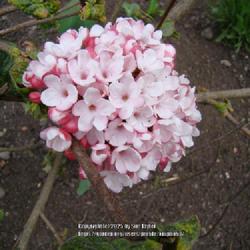
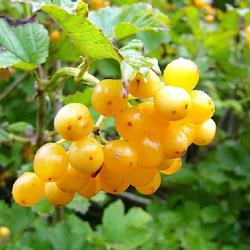
Viburnums are often grown as hedges, screens, or filler plants, and their abundant berries attract birds and other wildlife. Many species have colorful fall foliage and hang onto their blue, red, black, or yellow berries into winter, making them attractive in all seasons. Viburnums bloom in mid to late spring. Some, such as Korean spice bush (V. carlesii), have very fragrant flowers. Some varieties have purple foliage. Blooms in mid to late spring. Plant height ranges from 5 to 15 feet tall and wide, depending on the variety.
Special features of viburnums
Easy care/low maintenance
Fragrant
4-Season interest
Ongoing Care
Apply a layer of compost under the plant each spring, spreading it out to the dripline (the area under the outermost branches). Add a 2-inch layer of mulch to retain moisture and control weeds. Water plants during the summer if rainfall is less than 1 inch per week. Prune to shape after flowering. Prune to remove dead, diseased, or broken branches anytime.
Choosing a site to grow viburnums
Most viburnums prefer a site with full sun to light shade and well-drained soil. Some species tolerate wet soils.
Planting Instructions
Plant in spring or fall. Space plants 5 to 15 feet apart, depending on the expected mature size of the plant. Dig a hole only as deep as the root ball and 2 to 3 times as wide. If your soil is in very poor condition, amend the soil you've removed from the hole with a small amount of compost. Otherwise don't amend it at all. Carefully remove the plant from the container and set it in the hole. Fill the hole half full with soil, then water it well to settle the soil and eliminate air pockets. Let the water drain, then fill the remainder of hole with soil and water thoroughly.
Frequently Asked Questions about Viburnums
What growing conditions do viburnums want?
Full sun brings out the best in most of them, though they are equally happy in light or partial shade. Underneath they want soil of moderate fertility, moist yet well drained, in a pH band of about 5.6 to 6.6.
Air circulation is the quiet requirement. Where viburnums have good airflow they rarely suffer fungal disease, and a shrub content in its site is usually untroubled by pests as well. For water, about an inch a week on a regular schedule suits them, with organic mulch several inches deep spread over the roots but held back from the stems to even out soil moisture and cool the ground.
In hot summer regions, exposure needs more thought. What works is either a full morning of sun or bright dappled light all day. Direct afternoon sun in a hot climate is a shock these plants struggle with, particularly on a shrub planted in midsummer, which is the most stressful time of year to move one. A viburnum in damper ground takes more sun than one in dry, but saturated soil is never the goal.
What and when should I feed one?
Once, in early spring. Use a slow release product at the rate its current label states, and water the soil before and after so the roots are not burned. That plus regular watering is usually the whole program. These shrubs want moderately fertile soil, not rich soil.
Do not reach for a high phosphorus fertilizer to force bloom. Bloom failure in viburnums is almost always about pruning timing or light, and loading soil with phosphorus it does not need is not a fix. Two adjustments are worth knowing: on highly alkaline soil an acidified fertilizer helps bring things toward the band viburnums prefer, and mulching over the root system with peat moss works the same way. And avoid oversupplying nitrogen, which produces soft growth that flops.
When should I prune, and how much?
Timing decides whether you get flowers. These shrubs set their flower buds during summer for the following year, so prune immediately after flowering. That leaves a full growing season for new stems and next year's buds. Pruning at the wrong time, or too severely, is the most common reason a mature shrub carries two or three flowers when it should be loaded.
A light shearing each spring as growth begins promotes a full, dense shrub, and left entirely unpruned viburnums tend to go leggy and bare at the bottom. To rehabilitate a leggy plant, cut out the older canes and let newer growth fill in, doing that work in early spring. Understand the trade off: an early spring cut removes wood that would have flowered that season. If bloom matters more than shape this year, wait until right after flowering instead.
For an overgrown shrub you want smaller, be selective rather than shearing the outside. Reach into the shrub and remove the longer branches deep inside, cutting just beyond a side branch so no bare stub is left. Take no more than a quarter of the shrub at once, and spread the work over two or more years if you can. Once it is the size you want, hold it there with the same selective pruning each year.
Two cautions. Pruning stimulates growth and bushiness at every cut, so shearing a shrub well below its natural size is self defeating and eventually ruins its shape. And if you want a permanently smaller plant, a selection that stays small on its own is usually the better answer; there is a compact Koreanspice, Viburnum carlesii 'Compactum', for exactly this situation.
My snowball bush is growing well but did not flower. Did I prune it wrong?
Most likely, and the timing is the thing to fix. A snowball viburnum sets the buds for next spring during the previous summer, soon after the current year's bloom has finished. Any cut made after that point, whether in late summer, later in the year or in late winter, takes off buds that were already formed. The plant responds by growing strongly, which is why a snowball cut at the wrong moment usually looks healthy and simply refuses to flower. Cutting hard rather than shaping lightly costs you bloom in the same way even inside the safe window, so keep renewal cuts modest and spread them over several years.
The practical answer for this season is to do nothing. Leave the plant unpruned, let it carry the buds it forms this summer through to spring, and it should flower normally next year. After that bloom, prune within a few weeks of the flowers fading and you can keep it in shape indefinitely.
Two things worth knowing about the plant itself. The true snowball, a sterile selection of Viburnum opulus, produces round white heads instead of the flat lacecap flowers of the ordinary species, and because the flowers are sterile it sets no berries at all; if you also wanted the red fruit viburnums are known for, grow the species or a fruiting variety rather than the snowball form. And a snowball kept in a container has a much smaller root run than one in the ground, dries out faster and is more exposed to winter cold at the roots, any of which can hold back flowering on its own.
How and when should I prune a dwarf cranberry viburnum?
The same rule, and the stakes are higher because most people grow it for the fruit. It flowers in spring and carries showy red berries for months, and the flowers come from buds set the previous season, so pruning in late winter or early spring removes exactly the buds that would have bloomed. Prune right after flowering finishes, which is early enough to shape the plant before it sets next year's buds. You can safely take about a third of the live growth, and renewal pruning of the oldest stems at the base encourages healthy new growth. If you must prune in winter or early spring, accept that you will lose that season's entire flower and berry display.
My snowball viburnum has gone floppy.
Snowball types tend to flop, most of all in full bloom, and rain makes it worse by adding weight to the heads. Some of this is simply the plant.
What you can influence: light, since a shrub in full sun stands up better than one in shade; nitrogen, since excess produces weak floppy growth, so do not overfertilize; and how you prune, confining the work to removing dead wood and thinning perhaps a fifth of the oldest basal stems each year. An overall trim of the outside encourages weaker tip growth and makes flopping worse rather than better.
One thing worth knowing if you have just cleared out a lot of storm damaged wood: those older dead stems were in some cases physically propping up the younger canes, so removing them can leave the shrub looking floppier than before. Taking dead wood out of the interior is still right, and the plant builds sturdier structure over time in good light without excess nitrogen.
My newly planted viburnum droops more every day. Too much sun or too little water?
Work through it in order.
Check the soil first. Dig down an inch or two and feel whether it is moist but not sopping. Check both the original potting mix and the surrounding native soil, since the two often drain at different rates and one can be dry while the other is wet. Soak the ground deeply, give it a few hours, then dig again to see how far the water actually reached, which often surprises people.
Then read the timing of the wilt. A plant that wilts in the heat of the day and recovers by evening is probably moist enough and simply suffering heat stress. A plant still wilted in the morning either needs water or has been flooded, and the soil check tells you which. Newly planted shrubs are frequently over and under watered, and both look like wilting.
Then look at exposure, as above, and finally mulch several inches deep over the root zone, kept off the stems.
One of my two newly planted viburnums has black curling leaves while the other thrives.
When one of a pair fails and the other does not, check three things before assuming disease. Planting depth: the top of the root ball should sit level with or slightly above grade, not buried. The root ball itself: it can dry out inside while the surrounding soil stays wet, strangling the roots, so external moisture looking adequate proves nothing. Drainage: soggy soil kills.
If depth and drainage look right and water is reaching the root zone evenly, what remains is transplant stress or a plant that arrived with a problem, and management alone may not fix that.
How do I transplant a large viburnum?
Sooner rather than later, so the plant gets a full growing season to reestablish. Water deeply the day before so the roots take up moisture. On the day, pick calm, overcast weather if you can and wrap the branches with burlap to protect them and make the shrub easier to handle.
Cut the root ball out with a sharp spade at the drip line, then dig a trench about 18 inches deep around it to give yourself room to work. Lever the root ball onto a tarp and drag it to the new position. Replant immediately, water thoroughly and mulch, and keep the roots from drying out at any point during the move.
There are ants swarming one of my viburnums.
Look closely before treating the ants. Ants on a shrub are usually there because of aphids, which produce the honeydew they are after, and the aphids are the actual problem.
If you find aphids, an insecticidal soap will control them. Use a product whose current label names viburnum and the pest, follow the label for rate and protective equipment, and observe its reentry period. Do not spray open flowers or apply where bees are foraging. Store products out of reach of children and pets. Meanwhile keep the shrub well watered so it can recover from the feeding damage.
What causes curled leaves?
Two things. Aphids feeding on new unfurled leaves are the most common cause; watch for them as the foliage expands and rinse them off with water. Their damage stays visible long after the insects have gone, but early removal stops new distortion developing. The other cause is leaf rolling caterpillars, controlled by picking off the curled leaves and destroying them, which removes both the visible damage and the next generation inside.
My hedge has holes and curled leaves, and it got worse after I sprayed.
Holes and skeletonized leaves are viburnum leaf beetle, the governing pest of this plant across the northern United States and Canada. Larvae do the most visible damage in late spring and adults feed again in late summer. Pruning out the egg laying pits in twigs during winter reduces next year's population significantly. The curling is the separate aphid problem, and the two commonly show up together on the same plant.
New growth dying or shriveling weeks after a spray is a warning sign. Broad spectrum insecticides applied in warm weather can burn tender new growth, and they kill the predatory beetles and parasitic wasps that were holding the aphids down. If you want to spray, use an insecticidal soap or horticultural oil according to its label directions, on young growth before heat peaks. For an established infestation, winter pruning of the egg laying twigs is more effective than spring spraying and carries no risk to new foliage.
Are my two plants labeled Viburnum trilobum actually the same species?
If one is badly infested with aphids while the other stays clean in the same yard, and the leaf sizes and berry set differ noticeably, mislabeling is plausible. American highbush cranberry (V. trilobum) is far less susceptible to aphids than the European species (V. opulus), which is an aphid magnet, and the European plant has larger leaves, generally 2 to 4 inches long, against the smaller American species. Both come in multiple cultivars and environmental differences also affect performance, so two identically labeled plants can behave very differently. If the heavily infested one is the European type, expect to manage aphids every year; on the American species that level of pressure is unusual.
Is a snowball bush a hydrangea or a viburnum?
One of the most common mix-ups in shrubs, and there are three plants involved rather than two. Flower size separates them.
'Annabelle' hydrangea (Hydrangea arborescens 'Annabelle') has huge rounded clusters, 8 to 12 inches across, on a shrub about 4 feet tall.
Japanese snowball viburnum (Viburnum plicatum), often sold as Chinese snowball, has much smaller clusters at only 2 to 3 inches across, on a shrub that can reach 15 feet.
Common snowball, Viburnum opulus in its sterile form 'Roseum', sits between the two, with flowers 3 to 4 inches wide on a shrub around 10 feet tall.
In the Deep South and other hot summer regions all three tolerate the heat and still bloom if planted in a semi shaded spot protected from afternoon sun. Give them moist but well drained soil and water through extremely hot, dry spells.
Will Eastern Snowball grow in zone 9?
Eastern Snowball is Viburnum opulus 'Sterile', a European species. The tag rating of zones 3 to 8 is conservative and growers in southern California have had success with it, with showy white 2 to 3 inch blooms and purplish red fall color. The honest caveat is that it does not flower until established for about two years, so do not expect blooms the first season. It should survive in zone 9, but you will need patience for flowers.
My Chindo viburnum has never bloomed.
Viburnum awabuki 'Chindo' is known for slow bloom and delayed maturity. If the plant is healthy and growing, wait. Check late in the season to see whether flower buds are present. If buds form but bloom never arrives, winter wind exposure or temperature swings may be killing them before spring, and a more sheltered position or a windbreak would help. If no buds develop at all, the plant simply needs more time. Chindo is one of the slower types to reach flowering age, but patience generally wins.
It will also flower in partial shade provided the light is bright: partial shade and full shade are not the same thing, and a spot with bright indirect light works fine.
How deer resistant are viburnums?
Less than the phrase suggests. Deer do prefer tender plants to sturdy shrubs, and viburnums rank lower on their menu than many ornamentals, so they are a reasonable hedge choice where your site and climate suit them. But hunger overrides preference, and in a high deer area with limited food anything can become a meal. Deer resistant means less likely to be browsed, not protected. Where deer pressure is severe, only fencing offers real protection, whatever the species.
How far apart should I space them for a hedge?
Spacing trades what you spend on plants against how quickly the hedge closes. More plants in a run means a solid hedge sooner; fewer means waiting longer.
A good rule of thumb is 60 to 80 percent of the plant's mature width. Growth rate shifts it: a faster growing shrub can go at the wider end of that range and still close in about the same time as a slow grower planted tight. To work out your own numbers, take the mature width from the plant tag, multiply by 0.6 to 0.8, and divide the length of the run by that figure. A 124 foot property line planted with a viburnum maturing at 8 feet wide comes out around 5 to 6.5 feet apart, or roughly 19 to 25 plants.
Viburnums come in many species, so check what a given selection is adapted to before committing to a long run of it. Useful hedging selections include two laurustinus forms, the compact Spring Bouquet and the roundleaf 'Robustum', both Viburnum tinus; the doublefile 'Shasta' (Viburnum plicatum var. tomentosum); and 'Conoy' (Viburnum utile).
How do I propagate American highbush cranberry?
Given patience, Viburnum trilobum grows from seed or from cuttings.
From seed. Gather it once it has ripened on the shrub late in the season. Hold it in a sealed container at roughly 60 degrees Fahrenheit for five months, then sow into a greenhouse or cold frame.
From hardwood cuttings. Take them late in the season, choosing firm stems that grew during the current year. Each cutting wants to be 4 to 12 inches long with at least one bud toward the top. Pick a sheltered spot and dig a trench with vertical sides. Set the cuttings a few inches apart with at least three quarters of their length below the soil, then firm the soil back around them. Callus tissue usually forms soon after, and roots follow in the spring.