

Container gardening is one of the most rewarding and flexible ways to grow plants. You can start small with a single pot on a windowsill, or create an elaborate display of colorful planters on a patio. Even if you have a traditional in-ground garden, containers let you grow herbs steps away from your kitchen, enjoy fresh tomatoes on a sunny deck, or fill bare spots with seasonal color.
Why Garden in Containers?
Containers work in almost any living situation. Small apartments can transform a balcony into a thriving garden. Homeowners gain design flexibility, turning a plain patio into an outdoor living room. If you have less-than-ideal growing conditions in your main garden (too much shade, poor soil, or compacted earth), containers let you create custom conditions for sun-loving plants. You can also:
- Grow plants that aren't hardy in your climate by overwintering tender plants indoors or bringing marginally hardy plants to a sheltered location
- Move containers to a protected spot when weather turns threatening
- Easily rearrange your garden as your needs or tastes change
- Cater to individual plant needs (acidic soil for azaleas, sandy mix for succulents, rich loam for vegetables)
- Enjoy fresh herbs and vegetables right outside your kitchen door
Choosing Containers
Almost anything can serve as a container, as long as it has drainage holes to allow excess water to escape. You can start your treasure hunt in your attic or garage, repurposing old buckets, watering cans, painted tires, wooden boxes, or even an old teapot or work boot. Your primary consideration is drainage: without it, roots sit in water and rot.
If a container doesn't have drainage holes, you have two options. You can drill holes in the bottom, or use it as a "cache pot" (a decorative outer container with a draining pot nested inside).
Container Materials
Containers come in a variety of materials, each with distinct advantages and drawbacks:
Unglazed clay (terra cotta) offers excellent drainage, is readily available and affordable, and develops character with age. The downside: clay is breakable, heavy, porous enough that plants dry out quickly (especially in small pots), and not freeze-tolerant. In cold climates, clay pots can crack as soil expands and contracts with freezing. Reserve terra cotta for annuals and plants you'll bring indoors for winter.
Glazed ceramic comes in countless colors and designs. The glaze reduces porosity, so soil retains water longer than with unglazed clay. However, glazed pots are breakable and heavy, and also not frost-proof.
Plastic is lightweight, resists breakage, lasts for years, and comes in a wide range of styles including designs mimicking clay and wood. The main drawback: plastic doesn't weather or develop patina, and top-heavy plants may topple in lightweight pots. Plastic is ideal for hanging baskets and containers you'll move frequently.
Wood (half whiskey barrels, window boxes, homemade raised beds) develops character over time, but will eventually decay. Longevity depends on the wood type and exposure. Wood containers are heavy but beautiful.
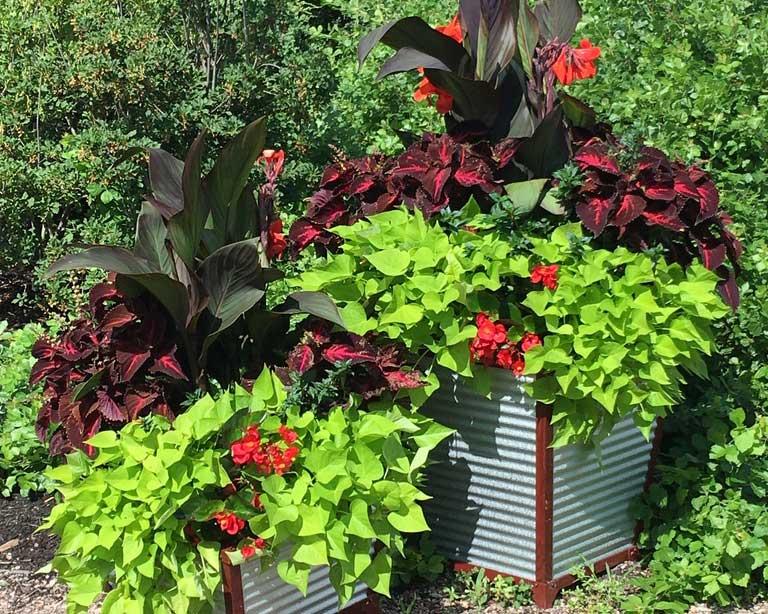
Metal (galvanized, copper, or lead) acquires character with age but can rust, decay, or dent. A bigger concern: direct sunlight heats metal containers, which can cook plant roots. Avoid metal for sun-exposed locations.
One solution if you love the look of terra cotta: grow plants in plastic pots, then nestle them inside a clay pot. Fill the gap between pots with mulch. This gives the aesthetic appeal of clay with the water-retention benefits of plastic.
Container Size and Weight
Before selecting containers, ask yourself:
- Will I need to move them? Large containers filled with moist soil can be surprisingly heavy. Use light plastic or smaller containers if you'll be rearranging frequently.
- Do I have balcony or weight limits? Check condo or apartment regulations.
- Is my location windy? Heavier pots are more stable for tall plants; lightweight plastic pots tip easily in wind.
- How often am I willing to water? Small containers (under 8 inches diameter) dry out quickly and may need watering twice daily in hot weather. Larger containers stay moist longer.
Different plants need different pot sizes. Small annuals with compact root systems thrive in 6 to 8-inch pots, while perennials, shrubs, and trees need generous space for root development. We cover specialized sizing recommendations in the "Matching Plants to Containers" section below.
Helpful Container Accessories
Pot feet are small decorative devices that elevate pots off the ground, allowing air circulation underneath. This prevents moisture buildup and discourages algae and mold growth.
Wheeled caddies and dollies make moving large planters easy. Choose ones with locking wheels.
Saucers catch water runoff and protect surfaces underneath. Use glazed ceramic or plastic saucers; unglazed terra cotta saucers are porous and won't prevent water damage.
Self-watering containers have a water reservoir and a wick system that provides consistent moisture. These are excellent for sunny spots and for gardeners who travel during summer. Most hold enough water to sustain plants over a weekend, though duration varies with plant size and conditions.
Potting Soil and Drainage
The foundation of container success is the right growing medium. Never use garden soil from your yard. Garden soil drains poorly in containers, compacts easily, and often harbors soil-borne diseases. Instead, purchase a quality soilless potting mix formulated for containers. These are lightweight, drain well, and are sterilized to eliminate pathogens.
You'll find many commercial mixes on the market. Some are peat-based; others use coconut coir. You can also create your own by mixing equal parts potting soil, seed-starting mix, and compost, then adjusting the ratios to suit individual plants.
Amendments for Specific Needs
- Perlite adds air space and reduces weight, beneficial for perennials and shrubs that need good drainage
- Lava rock is lightweight, holds air and water well, and looks attractive
- Sand increases weight in lightweight plastic pots (useful if tall plants are top-heavy)
- Extra compost enriches the mix for heavy feeders like vegetables
Soak soilless mix with water before planting. This can be messy, so plan to do it outside if possible.
Matching Plants to Containers
Container size should match the plant's needs. Here's a practical guide:
Annual flowers (petunias, impatiens, marigolds, zinnias) have compact root systems and flourish in containers as small as 6 inches in diameter, provided you water regularly. Since you'll replace annuals at season's end, you don't need to worry about long-term hardiness. Annuals are the best choice for decorative pots, window boxes, hanging baskets, and wire baskets lined with moss, since these containers may not survive winter.
Perennials and ornamental grasses need larger containers and thrive in relatively generous-sized pots. Reserve them for containers that can withstand winter. In regions with cold winters, choose larger pots to minimize soil freezing and the heaving that results from freeze-thaw cycles. Perennials in cold climates may benefit from winter protection such as wrapping or moving to a sheltered location.
Vegetables generally need larger containers than annuals. As a rule of thumb, tomatoes grow well in 5-gallon buckets (or a pot about 12 inches in diameter). Peppers and eggplant thrive in 2-gallon containers (about 8 inches diameter and 10 inches tall). Root crops like carrots need at least 12 inches of soil depth; beets can work in 8 inches. More on vegetable container growing in our specialized guide to vegetables and herbs in containers.
Herbs have varied needs. Compact herbs like thyme and oregano work in small pots; basil, parsley, and rosemary prefer 8 to 10-inch containers. See our guide to herbs in containers for details.
Trees and shrubs require generous containers and should remain in their pots year-round, so use durable, weather-resistant materials. A small Japanese maple or dwarf citrus tree in an artful pot makes a beautiful focal point. Many fruit trees including figs, tangerines, lemons, and limes thrive in containers, letting gardeners outside their hardiness zones enjoy them all summer and overwinter them indoors. Small trees and shrubs benefit from placement on wheeled caddies if you need to move them. Learn more in our guide to fruit and trees in containers.
Bulbs can be forced to bloom in containers on a schedule of your choosing. Plant bulbs almost touching each other in soilless mix, barely covering them. Place the container in a cool, dark location (around 40 degrees F) for about 8 weeks until growth appears, then move to sun and warmth. Forced bulbs are typically discarded after blooming.
Tropical plants (cannas, brugmansia, hibiscus, bougainvillea, elephant ear, banana) make dramatic summer displays and can be overwintered indoors in cold climates. Start with a container generously sized for the mature plant.
Planting Your Containers
Preparing transplants: If you've purchased transplants or started seeds indoors, harden off the plants before planting them into their permanent container. It's much easier to gradually expose seedlings to outdoor conditions by moving flats around than to acclimate tender plants after final planting. If transplants have become rootbound, gently tease the roots apart before planting.
Sowing seeds directly: Fill the container about two-thirds with soilless mix, sprinkle seeds on top, lightly cover with additional mix, and water gently. Follow guidelines on the seed packet for spacing and planting depth. Keep soil consistently moist until seedlings emerge.
Filling the pot: Fill the container halfway with potting soil, set plants at the same depth they were growing in their nursery pot, and add soil around the roots. Fill until soil reaches about an inch below the pot rim. Water well to settle the soil.
Spacing: Annuals can be packed in a little more tightly than you would in garden beds to create a lush, full look. Perennials should follow standard spacing recommendations to allow for growth.
Watering
Watering is the most critical task in container gardening. The most common mistake is underwatering. Container soil dries out much faster than garden soil, especially in small pots, in porous containers, and in hot, sunny weather. In peak summer, small containers may need watering twice daily. Check soil moisture by inserting your finger 1 inch into the soil; if it feels dry, water thoroughly until water drains from the bottom.
Signs of underwatering include wilting, dropping leaves, and stunted growth. Signs of overwatering include yellowing leaves and a musty smell from the soil (indicating root rot). Most plants prefer soil that is consistently moist but not waterlogged.
Self-watering containers are a good option if you travel or want to reduce watering frequency. These containers have a water reservoir that wicks moisture to roots as needed.
Drip irrigation is an option for gardeners tending many containers. These systems of plastic tubing can be regulated to provide consistent moisture and save time.
Mulch on top of the soil (1 to 2 inches) helps retain moisture and keeps roots cooler.
Fertilizing
Because fertilizers wash out of container soil faster than into garden soil, regular feeding is essential. Nutrients that would be available year-round in garden soil get leached out with each watering. Choose one of these strategies:
- Liquid fertilizer at half strength applied every two weeks
- Weekly liquid fertilizer at full strength
- Slow-release plant spikes that dissolve gradually with each watering
- Organic amendments (compost, fish emulsion, seaweed extract) mixed into the potting mix or applied as a top dressing
A balanced liquid fertilizer (equal nitrogen, phosphorus, and potassium) works for most ornamental plants. Vegetables are heavier feeders and benefit from higher nitrogen early in the season, shifting to higher phosphorus and potassium once flowering begins.
Light and Siting
Choose a location that matches your plants' light requirements. Most flowering annuals, herbs, and vegetables need at least 6 to 8 hours of direct sun daily. Shade-loving plants like impatiens, hostas, and shade perennials tolerate partial shade.
Metal containers can overheat in full sun, damaging roots. If using metal pots in sunny locations, choose plants that can handle afternoon shade or nest the metal pot inside another container.
Seasonal Care and Winter Protection
Spring and summer are peak growing seasons. Monitor containers daily in hot weather. Deadhead faded flowers to encourage more blooms on annuals.
Fall is a transition time. As daylight decreases and temperatures cool, reduce fertilizing. Start bringing tender tropical plants indoors before frost. Cut back watering slightly as evaporation decreases.
Winter care depends on what you're growing:
- Annuals are frost-killed. Remove the plants and compost them, then clean and store containers in a protected location.
- Perennials and hardy shrubs in cold climates need winter protection. Choose large containers so soil insulates the roots. In very cold zones, wrap containers with burlap or move them to a sheltered location against the house where temperatures are less extreme. Reduce watering but don't let soil completely dry out.
- Tender tropicals and marginally hardy plants should be brought indoors before the first frost. Reduce watering in winter as growth slows. Provide bright light and allow plants to enter dormancy.
- Bulbs that haven't been forced can remain outdoors in hardy zones; protect them as you would perennials.
As perennial plants grow, they fill their containers with roots and become rootbound. When growth slows or leaves yellow, move the plant into a container one size larger with fresh potting mix.
Ongoing Container Care
Check containers daily in warm weather. Water as needed, fertilize regularly, and watch for insect problems. While container-grown plants often receive extra attention that deters pests, monitor foliage, flowers, and fruit regularly. Many insects respond well to an occasional spray of insecticidal soap or a strong water spray to dislodge them.
Remove dead foliage and spent flowers to keep plants looking tidy and to encourage new growth and blooms.
Specialized Container Topics
For more detailed guidance, explore these companion guides:
- Maintaining Container Gardens covers ongoing care and troubleshooting
- Vacation-Proof Your Container Plants offers strategies for watering while away
- Readers' Best Container Gardening Tips shares community wisdom
- Container Design & Plant Combinations dives into aesthetic choices and plant pairing
- Vegetables & Herbs in Containers specializes in edible container growing
- Fruit & Trees in Containers covers citrus, figs, and small fruiting trees
- Hanging Baskets & Window Boxes focuses on those specific container types
- Rooftop & Patio Gardening addresses unique challenges of exposed outdoor spaces
Get Started Today
For the investment in containers and potting mix, you'll gain an enormous amount of pleasure. Start small by planting a few containers to feel your way and see what works best for your particular site and taste. In a short time you'll have containers brimming with flowers, foliage, and maybe even fruit.
