

Introduction
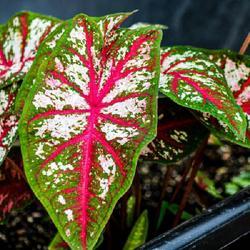
Caladiums are tropical plants growing from tubers, most known for their colorful foliage, and used as a houseplant or summer bedding plant.
About Caladiums
Any garden with a shady location has a perfect spot for caladiums. These tropical tubers, most of them varieties derived from Caladium bicolor, are grown for their dramatic summer foliage. They are naturals in beds with ferns or coleus, in pots to accent shady spots, or used as indoor houseplants.
But caladiums have their limitations, particularly when it comes to temperature. A primary requirement is soil warmed to above 65° F, no surprise for a plant native to tropical South America. In cool climates, you certainly need sun to attain that level of warmth. Fortunately, several of the best varieties tolerate full sun beautifully as long as they get plenty of water.
Special Features of Caladiums
Caladium bicolor is widely available at garden centers and nurseries. The leaf shape is oval or like an arrowhead. There are a multiple hybrids available offering a range of leaf colors and patterns.
Tall varieties such as white 'Candidum' and pink 'Carolyn Whorton' put on a beautiful show, but since each tuber has only one to three active buds, the leaf count is low.
Lance-leaved types, including 'Rosalie' and 'White Wing', produce many more leaves from multiple buds, but the leaves are thinner and not as long.
To increase leaf production on tall varieties, consider de-eyeing tubers: remove the terminal buds on the tuber when it first begins to sprout, which encourages side buds to develop.
You can use caladium leaves in flower arrangements, where they will last two weeks or more. The trick is to soak the freshly cut stems in deep water in a dark place for 24 hours before putting them to work in a vase. Being pollen-free, caladium leaves are naturally nonallergenic.
Sun-Tolerant Caladiums
If you want to try caladiums in sunnier locations, these varieties are selected for sun tolerance:
| Variety | Type | Use | Colors |
|---|---|---|---|
| Aaron | Tall fancy-leaved | Beds | White with medium green edge |
| Carolyn Whorton | Tall fancy-leaved | Beds | Pink, green, red |
| Red Flash | Tall fancy-leaved | Beds | Red and green with white speckles |
| Florida Sweetheart | Interspecies hybrid | Beds, pots | Pink with green edge |
| Miss Muffet | Interspecies hybrid | Beds, pots | Cream with red speckles |
| White Wing | Lance-leaved | Beds, pots | White with green edge |
Choosing a Site to Grow Caladiums
Select a shady area that is moist, well drained, humus rich, and slightly acidic. Caladiums are popular grown around the bases of trees, but for this planting scheme to work, you will need to create a 5-inch-deep bed of rich soil so the tuberous roots will have adequate space and a fair chance at moisture.
If you live in a cool climate, it's important to grow sun-tolerant caladiums in a sunny spot from the beginning, or at least let the plants gradually become accustomed to the feel of warm sun on their leaves. Even with the most sun-tolerant varieties, if you grow plants in the shade and suddenly shift them into bright sun, existing leaves are likely to develop brown sunburned patches. However, the new leaves that replace them should look fine, and will turn your bed or patio into a technicolor tropical paradise.
Planting Instructions for Caladiums
In the warm, humid climates of zones 8 and 9, plant caladium tubers directly into the ground in spring. In most other areas, you'll save several weeks of growing time by transplanting potted plants that are already up and growing.
To make watering and fertilizing easier, consider planting three tubers (or plants) in 6-inch pots and sink the pots up to their rims in the beds. The pots collect and hold water, stave off invasions from thirsty tree roots, and make it simple to lift and collect the tubers in fall.
Ongoing Care of Caladiums
Because caladiums are basically all leaves, they thrive on regular fertilizer. To keep plenty of new leaves coming on, feed with a balanced soluble fertilizer such as 10-10-10 twice a month.
Caladiums in full leaf need a steady supply of water. Plants that dry to the point of wilting will revive after a short dry spell, but forgotten plants may become dormant. Once dormant, caladiums will refuse to leaf out for at least eight weeks.
In USDA Hardiness Zone 7 southward, it's always warm enough to grow caladiums in outdoor beds; gardeners everywhere can growing caladiums in containers. Use a peaty potting soil, and plant three to five tubers upright in a 6-inch pot. Cover them with 2 inches of potting soil, soak once, and keep the pots in a very warm spot (70° to 80° F) for three weeks. Because the tubers like semidry conditions while they are breaking dormancy, water lightly, but don't let the soil dry completely.
The great advantage of pot-grown caladiums is that you can move them about as needed to keep them warm. When nights become chilly in fall, bring them indoors and keep in a sunny window, until the leaves begin to wither. At that point, let them dry out completely. To save space, you can collect the tubers, shake off the soil, and stash them in old hosiery or a mesh bag for up to five months. As long as the tubers are stored above 60d F, they will be ready to replant the following spring.
Frequently Asked Questions about Caladiums
Why are my caladium's leaves drooping and drying up?
Four causes account for nearly all of it, and they are worth working through in order.
Dormancy. A caladium that was drought stressed before you bought it, or one started very early in the season, may simply be shutting down for its natural rest. No amount of watering reverses that. If the tuber is still firm, let the pot go dry and restart it next year.
Water missing the roots. When potting mix shrinks away from the walls of the pot, every watering races down the gap and straight out the drainage holes while the root ball stays dry, so a faithfully watered plant can still be parched. Cure it by submerging the whole pot in a bucket until the root ball is saturated, then letting it drain.
Outgrown pot. Confined roots cannot keep up with a full head of leaves. Repot into the next size up.
Sunburn. Leaves that suddenly get more direct sun than they are used to scorch and collapse. Move the plant into brighter shade.
How much sun, water and what soil do caladiums want?
Caladiums are one of the best sources of color for shade, thriving under trees where flowering plants give up. The old rule to keep them out of sun holds for most varieties, but a number of modern cultivars take part sun to full sun, among them 'Aaron', 'Carolyn Whorton', 'Red Flash', 'Florida Sweetheart' and 'Florida Red Ruffles'. The catch in a bright position is water: a dry caladium in sun shows scorched looking leaves that read as sunburn but are actually drought damage.
Give them soil rich in organic matter. Sandy ground benefits from peat moss or compost plus a thick mulch to hold moisture. Heavy clay wants the same organic matter for aeration, and a genuinely soggy spot needs drainage or a slightly raised bed, because tubers rot in saturated soil. Water often enough that the plants never wilt, since a caladium allowed to dry to wilting point may drop into dormancy and refuse to grow again that season, while steady moisture keeps leaves coming all summer.
My tubers have not sprouted, and some are rotting. What went wrong?
Moisture balance, almost every time. Caladium tubers come from rainforest species, so they cannot tolerate drying out, and yet they rot in soil that stays wet. Rotting tubers point to poor drainage: lighten the mix and make sure water runs freely out of the container.
Warmth matters just as much. Tubers sprout when the soil is comfortably warm, ideally with air temperatures in the sixties and seventies, and in perfect conditions shoots appear in a week to ten days, though conditions are rarely perfect and a few weeks is common. Do not try to supply that warmth with full hot sun on a dark pot, which cooks the tubers rather than starting them. Keep starting pots in bright shade.
Are last year's unplanted tubers still good?
Possibly. A stored tuber lives on the carbohydrate reserves it packed away, and those fade over roughly a year out of the ground, so bulbs that have sat in a closet since last season are near the end of their window but often still viable.
The test costs nothing. Pot them in fresh potting soil, water, and wait. Viable tubers show growth within three to four weeks; anything that has not moved in a month or so is finished and the container can go to something else.
How do I overwinter caladiums?
They cannot take cold at all. The plants want days around 70 degrees Fahrenheit and nights no lower than about 60, so bring potted ones indoors well before frost. Leaves yellowing once temperatures drop below the sixties is the start of natural dormancy: stop watering as the foliage dies down, then store the tuber either in its pot or dug and packed in dry peat moss, somewhere around 60 degrees.
In the garden, dig tubers once nights start dipping toward 50 degrees and before the soil itself chills below that, since cold soil damages them. Store above 60 degrees, ideally at 70 to 75. Expect garden grown tubers to come back somewhat smaller and less vigorous than fresh ones, because a temperate season rarely lets them fully recharge, though plenty of gardeners carry favorites over for years. In spring, replant in fresh potting soil, resume watering, and give the pot a bright window or a shaded spot outdoors with direct sun kept off the leaves.
My caladium is dripping water from the edges of its leaves. What is wrong?
Nothing is wrong. Those beads along the leaf margin are guttation, a normal thing for a well watered plant with roots in warm soil to do. Water is being pushed up from the roots faster than the leaf loses it to the air, and the surplus is squeezed out through pores at the leaf edge. It is usually most obvious first thing in the morning and after a still, humid night.
You will see more of it if you water in the evening, because the plant then goes into the dark hours with a full root zone and little demand from the air, so moving your watering to the morning generally reduces it. Beyond that there is nothing to correct and nothing to spray. The droplets are not sap leaking from a wound, and not a sign of disease or of overwatering damage.
Two things get confused with it. Sticky droplets scattered across the upper surface of the leaves, rather than lined up along the edge, are usually honeydew from aphids or mealybugs, and those do want dealing with. Dried white or tan crust left at the leaf margin after the droplets evaporate is mineral residue from hard water, harmless and easily wiped off.
Are caladiums safe around children and pets?
Treat them as an irritant plant. Caladium foliage, stems and tubers contain sharp calcium oxalate crystals, and chewing any part causes immediate burning and swelling of the mouth, lips and tongue, along with drooling and sometimes vomiting. The reaction is painful and unpleasant rather than typically dangerous from a small taste, but the mouth pain arrives at once and a swollen throat is the reason to take it seriously.
Place indoor plants where a toddler or a chewing pet cannot reach them, and keep stored tubers out of reach too, since they look enough like something edible. If a child or an animal has chewed a leaf or a tuber, call your poison control center or your veterinarian. Sap on skin can itch, so wear gloves when dividing tubers, removing eyes, or cutting leaves for arrangements.