

Introduction
The beloved flowering dogwood tree, found in home gardens across the country, is just one of the many types of dogwoods. Some species are native to the United States.
About dogwoods
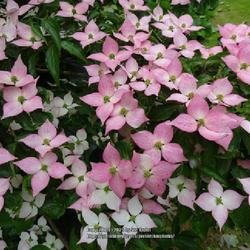
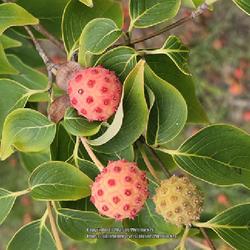
The most common dogwood, Cornus florida, is a flowering tree that grows 20 to 40 feet tall and wide at maturity. Flower colors include pink, red, rose, and white, depending on the variety. Unfortunately, it is susceptible to a number of insect and disease problems, especially in recent years. Look for disease-resistant varieties, or consider planting Kousa dogwood (C. kousa) instead. The most common shrub dogwoods vary in size from 6 to 20 feet tall and wide depending on species and variety. There is a spreading, ground cover form that only grows 3 to 9 inches tall. Some dogwoods have colorful bark -- yellow, red, or orange -- providing winter interest. Most dogwoods bloom in early spring to midsummer, depending on the species. Many produce fruits that are ornamental and provide food for birds. Hardiness varies among dogwoods, so use care when choosing plants.
Special features of dogwoods
Four-season interest
Choosing a site to grow dogwoods
Select a site with full sun to light shade and moist, well-drained soil. Some species prefer an acidic soil.
Planting Instructions
Plant in spring or fall. Space plants 6 to 20 feet apart, depending on the expected mature size of the plant. Dig a hole only as deep as the root ball and 2 to 3 times as wide. If your soil is in very poor condition, amend the soil you've removed from the hole with a small amount of compost. Otherwise don't amend it at all. Carefully remove the tree from the container and set it in the hole. Fill in around the root ball with soil until the hole is about half filled. Then firm the soil and water thoroughly. Fill the hole with the remaining soil and water again. Form a raised ridge of soil around the outside edge of the hole so it acts like a berm to help hold in water.
Ongoing Care
Apply a layer of compost under the tree each spring, spreading it out to the dripline (the area under the outermost branches). Add a 2-inch layer of mulch to retain moisture and control weeds, keeping mulch a few inches away from the tree trunk. Water plants during the summer if rainfall is less than 1 inch per week. The trees require little pruning once established. In late winter, remove dead, diseased, and broken branches, and prune lightly to maintain shape.
Cornelian Cherries: An Edible Dogwood
For early spring bloom, few plants beat the cornelian cherry (Cornus mas), an excellent little dogwood from Eastern Europe and a perfect edible ornamental for gardeners in Zones 5 through 8. It is hardy into Zone 4, though flower buds may be killed there in some seasons.
Cornelian cherries are small deciduous trees or large shrubs, reaching about 20 feet. In winter they display two-toned exfoliating bark. Before the forsythias bloom, the plants cover themselves in a haze of small, bright yellow flowers. In late summer or early fall the large red fruits are an enticing sight, and they are delicious, reminiscent of tart cherries. In Eastern Europe, cornelian cherries are a minor commercial crop, eaten fresh or made into juice, syrup, and jam.
Ordinarily the oblong fruits are cherry-sized, about 3/4 inch in diameter, but large-fruited cultivars developed at a research station in Ukraine, including 'Elegant', 'Helen', 'Pioneer', and 'Redstar', bear fruit about twice that size that looks like small, bright red plums. The trees are self-pollinating, so you need only one to set fruit, but you will get bigger crops with a cross-pollinator.
Frequently Asked Questions about Dogwoods
Shrub dogwoods and tree dogwoods are not the same plant
Almost every mistake people make with this genus comes from applying advice for one group to the other, so keep them straight.
Shrub dogwoods, the red-twig and redosier types (Cornus sericea, also listed as C. stolonifera) and variegated selections such as 'Ivory Halo', are grown primarily for the bright color of their youngest stems in winter. They spread by underground roots and sucker freely.
Tree dogwoods, including flowering dogwood (Cornus florida), kousa (C. kousa) and pagoda (C. alternifolia), are understory trees prized for spring bloom or distinctive form.
Their pruning, soil and light needs are not interchangeable.
Are dogwoods fast growing?
No. Dogwoods are slow growers, particularly in the first years after transplanting. By the standards used for landscape plants, slow means less than a foot a year. Flowering dogwood grows slowly at first and then transitions to a medium rate, one to two feet a year, and pagoda dogwood follows the same pattern. Kousa grows slowly, though it may reach a medium pace in its youth.
This matters for site planning: a slow-growing tree takes time to reach its mature form, patience is part of the bargain, and aggressive pruning will not speed the process.
What soil and site does a dogwood need?
Dogwoods need acid soil that stays evenly moist while still draining freely, with plenty of organic matter and humus, though they tolerate clay if drainage is managed. In clay, plant on a slight slope to improve water movement, and avoid both low spots where water pools and especially dry ground.
In nature these are woodland-edge plants growing in bright but often dappled light, and it pays to replicate that: morning sun only, or bright dappled shade all day. A spot with only hot afternoon sun, particularly one facing south with heat reflecting off buildings or pavement, will stress the tree. Keep large trees at a distance, since their roots compete for moisture and nutrients and make it hard for a dogwood to establish.
Two things to avoid outright. Do not plant near black walnut, which exudes a root toxin called juglone that can kill nearby plants. And do not site a dogwood where road salt or sidewalk de-icer will reach the soil, since salt accumulation causes leaf burn and decline.
Note that red-twig shrub dogwoods want the opposite of what their plant tags often say. They are native to wet-soil sites and prefer soil that stays damp to quite wet, especially in full sun, and the variegated varieties are particularly sensitive to drought, showing wilting and leaf burn as soon as the soil dries out.
How do I plant a dogwood correctly?
Loosen a broad stretch of ground around the planting spot, but dig the hole only as deep as the root ball is tall and considerably wider, with rough rather than smoothed sides so roots can penetrate the surrounding soil.
Set the tree half an inch to an inch proud of the level it sat at in its container. Before backfilling, look low on the trunk for the flare, the point where trunk tissue widens into root tissue, and make sure that flare is above the soil surface. Some nursery trees arrive with soil mounded over the flare; clear it away gently before planting. If the root ball is circling tightly around itself, roughen the perimeter and tease the encircling roots outward.
Do not amend the planting hole with compost, peat or anything else. Native soil is suitable, and amendments actively hinder establishment by making a pocket of good soil that roots decline to leave. Do not put fertilizer in the hole either; the plant's energy should go into growing new roots rather than processing nutrients it cannot yet use.
Backfill and firm the soil so no gaps are left against the roots, water it in well to settle everything and drive out air pockets, then come back a few hours later to confirm it has not sunk below the level you set it at. Mulch two to three inches deep in a flat layer over the root zone, keeping it a few inches clear of the trunk.
For a bare-root tree, work the soil over a wide area, digging down about ten inches and placing any sod upside down at the bottom, then return all the soil and scoop out a planting hole just large enough for the root system. Build a mound of soil in the middle for the roots to rest on, spreading them out as you lower the tree so it sits at the same depth it originally grew or slightly higher. Soak the roots in water before planting and get them in the ground quickly, so dormancy breaks gradually with the season rather than in the bag. You can also pot bare roots in a container for a year to build more roots first, though direct planting works well if you keep the tree watered and protected from traffic through its establishment year.
Allow for the mature size, about 25 feet high and wide for a flowering dogwood, and space plants 6 to 20 feet apart depending on type.
How much water does a dogwood need?
Dogwoods are shallow rooted, so consistent soil moisture is essential. Hold the root zone lightly damp, never sodden and never bone dry. Push a finger into the ground when deciding whether to water and hold off while it still comes up damp. When you do water, do it slowly and thoroughly so the water soaks deep, and dig down a few hours later to see how far it actually reached, which teaches you what deep watering means in your soil. During summer drought, water deeply about once a week. Keep watering a newly planted tree until the ground freezes in fall.
Leave the ground under the canopy free of turf and groundcover, both of which compete with those shallow roots. Avoid disturbing the root area, since damage opens the trunk to borers and infection.
Can I plant red-twig dogwoods three feet apart?
Technically yes, but understand what you get: a crowded hedge rather than individual shrubs. At three feet they will touch at maturity, since they mature to about six feet wide, and shrubs growing that close compete for sunlight, soil moisture, nutrients and air circulation. If your site has varying conditions, some damp and some dry, some shaded and some sunny, that variation will show and the hedge will look uneven. These shrubs want moisture and grow thinner in shade, performing poorly in dense shade. Plan spacing with the mature width in mind.
How do I prune a dogwood?
Tree dogwoods: prune as little as you possibly can. The best time is early spring, though dead branches can be removed any time. Prune only to remove dead, diseased or crossing branches, and do it in dry weather when the tree compartmentalizes wounds quickly rather than during wet periods when it is physiologically stressed. Sterilize your tools between cuts with rubbing alcohol or a 10 percent bleach solution, which prevents spreading canker and anthracnose from a diseased branch to healthy wood. Do not use wound sealers or tree paint, which are ineffective at preventing disease entry and may trap moisture inside the tree, promoting decay rather than preventing it; a healthy tree callouses over its own wounds.
Pagoda dogwood grows to about 25 feet with a distinctive flat crown and horizontal, evenly spaced layers of branches, and that architecture is the whole point of the plant. Wait until after flowering, in late spring. If size control is needed you can cut branches back by up to a third of their length, and because the branches are naturally horizontal and evenly spaced there is usually little crossing to remove, though a branch genuinely out of place should come off entirely. Never cut away more than a third of a tree's living material at once, or stress and disease susceptibility increase sharply.
Shrub dogwoods are the opposite, because the red color worth growing them for is most vivid on the youngest stems. You have two options. Cut the whole shrub back hard to six to twelve inches in late winter or very early spring, which forces vigorous dense new growth from the base, though it leaves visible stubs until new foliage hides them. Or thin annually, removing roughly a quarter of the stems at their base, and cut the whole plant back hard every few years to regenerate vigor. If you want a rounded shape, start pruning frequently while the plant is young, since each cut triggers branching and builds density. Bear in mind that these shrubs have a natural mature size larger than most gardeners want, so containing one indefinitely takes consistent effort.
My dogwood is not flowering. Does it need fertilizer?
Almost certainly not. Flowering dogwoods that leaf well but bloom poorly are nearly always stressed by light or water rather than short of nutrients.
Bloom depends on two things. First, adequate summer water during the previous year's late summer and fall, when flower buds form on the branch tips; dry soil in summer wipes out the next year's bloom. Second, enough sunlight, which matters especially in cool climates. A young tree, or one under stress from poor drainage, inadequate light, or competition from nearby trees, produces few flowers or none.
So keep the tree watered through summer dry spells, apply light mulch to conserve moisture, apply an annual layer of compost in spring to build soil health, leave the root area undisturbed, and address whatever is stressing it. Once the tree is settled, flowering usually follows. Note that fall berries develop from the blooms the tree carried that spring, so a flowerless spring gives a fruitless fall.
If you do feed, make it an organic product applied in spring rather than a high-nitrogen one that promotes leafy growth at bloom's expense. Most bloom-reluctant dogwoods need no fertilizer at all.
Should I fertilize a dogwood at all?
Avoid heavy fertilization. Dogwoods are naturally slow growing, and overfeeding can burn the roots and force growth that does not harden off properly. Do not fertilize unless a soil test indicates a deficiency. If a feed is warranted, choose a granular slow-release product formulated for acid-loving plants, apply only the amount stated on its current label, and water well both before and after application, which prevents root burn.
Never lime the area where you planted a dogwood. Lime raises soil pH toward the alkaline conditions the tree cannot tolerate.
When and how do I transplant a dogwood?
Timing is critical. Very early spring, just as the plant breaks dormancy, is the ideal window for most dogwood shrubs. For native dogwood trees, November is significantly better than spring or summer, because the plant has time to establish roots before hot weather arrives. Avoid late spring and summer for tree dogwoods, since the combination of heavy root loss and summer heat is very stressful and the chances of success drop sharply. Even established shrubs moved in warm weather face high risk.
Identify what you have first, because the approach depends on it. Red-twig types spread by underground roots and sucker freely, which makes them harder to lift cleanly than a fibrous-rooted shrub. For shrubs, prune them back to about 12 inches high before digging, which reduces the stress of root loss. For tree dogwoods, do not cut the top back at all, since dogwoods strongly dislike pruning and cutting back slows recovery.
Either way, dig carefully to capture as much of the root system as possible, starting from as far out as practical to catch the lateral roots. The more roots you preserve, the better the survival rate. A smaller specimen recovers more quickly from transplant shock than a large one.
Get help, and take the lifting seriously. Dogwood root balls are extremely heavy, and attempting to lift one alone risks serious back injury. Slide the root ball onto a sturdy tarp and drag it to the new location rather than carrying it. Wear gloves and keep stable footing to avoid slips with sharp digging tools. Never try to move a tree dogwood alone.
Replant following the planting instructions above, water well, and keep the soil moist but not waterlogged through the first growing season.
Can I dig dogwood seedlings from the wild?
Sometimes, but settle the permissions first. Obtain permission from the landowner, and check whether your state or county restricts collecting native plants from public land, since these rules vary widely.
Beyond that, all the timing and technique above applies. A small seedling transplants more successfully than a large specimen because it has suffered less root loss. Start digging from well beyond the plant to capture the full root system, use November as the window in most cases, and avoid summer entirely. Do not cut back the top growth, do not amend the soil, and do not add fertilizer.
Why is my newly planted dogwood wilting or drooping?
Several causes look alike here, and identifying the right one matters. Transplant shock alone causes temporary wilting, especially if temperatures turn suddenly warm, and some drooping after bloom is normal during seasonal heat spikes. But underwatering, overwatering, settled soil that has left the tree too deep, poor drainage, disease and insect pests all produce similar symptoms.
Check the soil with your finger: it should feel moist but not soggy, since soggy conditions lead to root rot and death. If it is dry, water gradually, remembering that shallow-rooted dogwoods often need watering more often than other trees and shrubs. If the area was recently filled with soil around a new house, compacted fill may be preventing drainage. The original potting soil or backfill may also dry out faster than the surrounding ground, creating a pocket where water runs through without being absorbed. Lift the plant gently to see whether the soil has settled below the original planting depth, and if it has, replant higher.
If wilting persists despite proper watering and drainage, contact your cooperative extension office or a certified arborist, since foliar diseases and pests also affect dogwoods and a professional diagnosis points to the right treatment.
My Ivory Halo has brown leaves six weeks after planting
Browning at the edges could be several things: underwatering, overfertilizing, a fungal problem, or early frost damage from a cool spring. This shrub tolerates a wide range of soil pH and actually prefers acidic soil, so pH is not the culprit. Without seeing the plant and knowing your conditions the diagnosis is hard to narrow, so contact your county extension office with fresh leaf samples kept cool in a plastic bag, along with photos of the whole plant and of the affected leaves.
If the plant is simply drying out, move it to a wetter spot if you can, or to a location with afternoon shade. If transplanting is not an option, add several inches of organic mulch to keep the soil cooler and moister, and switch from light daily sprinkling to deep, less frequent watering.
My kousa dogwood has not leafed out yet and the others have. Is something wrong?
Probably not. Kousa dogwoods naturally leaf out later in spring than other dogwoods, and they also have different light requirements, needing more sun than native flowering dogwood and tolerating full sun. If the stems look healthy and flexible rather than brittle or obviously dead, patience is warranted.
Is it anthracnose, or just leaf spots?
This distinction matters more than any other on this page, because the two are different fungi with completely different management.
True anthracnose (Discula destructiva) attacks flowering dogwood and can kill branches or entire trees over several years. It starts on the lower branches and works upward over successive seasons, which is the key identifying feature. Affected leaves show angular brown or purple-margined blotches, often with a target-like pattern where the center dies back and leaves a darker ring. Infected shoots die back from the twig tips toward the branch collar, and as the infection advances into the branch the whole shoot may blacken and die. It thrives in cool, wet, shaded conditions and spreads most aggressively in springs with prolonged cool wet weather, so trees in dense shade with poor air movement, or receiving overhead watering, are at highest risk. Because it progresses gradually, a severely infected tree may not decline all at once, but over several seasons you will see dead branches accumulating higher into the canopy.
Spot anthracnose (Elsinoe corni) is a different fungus and causes mostly cosmetic damage. It appears as small, dark, round to irregular lesions on leaves and on the bracts that most people take for flower petals, often with a dark border and lighter center, appearing suddenly on foliage that was healthy weeks earlier. On bracts the spots make the flowers look blemished or aged. Despite the appearance, these spots cause no structural damage, the tree's vigor is rarely affected, and the infection clears naturally as weather improves and new foliage emerges. It is common and alarming and not a threat to survival.
What else gets mistaken for dogwood disease?
Powdery mildew appears as a whitish, powdery coating on leaves, typically on the upper surface. It became widespread on flowering dogwoods in the 1990s and has persisted. It reduces vigor and looks bad, blocking light into the leaf and eventually causing some leaf drop, but affected trees usually recover the following season with clean new foliage. Unlike anthracnose it causes no branch dieback or twig death.
Borers tunnel into trunks and branches, leaving visible holes and galleries. They are a secondary problem rather than a primary cause of decline, attacking trees already stressed by drought, disease, or mechanical injury such as mower or trimmer damage. Their presence usually means something else has already weakened the tree, so address the underlying stress rather than simply killing the borers.
Drought and heat scorch is frequently misidentified as disease. A dogwood in full sun with poor soil dries out rapidly, showing leaf browning, wilting and branch dieback that mimic disease. The key distinction is that drought damage develops quickly, within a single growing season following hot dry weather, and affects the whole crown more or less uniformly rather than progressing branch by branch over years. Drought-stressed trees often recover completely after a year of consistent watering, whereas anthracnose-infected trees do not.
Verticillium wilt should be suspected if a branch dies suddenly and you find black streaks inside the wood when you cut it open. Check soil drainage and moisture first to rule out drought or waterlogging, and check the crown and roots for soft, mushy tissue indicating root or crown rot.
Aphids explain curled leaves with ants moving over them. The ants are tending the aphid colonies, driving off predators in exchange for honeydew. You usually see the damage after the aphids have moved on, so spraying is generally pointless. Holes in leaves are typically caterpillars or beetles, and if you cannot find the insects on the plant there is nothing to spray. Let the tree shed the affected leaves naturally.
Spittlebug explains white foam on the leaves of shrub dogwoods. It is an insect that feeds on sap and protects itself with a bubbly coating, not a disease. It is not especially damaging, just unattractive, and a strong stream of water from a hose removes them.
Damaged bark on the trunk needs no wound dressing or tree paint, and wrapping the wound slows healing. A healthy tree closes such damage on its own. Dogwood bark is thin and susceptible to sunscald from intense winter sun on the trunk, and to frost cracking. If you are concerned about further damage, fit a perforated plastic tree guard or sunshade strip around the lower trunk; the punched holes allow the air circulation that aids healing, and you remove it once the trunk is thicker and more resistant.
How do I manage anthracnose?
If a professional has diagnosed anthracnose, understand what fungicides can and cannot do before you start spraying. They work only preventively, not curatively, so they must be applied before spores land and germinate on new leaves and shoots, and they do not stop an active infection. They must go on before and during leaf expansion, which is a narrow window in spring, and on a large mature dogwood thorough coverage of all new shoots becomes impractical. Even with persistent spraying the disease often returns in later years. The real answer is environmental management, plus resistant cultivars where appropriate.
Improve air movement and light. Thin nearby plantings and trees so the dogwood gets morning sun and afternoon shade in hot climates, and make sure air can circulate freely around the whole canopy. Avoid dense shade and low-lying areas where cool air pools and moisture accumulates. A dogwood in a wet, shaded woodland understory or under a large oak is fighting uphill and may never be completely free of the disease.
Water correctly. Water deeply and infrequently rather than in light daily sprinkles, and water the soil in the root zone rather than the foliage. Wet leaves create exactly the humid microclimate the fungus needs to germinate, so avoiding overhead sprinklers is a single change that reduces disease pressure significantly. Let the soil surface dry partly between waterings, meaning moisture cycles rather than remaining constantly wet.
Mulch properly. Two to three inches of organic mulch, whether shredded bark, compost or wood chips, in a flat layer from near the trunk out to the drip line, with a gap of several inches between the mulch and the bark. Never pile mulch into a volcano against the base, which traps moisture and invites rot and pests.
Avoid trunk damage. Keep mowers and string trimmers well back from the trunk, maintaining a wide clear zone around the base of every dogwood, since those wounds create entry points for borers and further stress.
Prune out infected material as soon as you see a branch with shoot dieback and the characteristic purple-margined blotches. Cut well behind the visible damage, back to healthy wood with the branch collar intact, disinfecting your pruners between cuts. Do not compost the removed material. Put it in the trash, or burn it only if local regulations allow. Removing infected branches before the fungus reaches the main trunk or larger scaffold branches can save a tree in the early stages.
Accept realistic limits. Once anthracnose is established, particularly on susceptible Cornus florida in an unfavorable site, complete eradication through cultural management alone is difficult, and reducing the disease to an acceptable level may be the realistic goal. Many gardeners choose to replace a severely infected tree with a resistant cultivar rather than wage an ongoing battle, and that is often the wiser long-term choice.
And if a dogwood dies on your site and you suspect disease, do not plant a new dogwood in the same location. Certain soil-borne diseases attack dogwoods repeatedly in the same spot. Choose a different species, or move the new tree well away.
Which dogwood cultivars resist disease?
If anthracnose is present in your area, or your site is naturally favorable to it, planting resistant cultivars makes far more sense than struggling with susceptible trees.
Kousa dogwood (Cornus kousa) and its cultivars show strong resistance to both anthracnose and powdery mildew, and perform well across much of the eastern and central United States in zones 5 through 8. One difference to expect: kousa leafs out before flowering, so the flowers appear on fully leafed branches rather than on the bare branches gardeners associate with flowering dogwood, and the bracts are often slightly smaller, greenish-white or pale pink, appearing several weeks later in spring. It is a superb ornamental tree regardless, with excellent fall color and exfoliating bark for winter interest.
The Rutgers Stellar series (Cornus x rutgersensis) are hybrids of C. florida and C. kousa, developed specifically to combine an appearance and growth habit closer to flowering dogwood with kousa's disease resistance. Cultivars include 'Stellar Pink', 'Stellar White' and a third selection named for its fall color. They resist both anthracnose and powdery mildew, bloom at a time intermediate between the two parents, and are hardy in zones 5 through 8. If you want a tree that looks and behaves much like a traditional flowering dogwood but with built-in disease protection, these hybrids are the modern answer.
'Appalachian Spring' is an anthracnose-resistant cultivar of Cornus florida itself, with white flowers, and it is the best choice if your heart is set on a native flowering dogwood with the traditional bare-branch spring bloom. It will not match kousa or the Rutgers hybrids for complete resistance, but it has a substantial advantage over standard flowering dogwood cultivars in disease-prone areas.
For a new planting, choose a site with several hours of morning sun and afternoon shade in the heat of the day, excellent air movement around the whole canopy, and acidic soil (pH 5.5 to 6.5) amended with organic matter so it holds moisture without waterlogging. Never plant a dogwood in a low-lying, wet, shaded hollow or in dense shade under large trees. And if dogwood diseases are common in your neighborhood, choose a resistant cultivar from the start rather than hoping cultural management alone will protect a susceptible one.
There is a hollow in my dogwood trunk. Does the tree have to come down?
Not necessarily. Trees live for many years with internal decay by compartmentalizing the damaged wood and growing new sound wood around it. But a large hollow, or a cavity near the base that leaves only a thin shell of living wood, does represent a genuine failure risk, particularly on a large tree growing where it could damage property or hurt someone if it falls.
A small hollow confined to the upper branches or well above head height poses little structural risk even if quite large, since any failure would be localized. A large hollow near the base within a few feet of the ground, or a remaining wood shell less than a couple of inches thick all the way around, makes the tree's ability to support its own weight questionable, especially in high wind. A dead, soft, decaying cavity with no living tissue bridging it and large enough to fit your hand raises the risk further. Conversely, a cavity with callus tissue, a thick corky overgrowth of bark partially or fully sealing it, means the tree is actively compartmentalizing the damage, and a hollow that has been stable for years without growing suggests the tree is managing.
Do not fill a cavity with concrete, epoxy, wood filler or other sealants, and do not paint or seal the wound edges. These practices, recommended by arborists decades ago, are now known to be counterproductive: they trap moisture inside the tree and often promote decay rather than preventing it.
Instead, consult a certified arborist, who can assess the cavity's extent, examine the tree's overall structure, and evaluate the actual risk of failure in your situation, then advise whether the tree should stay as it is, be pruned to reduce wind load, or be removed. That assessment is particularly important if the tree is near a house, a driveway, a power line, or anywhere people gather.
Deer eat my dogwoods. What can I do?
Deer do browse dogwoods where they are present. Scare tactics such as strips of aluminum foil or old discs hung from the branches sometimes help, as does a liquid deer repellent whose current label names dogwood. Draping the tree with bird netting works as a physical barrier until the deer learn they cannot feed on it.