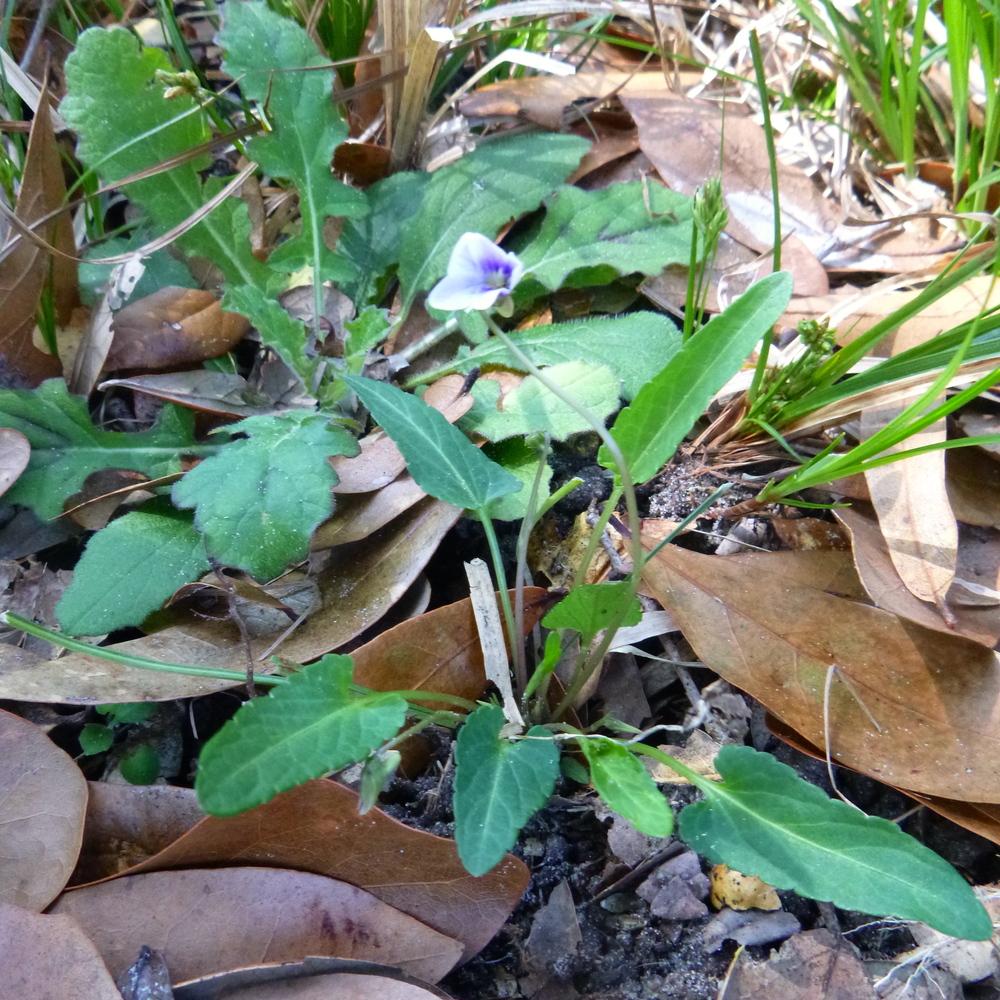
Hi! Thank you! I love to look at violets. I wouldn't rule it out. I think Viola inconspicua is very similar!
https://florida.plantatlas.usf...
https://people.ohio.edu/ballar...
I'll share more info on my notes regarding the possibly of this being a hybrid:
In 2018, I had posted several photos of my violet to the Ask the Botanist feature at GoBotany.org (Native Plant Trust, formerly NE wildflower society) in order to help identify my plant. They replied that this was likely a hybrid with the arrowhead shape likely from V. sagittata and the cordate base likely from V. sororia or V. cucullata, etc. These species are known from my area and the first two grow wild on my land. On their website, they note "Viola sagittata var. ovata) is present in all New England states, while the other (V. sagittata var. sagittata) is found only in Connecticut, Massachusetts and Maine, and is rare. Various hybrids of arrowhead violet occasionally occur."
https://gobotany.nativeplanttr...
Also, I discovered this reference:
"Variety sagittata reportedly hybridizes with V. cucullata (= V. ×porteriana Pollard), V. hirsutula (= V. ×redacta House), V. pedatifida var. brittoniana (= V. ×mulfordiae Pollard), V. sagittata var. ovata (= V. ×abundans House), and V. sororia var. sororia (= V. ×conjugens Greene)."
http://floranorthamerica.org/V...
Last night I noticed in the Gobotany database another intriguing arrowhead violet called "New England violet": Viola novae-angliae (aka Viola sororia Willd. var. novae-angliae ). It occurs on rivershore outcrops primarily in northern and central ME. Here is a link:
https://gobotany.nativeplanttr.... New England violet is not known in New England except some Maine counties and is also is found in Canada and some northern states such as Minnesota. See:
https://www.minnesotawildflowe...
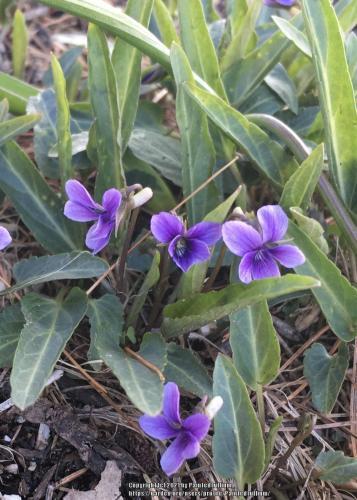
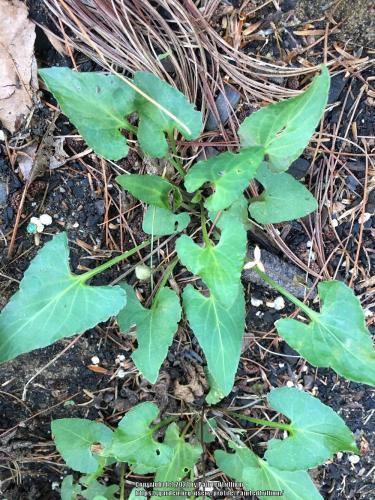
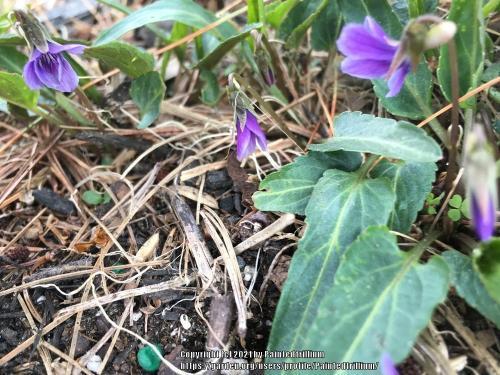
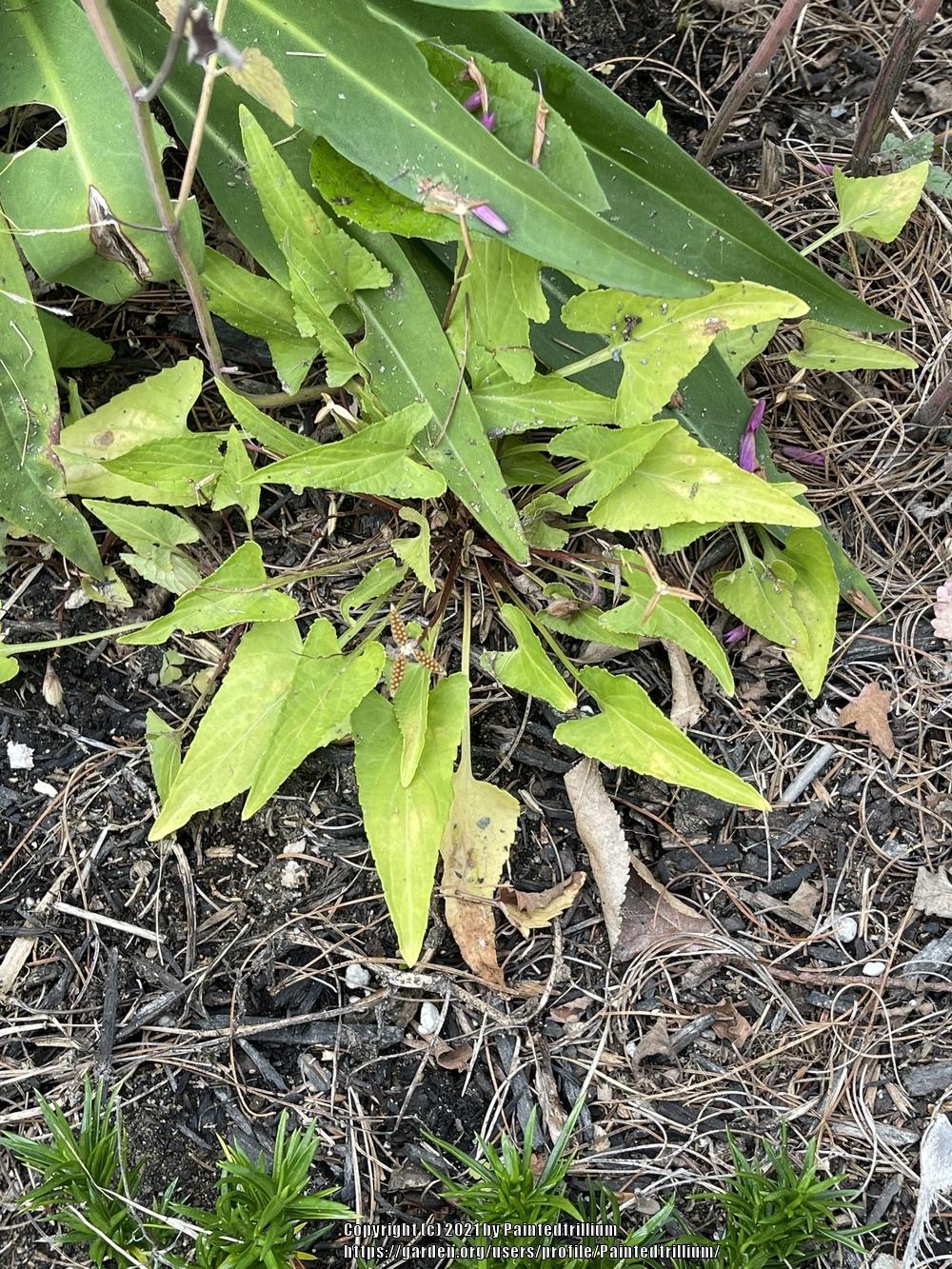
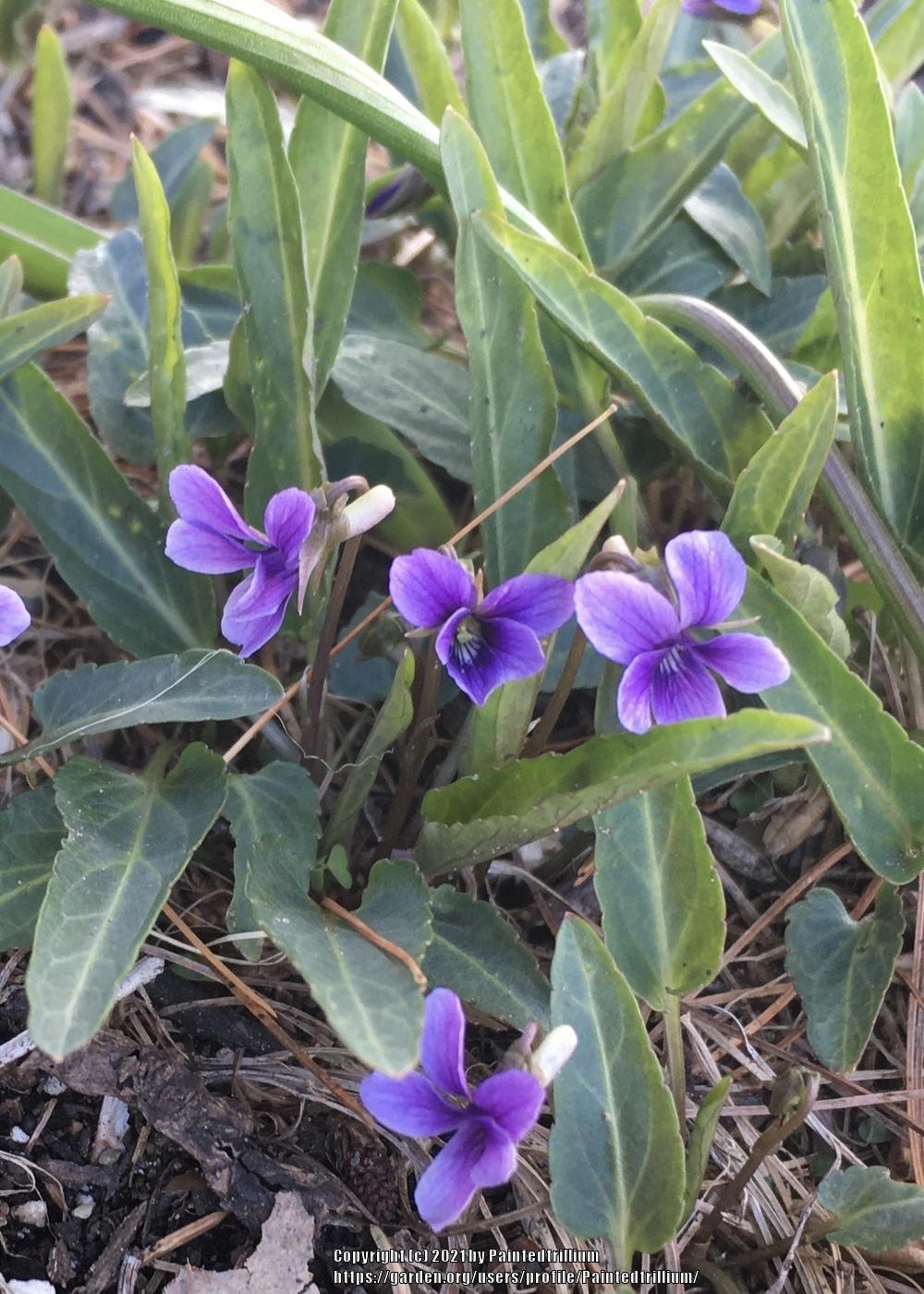
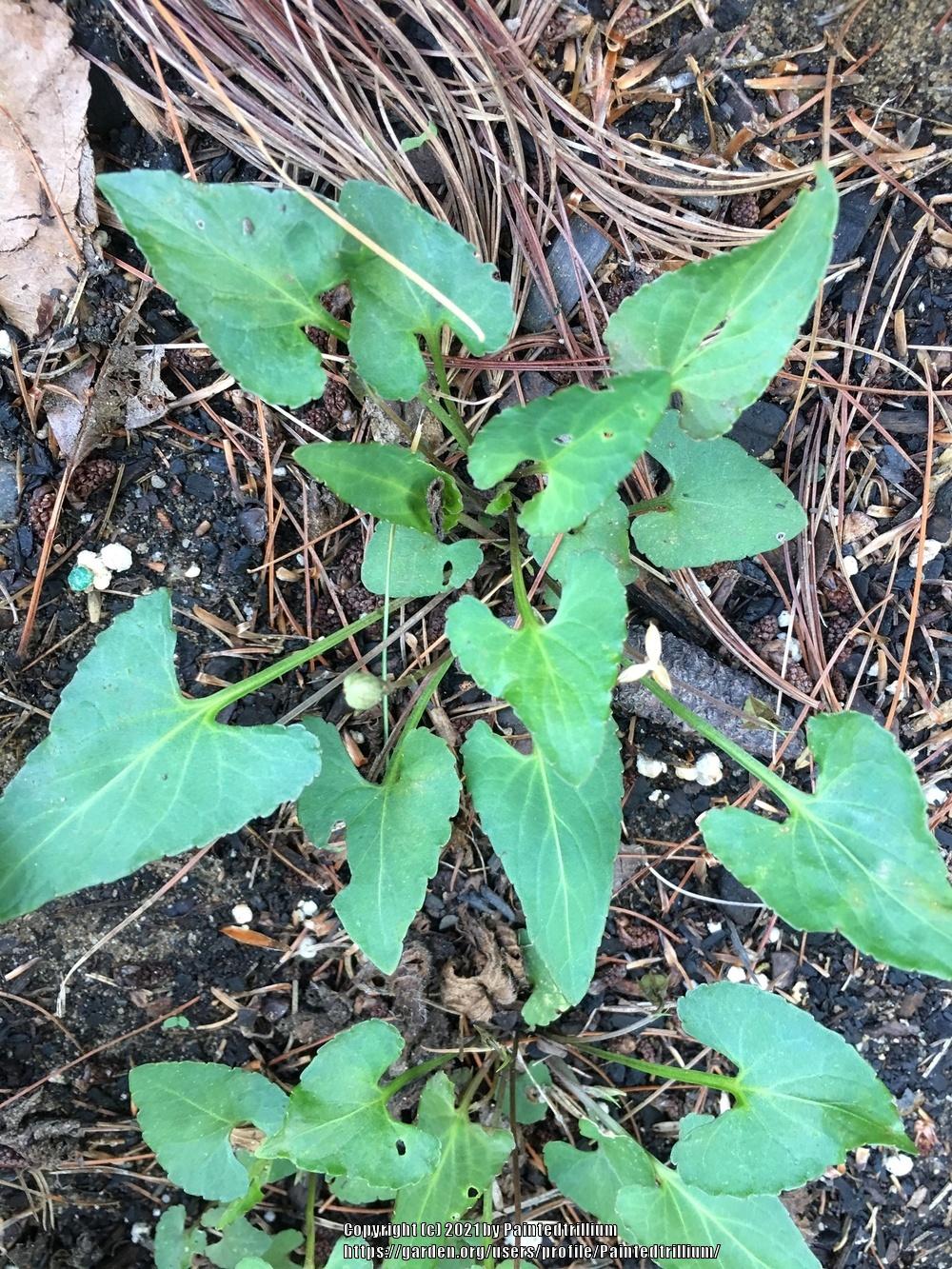
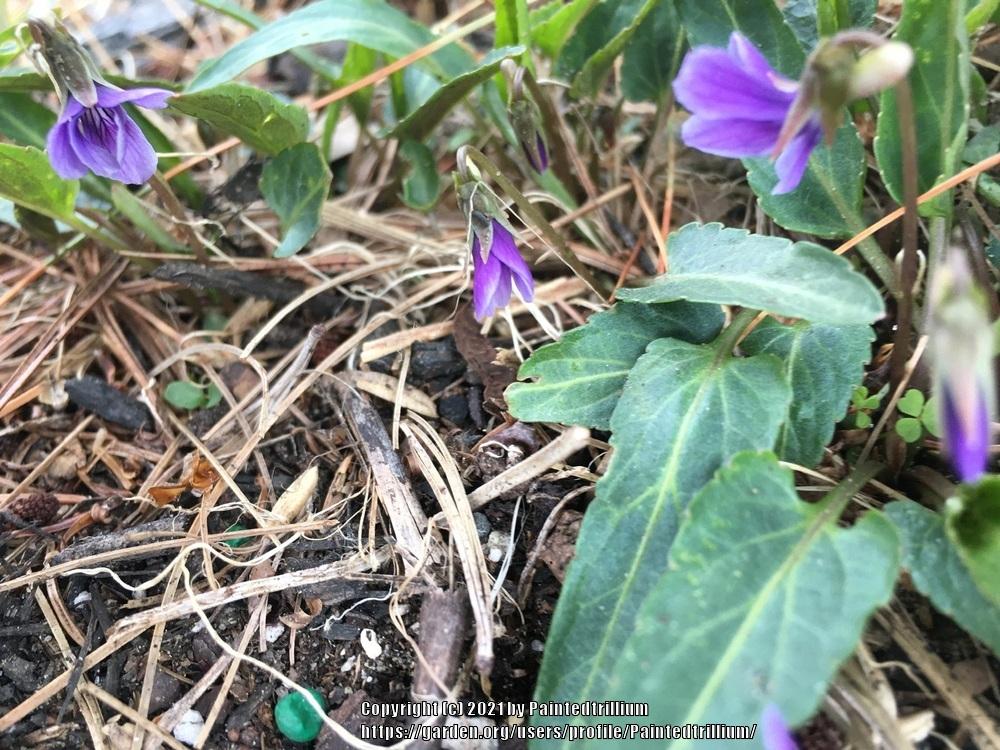
Some views of my viola from my garden.
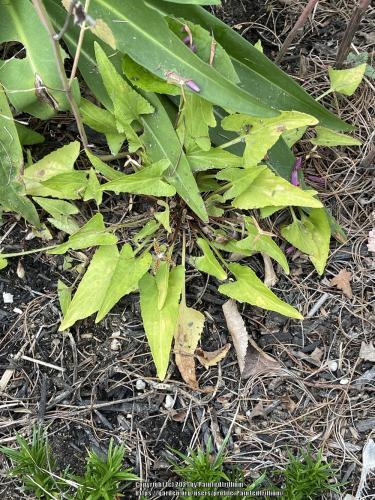
Some leaves are very long!