

Introduction
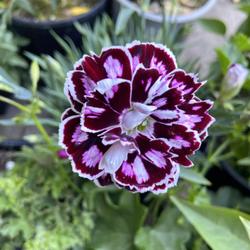
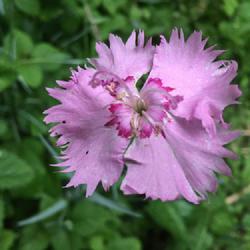
There are numerous types of dianthus, so there's one for almost any garden situation. Many types have flowers with a fragrant, spicy scent and notched petals. Common dianthus include Sweet William, pinks, and carnations.
About dianthus
Most dianthus have pink, red, or white flowers with notched petals. Sweet Williams are biennial or short-lived perennials covered with bicolor flowers in late spring. Pinks are low-growing dianthus suitable for rock gardens. Carnations are taller and good for bouquets but tend to be less hardy than other dianthus.
Special features of dianthus
Multiplies readily
Fragrant
Good for cut flowers
Deer resistant
Choosing a site to grow dianthus
Select a site with full sun and well-drained soil, preferably with neutral to alkaline soil pH. Dianthus won't tolerate wet soils, especially in winter.
Planting Instructions
Plant in spring or fall, spacing plants 6 to 12 inches apart, depending on the type. Prepare the garden bed by using a garden fork or tiller to loosen soil to a depth of 12 to 15 inches, then mix in a 2- to 4-inch layer of compost. Dig a hole twice the diameter of the plant's container. Carefully remove the plant from its pot and place it in the hole so the top of the root ball is level with the soil surface. Carefully fill in around the root ball and firm the soil gently. Water thoroughly.
Ongoing Care
Apply a thin layer of compost each spring, followed by a 2-inch layer of mulch to retain moisture and control weeds. Water plants during the summer if rainfall is less than 1 inch per week. Stake tall varieties to keep them upright. Remove spent blooms on tall varieties, or shear back mounding plants after bloom to encourage rebloom. After the first killing frost, cut stems back to an inch or two above soil line. Divide plants every 3 to 4 years as new growth begins in the spring, lifting plants and dividing them into clumps.
Frequently Asked Questions about Dianthus
What conditions do dianthus actually need? Most of my problems seem to come back to the bed.
They usually do, so this is the answer worth reading first. Dianthus evolved in the Mediterranean and in stony mountainous regions with thin, poor, highly alkaline soil. They were not bred for rich garden loam and they perform worst in the conditions gardeners often think are improvements, which is why so many plantings decline even in zones where they are perfectly winter hardy.
They want a pH between 7.0 and 7.8, firmly in the neutral to alkaline range. They tolerate soil down to about 6.5 with reduced vigor and slower growth, and below that they decline more quickly, with yellowing foliage, poor flowering and susceptibility to root disease. The yellowing in a struggling planting is often iron deficiency triggered by acidity, where the plant cannot take up iron even though it is present. If your soil is naturally acidic, add ground limestone or dolomite limestone before planting, dolomite having the advantage of supplying magnesium as well as calcium. Apply according to a soil test if you have one; without a test, a rough guide is 100 pounds of limestone per 1,000 square feet for a significant increase in clay soil and 50 pounds per 1,000 square feet in sandy soil, worked into the top 6 inches several weeks before planting. Retest every two years, since soil drifts acidic over time.
Drainage is equally critical and often more limiting than pH. Dianthus must have sharp, fast draining soil and cannot be planted in heavy clay or in low spots where water accumulates. If your soil is clay, do not use the common workaround of digging individual planting holes and amending only those holes, because the amended hole becomes a sump. Build a raised bed 8 to 12 inches high instead and backfill with roughly 40 percent sharp sand (not play sand), 40 percent compost or peat, and 20 percent existing garden soil for microbial life.
Lean feeding is the third leg. Dianthus do not need fertilizer once established, and the soft, sappy, over long stems that flop under the weight of flowers are a sign of overfeeding rather than a genetic trait. If you feed at all, apply a balanced fertilizer such as 10-10-10 or 5-10-5 in early spring only, at half the label rate, and do not repeat through the season.
Water deeply but infrequently, letting the top inch dry between waterings, which may mean every two weeks in cool spring weather and weekly in heat. Avoid shallow daily watering, which encourages shallow roots and fungal disease, and avoid evening watering that leaves foliage wet overnight, since moisture plus cool nights triggers bud rot and leaf spot. If you must use a sprinkler, run it in early morning. Mulch the base with gravel, grit or coarse sand rather than bark or wood chips, which hold moisture against the stems and crowns and promote rot, keeping the layer just shy of the crown itself.
Alkaline pH, sharp drainage, lean soil, light or no feeding and moderate infrequent watering address the large majority of dianthus failures. They require no special products and no complex procedures.
My dianthus stopped blooming when the heat arrived and the foliage is yellowing. What do I do?
Restrain yourself, which is genuinely the answer. Dianthus are cool-season plants, and when heat deepens above about 85 degrees, especially with warm nights and high humidity, established plants often halt flowering abruptly and the foliage yellows and wilts despite adequate soil moisture. They are not dying of drought or disease; they are going dormant in response to stress.
The mistake is in the response. Watering more often, loosening the soil to help roots breathe, or stripping leaves for airflow all tend to make things worse. Overwatering during heat stress is the most damaging of these, because warm saturated soil is ideal for root rot and crown rot fungi. The yellowing foliage is a signal to rest, not a cry for water, and there is usually adequate moisture below a dry-feeling surface.
Leave the plant alone except for genuinely dead material. As temperatures moderate, new growth emerges from the base and on side shoots and flowering resumes, in late August in mild zones and not until September or October where summers are long and hot. The plant may then give a strong fall flush lasting to frost, or rest and bloom vigorously the following spring. This cycling is especially common in sweet william and in short lived pinks and carnations in severe-summer climates.
Do not cut a heat-stressed plant back while it is still in decline. It has no reserve carbohydrate to fuel regrowth from a cut surface, and cutting while temperatures are high can accelerate decline or kill it. Wait for clear new growth before any pruning.
What distinguishes recovery from failure is the crown at the soil line. A firm crown means wait. A crown that is soft, mushy or collapsed into a hollow means crown rot, usually from weeks of wet conditions in heat, and that plant is unlikely to recover and should be removed before the disease reaches its neighbors.
My buds brown, drop, or open empty. What is causing it?
Several different things do, and telling them apart decides what you do.
If more than one kind of plant in the bed is unhappy at the same time, diagnose the bed rather than the plants. Carnations and phlox, for instance, are unrelated and share neither pests nor diseases, so both looking poor together points hard at one shared site problem. Check drainage first, since dianthus are unusually intolerant of wet feet: dig a hole a spade deep, fill it with water, and if water still stands hours later that is your answer, and the cure is a raised bed or grit and compost worked in deeply rather than any spray. Check planting depth second, because dianthus must sit with the crown at or a shade above the soil surface, and a plant set a little deep, or with mulch pushed over the crown, rots at the base and sheds its buds. Heat and dryness at the root produce the same bud drop, particularly on plants set out into an already hot bed with too little water in the first month.
On a newly planted perennial, ordinary transplant shock also drops buds while the roots reach into the surrounding soil, and flowering is expensive. That is normal, lasts a few weeks, and resolves. It looks identical to a site problem for the first couple of weeks, and time tells them apart: transplant shock improves, a drainage problem gets worse.
If the site checks out, look at the plants. Thrips are the commonest insect cause of buds that brown and fail on dianthus, and they are easy to miss because they live inside the bud; tap a few buds over white paper and watch for moving slivers, or open a failed bud and look for brown streaked scarring at the base of the petals. Bud rot and botrytis produce a bud that goes soft and brown and stays shut, often with a furry gray mold in humid weather, following wet foliage and crowded planting; the answer is sanitation rather than a spray, so pick off and bin affected buds, thin the planting so air moves through it, water at soil level, and water in the morning. Budworm is the third: the larva of a small moth bores into the bud and eats out the developing petals and reproductive parts, then leaves to pupate in the soil, so a damaged bud looks normal from outside and shows a small dark entry or exit hole, or simply hollow, partly eaten tissue, when opened. Picking them off by hand works on a small planting. If you want a treatment, the low risk option is a Bacillus thuringiensis product for caterpillars, with two conditions: the label must name ornamental flowers and caterpillars, and it works only on a young larva that eats treated tissue, so it has no effect at all on one already sealed inside a bud. Timing is everything with it.
Whichever cause it turns out to be, remove the failed buds. Clip the flower stem back to a healthy node or branch point below the failure. That stops the plant spending anything further on them, takes the fungus or the larva out of the bed, encourages side shoots and new buds higher up that often escape the pressure that ruined the first flush, and improves air circulation among the remaining stems.
Should I deadhead for a longer season, or cut the plants back for a second flush?
These are two different operations with two different outcomes, which is why the advice sounds contradictory when you read it in two places.
Deadheading is picking off individual spent heads as they go over. It keeps the plant presentable and stops it putting energy into seed, but it does not do much to lengthen the main flush. Sweet william gives two or three weeks of display toward the end of spring, and no amount of nipping off heads turns that into a long season.
Cutting back is shearing the whole plant by about a third to a half once the main display is properly over, taking the flowering stems down into the low leafy growth. That is the operation that can bring a second, lighter flush later in the summer. It works reliably where summers are cool and unreliably where July and August are hot, because the plant sits and waits out the heat instead of regrowing. Two things before you shear: do it before seed sets, since a plant that has committed to ripening seed is much less likely to make new flower buds, and remember that a cut back plant makes no seed, so leave a few plants uncut if you want the patch to perpetuate itself. The same shearing on perennial garden pinks does a second job, keeping the mat compact and delaying the point at which it goes bare and woody in the middle.
Never cut into the bare woody base. Dianthus do not reliably resprout from old leafless wood, and on an older plant the temptation to cut hard is exactly where people kill them. Taking a plant back by two thirds is safe on a young soft plant and risky on an old woody one.
My potted dianthus flowers beautifully for two weeks in spring and then does almost nothing all summer.
Heat is part of this, but on an older plant in a pot it is usually not the main event.
The plant is very likely pot bound and starved. Three years is a long time in the same container: the roots have filled it, there is little soil volume left to hold water or nutrients, and every watering flushes more of what remains out of the drainage holes. A plant in that state has enough reserve for one flush in spring and nothing left for a second. Knock it out and look, and if the root ball is a solid mat, either pot it on one size larger into fresh gritty compost or divide it and start again. Then feed it, using a balanced liquid feed every two to three weeks through the growing season rather than a high nitrogen one, which gives soft leaves and few flowers.
The plant may also simply be past its best. Dianthus are short lived, and by year three a cottage pink or a bedding carnation is typically woody and bare at the center with growth pushed out to a ring around the edge. The remedy is renewal rather than rescue, and they root very easily: pull off a few non flowering shoots in early summer, strip the lower leaves and put them in gritty compost, or peg a low shoot down into the soil to layer it. In a year you have replacements.
And there is the answer that decides the whole question: not all dianthus repeat. Old fashioned cottage pinks and clove carnations give one glorious flush and that is their nature, while the modern bedding and patio series were bred to flower repeatedly from spring until frost. If you want flowers all summer from a pot, grow one of the repeat flowering series, because no amount of cutting back will make a once flowering pink behave like one.
Within a season, shear as soon as the main flush fades, deadhead individual flowers in between since any seed set is bloom you do not get, move the pot into afternoon shade for the summer because a container heats far more than open ground, and watch the watering both ways: a pot dries fast and a plant that wilts repeatedly will not flower, but one standing in a saucer of water rots. Expect a rest in the hottest weeks even from a good repeat flowering plant. That pause is not a fault to be fixed.
How hardy are dianthus, and should I pot them up for winter?
Leave them in the ground. Hardy carnations and pinks are typically hardy to zone 3 or colder, and border carnations, garden pinks and modern compact bedding dianthus survive outdoors year round from zones 3 through 9 without protection. The florist carnation bred for greenhouse production is a different plant, often treated as an annual, and is not suited to outdoor planting in cold zones.
Gardeners in zones 5 and 6 often assume potting plants up in fall and moving them indoors improves survival. It does not. Hardy dianthus are fully winter hardy in the ground there, and a potted plant indoors endures swings between warm days and cold nights, drying indoor air, and the stress of being uprooted. Unless you can hold it consistently at 40 to 50 degrees through dormancy, which few homes manage, it will suffer more root loss and dieback than it would have outside.
The real variable is drainage, not cold. Standing water in winter is far more lethal to a dianthus than low temperature: freezing saturated soil forms ice around the crown and roots and the crown rots from the inside out, while dry frozen soil even at zone 5 extremes is no problem at all. If your bed puddles in winter, either raise and amend it with sand and gravel before planting or choose a spot where water does not accumulate, and a slight slope away from the planting helps. A 1-inch layer of gravel or coarse sand around the base, kept just shy of the crown, improves drainage, buffers temperature swings and reduces frost heave where snow cover is unreliable.
Dianthus are not long lived plants in any case. Even in ideal conditions individual plants decline and stop flowering reliably after two to three years. That is the nature of the plant rather than a failure of cultivation, and replanting on a two to three year interval keeps bloom consistent instead of letting the bed become a collection of weak, gappy clumps.
My sweet william grew large and green all summer and never flowered. Will it flower next year?
Almost certainly yes, and the plant is doing nothing wrong. Sweet william is normally biennial: sown or planted in spring, it spends its first season building a leafy rosette, goes through a winter, and flowers the following late spring and early summer. Big, healthy, green and flowerless at the end of the first summer is the first half of the cycle working exactly as it should. Many plants also need the cold of winter itself before they will initiate flower buds, so a mild sheltered situation can delay them further.
The one thing that would change the answer is what you bought, since some modern strains are bred to flower in their first year and are sold as bedding annuals. If the label said first year flowering and you got nothing, the other explanations become worth considering. Shade and nitrogen are real but secondary: sweet william wants full sun or close to it and flowers poorly in deep shade, and rich feeding, particularly a high nitrogen fertilizer or lawn feed drifting into a border, produces lush foliage at the expense of flowers.
If it is in a planter, that is what actually puts next year's flowers at risk, because a crown in a pot is far more exposed to cold than the same crown in the ground; the whole root ball reaches air temperature instead of being buffered by soil. Sink the planter to its rim in a border for the winter, or group pots against a house wall out of the wind, or wrap the sides. Water occasionally through the winter, since a pot that goes into spring bone dry kills the plant as effectively as cold does, and make sure it drains, because a planter that freezes solid with water in it rots the crown. Leave the top growth on over winter and tidy it in very early spring, cutting the dead and tired foliage from around the crown as new growth starts. Better still, plant them out into the ground in early fall while the soil is still warm; they establish quickly, overwinter far more reliably, and flower better for it.
My sweet william has finished flowering. Will it bloom again?
Sweet william is the biennial of the group and behaves differently from the perennial pinks. Sown one year it makes a leafy rosette, the following late spring it produces its dense clusters of bloom over several weeks, and then that plant is essentially finished. It will not build into an older, better flowering clump the way a border pink does, though a good many plants flower again for a weaker third season before giving up.
Once the heads fade you have two reasonable choices. Shear the spent stems off to keep the planting tidy, which often brings a flush of fresh low foliage and sometimes a lighter second showing, though not a repeat of the main display. Or leave the heads to ripen and let the plants drop seed into the bed. Self-sown seedlings appear readily and reach flowering size the next year, and that is how an established patch perpetuates itself with no replanting on your part. Browning stems after flowering are normal for a plant winding down its second season, not a sign of disease.
My sweet william grew tall and leggy with few flowers.
Sweet william should be a low, mounding plant, so unusual height with sparse bloom almost always means it is stretching toward light. Full sun is what it wants, and the usual cause is a spot that has quietly become shaded by a growing shrub or a taller neighbor. Move the plant to an open position and the habit corrects itself. Shear the spent flowering stems back hard, to a few inches above the soil, which both reduces the plant's size and encourages fresh growth from the base.
Can I divide my sweet william, or lift established clumps and spread them around the garden?
Division is not the way to increase this one. Because the plants are biennial, or at best short lived perennials, a flowering clump is already near the end of its cycle and splitting it rarely yields divisions with the vigor to establish. Sweet william does not really form a clump that pulls apart in any case. The advice earlier in this guide about dividing dianthus every three to four years applies to the perennial pinks and carnations.
Moving is possible but the timing matters. Sweet william moves well when young and badly when flowering: a first year rosette lifts with almost no check, while a big two year old clump in full bud is at the worst possible moment, carrying a large amount of top growth on a root system you are about to damage. If you must move one in growth, water it thoroughly the day before, take as much soil with the roots as you can carry, cut the flowering stems back by half, replant immediately at the same depth, water it in and shade it for a few days. Fall is the easy season, once flowering is over and the weather has cooled, when the young rosettes formed around the base lift and replant with little fuss and have all winter and spring to settle. Early spring, before the flower stems extend, is second best.
The better answer is usually not to move the clumps at all, since a clump that flowered last year is at or near the end of its useful life and moving it buys one more display at best. Let some plants set seed and move the seedlings that appear, which is how these plants naturally spread through a garden and costs nothing. Take tip cuttings in early summer from non flowering shoots, three inches or so, cut below a leaf joint with the lower leaves stripped, into a gritty free draining mix in bright shade; sweet william and the perennial pinks root easily this way. And divide the mat forming pinks, which genuinely do divide.
Can I save and sow my own seed?
Yes, and it is what keeps a patch going. Wait until the capsules have gone papery and brown and the seed inside is dark and hard. That is a narrow window, because the pods open and spill as soon as they are ready, so check every few days once the color changes and cut whole stems into a paper bag as they turn. Dry them for a week or two somewhere airy, shake the seed out, and store it cool, dark and dry. No chilling or other treatment is needed and it germinates readily. Sow in early summer for flowers the following year, or indoors in late winter for the modern first-year-flowering strains.
One caveat that did not exist when this advice was first given: a great deal of what is sold now is F1 hybrid seed or a named cultivar, and neither comes true. The seedlings will be a mixed bag, some good, some plain, none identical to the parent. That is fine for a cottage garden drift and disappointing if you expected the same plant again, so take cuttings if you specifically want more of one plant. Named cultivars are also frequently protected by plant breeders' rights, which prohibits propagating them for anyone other than yourself, and the tag will say so. Sweet william seeds itself around freely in open ground but will not usefully do so in a planter.
My carnations are so full of buds that the stems are on the ground. Are they just floppy plants?
Partly yes, and knowing which sort you are growing saves a lot of frustration. The florist carnation is not a border plant: those long stemmed, heavy headed, many petalled flowers were bred for a greenhouse bench, grown as single stems, disbudded to one flower each, and held up by layers of horizontal netting the crop grows through. Grown as a garden clump, that plant flops, and it is not a failure of cultivation. Border carnations, garden pinks and modern compact bedding dianthus carry smaller flowers on much shorter, stiffer stems and mostly stand on their own.
A peony ring usually fails here because it is designed for one dome shaped clump of thick stems pushing up through a single hoop, whereas a carnation is a loose mass of many thin independent stems that lean wherever there is room and slide out sideways to pile against one edge. It is also usually fitted too late: any support a plant grows up through must be in place when the plant is a few inches high.
What works, roughly in order of effectiveness, starts with a horizontal grid the plants grow through: wire mesh, plastic netting or a home made string grid stretched flat about a foot above the soil on short corner stakes, in place in early spring, set at about a third to a half of the plant's final height. As the stems extend they push through the squares and each is supported independently. That is the greenhouse method scaled down and it is far and away the best answer for a bed of carnations. Failing that, several short stakes around the clump with string run between and criss crossed through the middle is effective, easy to add late, and less tidy to look at. Individual stakes suit the few exhibition stems you want perfect rather than the whole plant, and twiggy prunings pushed in among the plants in spring are old fashioned, free and invisible by flowering time.
Then reduce the flopping at source. Full sun, six hours minimum and eight better, because stems reaching toward light are the weakest on the plant. Lean soil and no rich feeding, which is the big one. Sharp drainage and restrained watering, since wet feet produce weak growth and rot the crowns. Pinch young plants once, when they have four or five pairs of leaves, to make a branched plant with more, shorter stems. Give them room, because a crowded plant leans toward the light gap. And keep mulch off the crown, using grit or gravel rather than bark.
A plant that flowered poorly in its first season and is now smothered in buds is behaving normally. That surge is what it has been building toward, and heavy flowering on a young root system is itself part of why the stems are on the ground.
How do I grow Chabaud carnations from seed?
Start with the timing, because it catches most people out. Chabaud carnations take five to six months from sowing to first flower, so a late sowing may not bloom until the following year. That is the nature of the strain rather than a sign anything went wrong, and gardeners who want flowers the same summer sow very early indoors, well before the last frost.
Barely cover the seed and keep the surface moist but not waterlogged; germination takes a week or two at ordinary room temperature. Once seedlings emerge they need light and air movement to stay stocky, and cool nights strengthen them.
The pot is the thing most likely to lose them. Carnations hate sitting wet, and a large pot of moisture retentive seed-starting mix kept moist is exactly how seedlings rot at the base. Use a free draining mix with added grit or perlite, a pot with real drainage holes, and water only when the surface feels dry, keeping to that same rule once the young plants are established. Most seed-starting mixes are acidic and peat based, which is not ideal for a plant that prefers neutral to slightly alkaline soil, though it will still grow in them.
A pot sown thickly produces a dense mat that damps off, so thin to a few strong, well spaced seedlings and discard the weak ones, or prick the best out into individual small pots. Wait until the seedlings have three to four sets of true leaves before feeding, then feed every three to four weeks with a balanced water-soluble fertilizer, mixed and applied exactly as its label directs, at the weaker end of whatever range the label gives. Store the product and keep treated pots out of reach of children and pets.
Once the seedlings have several pairs of leaves, pinch the central growing tip to encourage branching. Chabaud carnations are bred as cut flowers and naturally grow tall and rather floppy, so loose staking or a tomato cage helps. They need full sun, at least six hours a day, and prefer cool nights; in sustained heat they sulk and stop budding, so afternoon shade through the hottest part of a warm-climate summer helps.
Are dianthus safe around children and pets, and can I eat the petals?
Treat them as mildly poisonous to animals. Dianthus of every kind, carnations and sweet william included, are listed as toxic to dogs, cats and horses, and they contain saponins and related compounds that irritate skin and mucous membranes. A dog that chews one usually gets drooling, vomiting, diarrhea, mouth irritation and an unhappy few hours rather than anything worse. Do not leave a heap of clippings where an animal will investigate it, keep the pot out of reach of children and pets, and contact your veterinarian or an animal poison control center if a pet has eaten a quantity and is showing signs of distress.
Handling the plants can irritate human skin too. Contact dermatitis from carnations is a well known nuisance among people who handle them in quantity, so wear gloves for a long session of cutting or shearing if your hands react, and wash your hands after handling the plants.
Carnation and pink petals are edible, with a mildly sweet, clove-like taste, on two conditions that both matter. The plants must have been grown to be eaten, because bedding and cut flower stock is routinely treated with insecticides and fungicides cleared for ornamental use and not for food, and those residues do not wash off. And it is the petals only, cut away from the bitter white heel at the base, with everything else on the plant staying out of the kitchen. If a child or a pet has eaten part of a plant and you are unsure, a poison service will tell you what to do faster than a search engine will.