





» See more new plant database photos
» View recently added plants
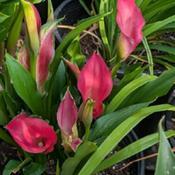
| By Hortica on Jan 1, 2026 6:32 PM, concerning plant: Copihue (Lapageria rosea 'Collinge') This is a wild picotee variety with both faint speckles/spots, AND the watercolor bleed at the tips of the petals (tepals). A very unusual pattern, and understandably sought after. [ | Reply to this comment ] |
| By Hortica on Jan 1, 2026 6:13 PM, concerning plant: Chilean Bellflower (Lapageria rosea 'Myrtle Wolf's Pink') Originated by Ed Carmen from Chilean material, it was named for the lovely Mrs. Wolf, who was a long time patron of the UC Botanical Garden. [ | Reply to this comment ] |
| By Baja_Costero on Jan 1, 2026 11:33 AM, concerning plant: Euphorbia (Euphorbia otjingandu) Large, many-branched, spiny Euphorbia from northern Namibia, growing to 13 feet tall. 4-8 ribs, short paired spines, continuous spine shield. Wavy stem with regular constrictions. Yellow cyathia. As this plant ages, it retains its older stems (which continue to grow upward), giving it increasing heft. Old specimens tend to be pretty dramatic. Provide ample (generous) space in the garden. [ | Reply to this comment ] |
| By Baja_Costero on Jan 1, 2026 11:01 AM, concerning plant: Euphorbia (Euphorbia fortissima) Extra large, many-branched, spiny Euphorbia from Zimbabwe, growing to 20 feet tall or more. 3-4 ribs, short paired spines, continuous spine shield. Marked constrictions between stem segments. Yellow cyathia, roughly triangular fruit. As this plant ages, it retains its older stems (which continue to grow upward), giving it increasing heft. Old specimens tend to be pretty dramatic. Provide ample (generous) space in the garden. [ | Reply to this comment ] |
| By Baja_Costero on Dec 30, 2025 10:11 PM, concerning plant: Small-Toothed Euphorbia (Euphorbia evansii) Large tree (to 10m) from southeastern Africa with a tall main stem (sometimes bearing side branches) and a whorl of short branches at the top. 3-4 ribs. Some rebranching. Short paired spines, discontinuous spine shields, no constrictions between successive seasons of growth. Pinkish cyathia. Related to E. eduardoi (no rebranching), E. cooperi (shorter, with deep constrictions between stem segments), E. grandidens (taller, usually 3 ribs, usually yellowish green cyathia), E. triangularis (3-5 ribs, stem constricted in between segments), E. zoutpansbergensis (shorter, narrower branches in greater numbers, stems constricted in between segments). All these similar-looking plants also from southeastern Africa, except eduardoi (far northwestern Namibia). [ | Reply to this comment ] |
| By Baja_Costero on Dec 30, 2025 9:57 PM, concerning plant: Euphorbia (Euphorbia eduardoi) Large tree (to 10m) from northern Namibia with a tall unbranched main stem and a whorl of short branches at the top. Does not typically rebranch. Stout paired spines, continuous spine shields with age. Related to E. cooperi (shorter, with deep constrictions between stem segments) and E. evansii (with shorter spines and usually some rebranching), both from southeastern Africa. [ | Reply to this comment ] |
| By ILPARW on Dec 29, 2025 1:05 PM, concerning plant: Dutchman's Pipe (Isotrema tomentosum) This fast-growing, twining liana (vine) is native to the southeast USA from eastern Texas up to southern Missouri to southern Indiana to coastal South Carolina and Georgia to the Florida panhandle. Because there are some isolate colonies around, some maps include southern Ohio, into much of Pennsylvania, one spot in central New York, one spot in central North Carolina, and a little more, usually growing in rich, moist forest edges. I have only seen this species growing on a trellis in the plant display area of a native plant nursery called Edge of the Woods, not far west from Allentown, PA. That business and some other native plant nurseries and some online sites sell some of this Wooly Dutchman's-Pipe or Pipevine. The heart-shaped leaves are wooly beneath as are stems. A member of the Birthwort Family, Aristolochiaceae. Not highly ornamental but makes a very interesting plant worth staring at. [ | Reply to this comment ] |
| By Hortica on Dec 28, 2025 2:26 PM, concerning plant: Poor Man's Orchid (Impatiens sodenii 'Flash') This was a true flash in the pan variety, surpassed by the similar, but much better 'La Vida Rosa'. [ | Reply to this comment ] |
| By pod on Dec 27, 2025 11:28 PM, concerning plant: Cucumber (Cucumis sativus 'Iznik') Iznik is a manageable sized vine that produces 4-6 inch cucumbers. The fruit has a delightfully fresh taste and the peeling is tender for eating as well. [ | Reply to this comment ] |
| By bluestem55 on Dec 27, 2025 6:02 AM, concerning plant: Butter And Eggs (Linaria vulgaris) Considered invasive in many parts of the U.S. [ | Reply to this comment ] |
